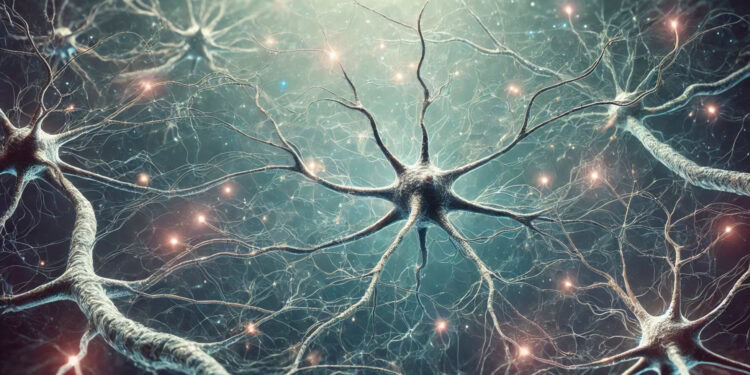
A recent study has found that by the age of three, children are already able to understand the intentions behind other people’s actions, thanks to a sophisticated neural system involving mirror neurons. This system allows young children to mimic and anticipate the actions of others, laying the foundation for more complex social understanding as they grow older. The findings were published in the Proceedings of the National Academy of Sciences and highlight the early development of this cognitive ability, which is vital for social interactions.
Previous studies had shown that adults and older children possess mirror neurons, a type of brain cell that activates both when a person performs an action and when they observe someone else performing the same action. This activation is thought to be key to understanding the intentions behind actions.
What was unclear, however, was whether very young children also have this ability and, if so, how early it develops. The study focused on preschoolers, aged three to six, to investigate whether these children already demonstrate the ability to recognize and anticipate others’ intentions through the activation of mirror neurons.
“The interest in this topic arises from the combination of my education in neuroscience and my subsequent professional experience in developmental psychology. This multidisciplinary approach, shaped by my diverse background in both fields, allows me to envision a functional developmental connection that begins with how a child understands the world from birth, largely through motor experiences — both in relation to their environment and, crucially, to their caregiver,” said study author Cinzia Di Dio, an associate professor at the Catholic University of the Sacred Heart and co-head of the Research Unit in Psychology and Robotics in the Lifespan (PsyRoLife).
“This initial understanding, conveyed through the body and its movements, leads to emotional synchronization and recognition, a phenomenon elegantly explained by the discovery of the mirror neuron system. The development of social skills, which evolves alongside cognitive growth, has been explored across various disciplines but often remains fragmented.”
“The developmental steps that take a child from ‘feeling’ a relationship to ‘understanding’ it are still not fully understood. This study offers an opportunity to shed light on the progression of more sophisticated social skills, such as the ability to understand others’ mental contents like intentions, desires, beliefs, and emotions—what we refer to as mentalizing—likely grounded in a motor-based understanding of others’ actions, intentions, and emotions.”
The study involved 18 preschool children between the ages of 3 and 6 years. These children were recruited from two kindergartens in Italy. With parental consent, the researchers conducted a series of experiments to measure how the children’s muscles responded when they either performed or observed certain actions.
The researchers focused on the mylohyoid muscle, which plays a key role in mouth movement and is commonly activated during actions like eating. While previous studies in adults and older children have confirmed the involvement of mirror neurons using more advanced techniques, it’s not possible to directly measure their activity in young children without invasive procedures. Instead, recording muscle responses can provide important indirect evidence, as these responses are closely linked to motor planning and intention, which mirror neurons are thought to influence.
The study was divided into two main conditions: action execution and action observation. In the action execution condition, children were asked to perform two distinct tasks: picking up a piece of food and bringing it to their mouth (grasping-to-eat) or picking up a piece of paper and placing it into a container (grasping-to-place).
These tasks were chosen based on prior research that showed mirror neurons fire differently depending on the goal of the action, such as eating versus placing, even when the physical movement is similar. Both tasks were repeated multiple times, and the children’s muscle activity was recorded using surface electrodes placed under their chins.
In the action observation condition, the children watched as an experimenter performed the same two tasks—either grasping food to eat or grasping paper to place into a container. The children’s muscle activity was again recorded to see if their brains “mirrored” the observed actions.
The researchers found that even at such a young age, children showed distinct patterns of muscle activation when either performing or observing these tasks. In particular, there was greater activation in the mylohyoid muscle during the grasping-to-eat task than during the grasping-to-place task. This was true for both conditions: when the children performed the actions themselves and when they merely observed someone else doing them.
This muscle activation suggests that their brains were simulating the observed action as if they were performing it. This is a hallmark of how mirror neurons are believed to work: the brain essentially “mirrors” the actions it sees, preparing the body to perform those same actions if necessary.
“Our findings highlight the gradual transition in socio-cognitive abilities that allow us to become competent social beings,” Di Dio told PsyPost. “This process begins with basic bodily/motor experiences, which later evolve into more complex mental functions. It’s important to foster this bodily communication effectively from birth to prevent deviations from typical development, which can lead to social and psychological challenges later in life, both in adolescence and adulthood. By understanding the developmental stages of this growth, we can more accurately identify early warning signs of atypical development and intervene in a timely manner.”
The researchers noticed that the muscle activation started even before the children or the experimenter actually grasped the object. For instance, in the grasping-to-eat condition, the children’s mylohyoid muscles began to activate during the reaching phase, long before the food reached their mouths. This anticipatory activation is a sign that the children’s brains were already preparing for the goal of the action—eating—well before the action was completed.
This early activation also occurred during the observation condition, although the response was slightly delayed compared to older children studied in previous research. The researchers suggest that while the ability to understand and anticipate others’ intentions is present in preschoolers, it may not be as fully developed as in older children.
“We hypothesized an activation of the ‘intentional’ motor system and the findings aligned with our expectations,” Di Dio said. “However, what was particularly interesting was discovering that preschoolers are still in the process of refining their ability to understand motor intentions. This likely explains why the ability to fully grasp others’ intentions, along with more sophisticated skills like mentalization, begins to explicitly emerge around the ages of 4-5.”
But as with all research, there are some caveats to consider. “In science, it’s crucial to be cautious in interpreting data and avoid overgeneralizing results, which can lead to confusion,” Di Dio noted. “For instance, we must be careful not to automatically equate understanding motor intentions with understanding intentions in a broader sense. Motor intention understanding refers to a basic level, such as seeing someone grab a glass and understanding they want to drink.”
“However, full comprehension involves a more nuanced understanding of behavior—like realizing someone is drinking because they are at a pub enjoying time with friends. This higher-level understanding requires additional cognitive processing, which likely develops later. As Rizzolatti and Sinigaglia (2007) explain, this distinction is key. Therefore, while we should aim to extract valuable insights from the data, it’s essential to approach conclusions with caution and recognize the need for further research.”
The researchers also noted that it would be interesting to investigate how this system develops in children with autism, who often have difficulties with social understanding. By studying the mirror neuron system in these children, researchers might be able to identify early markers for social cognitive deficits, potentially leading to earlier diagnosis and intervention.
“My long-term goals for this line of research include lowering the age of participants to study earlier developmental stages and expanding the research to include cases of autism spectrum disorder, with the aim of promoting early diagnosis,” Di Dio explained. “This could help identify atypical developmental patterns at an earlier stage, improving intervention outcomes.”
“Additionally, I am interested in exploring the use of robotic agents in social interactions to better understand how the mirror neuron system responds in these contexts. This could open new pathways for understanding motor intention recognition and social cognition in both typical and atypical development.”
The study, “Action chains and intention understanding in 3- to 6-year-old children,” was authored by Cinzia Di Dio, Laura Miraglia, Giulia Peretti, Antonella Marchetti, and Giacomo Rizzolatti.