PsyPost
  • Mental Health
  • Social Psychology
  • Cognitive Science
  • Neuroscience
  • About
No Result
View All Result
Join
My Account
PsyPost
No Result
View All Result
Home Exclusive Social Psychology

Study links poor understanding of the physical world to religious and paranormal beliefs

by PsyPost
October 9, 2016
Reading Time: 2 mins read
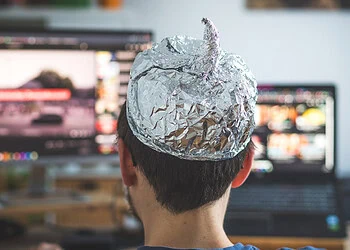
Photo credit: Brian Talbot

Photo credit: Brian Talbot

Share on TwitterShare on Facebook

Poor understanding of the physical world is related to religious and paranormal beliefs, according to a recent study published this June in Applied Cognitive Psychology.

Many people like to believe in supernatural phenomena, for example, breaking a mirror brings you 7 years of bad luck. In the past, studies have shown that people see natural phenomena as having intentions, and give human characteristics to God and other supernatural agents. Moreover, paranormal and religious believers have been shown to take such statements as ‘Earth wants water’ or ‘Force knows its direction’ as more literally true than skeptics, who interpret the statements more metaphorically.

Another possible factor, highlighted in the Empathizing–Systemizing theory, proposes that people who are poor at physical cognition are called low systemizers because they have poor abilities and low interests in such things as map-reading, mathematics, intuitive physics, or technical and motor systems.

Although supernatural (paranormal or religious) beliefs often paint a peculiar picture about the physical world, the possibility that the beliefs might be based on inadequate understanding of the non-social world has not received research attention.

The study, by Marjaana Lindeman and Annika Svedholm-Häkkinen of the University of Helsinki, involved 258 participants who took part in an online study examining how physical-world skills and knowledge predict religious and paranormal beliefs. Data about religious and paranormal beliefs, physical world skills and interests (systemizing), mechanical abilities, intuitive physics skills and knowledge about physical and biological phenomena were collected.

The results showed that religious and paranormal (supernatural) beliefs correlated with all variables that were included: low systemizing, poor intuitive physics skills, poor mechanical ability, poor mental rotation, low school grades in mathematics and physics, poor common knowledge about physical and biological phenomena, intuitive and analytical thinking styles, and in particular, with assigning mentality to non-mental phenomena. Regression analyses indicated that the strongest predictors of the beliefs were overall physical capability (a factor representing most physical skills, interests, and knowledge) and intuitive thinking style.

The researchers concluded, “Nonscientific ways of thinking are resistant to formal instruction…” adding that this can “affect individuals’ ability to act as informed citizens to make reasoned judgments in a world that is increasingly governed by technology and scientific knowledge.”

The findings open up the possibility for future research to help develop understanding of the relationship between intuitive thinking and supernatural beliefs in greater depth.


Google News Preferences Add PsyPost to your preferred sources

RELATED

Narcissists, psychopaths, and sadists often believe they are morally superior
Dark Triad

Even highly antagonistic people find immoral peers physically unattractive

April 21, 2026
Are you a frequent apologizer? New research indicates you might actually reap downstream benefits
Moral Psychology

New psychology research shows people consistently underestimate how often things go wrong across society

April 21, 2026
Girl taking a selfie on her smartphone, enjoying a drink, smiling and outdoors, illustrating social media, happiness, and modern communication.
Social Media

Short video addiction is linked to lower life satisfaction through loneliness and anxiety

April 21, 2026
Economic scarcity can invigorate racial stereotypes and even alter our mental representations of Black individuals
Racism and Discrimination

How a perceived lack of traditional values makes minorities seem younger

April 20, 2026
The combination of poverty and inequality predict homicide rates in the United States
Social Psychology

Does listening to true crime make you a more creative criminal?

April 20, 2026
Live music causes brain waves to synchronize more strongly with rhythm than recorded music
Artificial Intelligence

People remain “blissfully ignorant” of AI use in everyday messages, new research shows

April 20, 2026
Collective narcissism, paranoia, and distrust in science predict climate change conspiracy beliefs
Conspiracy Theories

New study reveals how political bias conditions the impact of conspiracy thinking

April 19, 2026
Women’s cognitive abilities remain stable across menstrual cycle
Cognitive Science

Men and women show different relative cognitive strengths across their lifespans

April 19, 2026

STAY CONNECTED

RSS Psychology of Selling

  • The color trick that changes how you expect products to smell, taste, and feel
  • A new framework maps how influencers, brands, and platforms all compete for long-term value
  • Why personalized ads sometimes backfire: A research review explains when tailoring messages works and when it doesn’t
  • The common advice to avoid high customer expectations may not be backed by evidence
  • Personality-matched persuasion works better, but mismatched messages can backfire

LATEST

People with cannabis disorder do not seem to pay increased attention to pictures of cannabis

Precommitment can lead to healthier food choices under stress, study finds

Childhood adversity predicts combined physical and mental illness in later life

Even highly antagonistic people find immoral peers physically unattractive

New psychology research shows people consistently underestimate how often things go wrong across society

Short video addiction is linked to lower life satisfaction through loneliness and anxiety

Unrestricted generative AI harms high school math learning by acting as a crutch

Lifting weights builds a sharper mind and reduces anxiety in older women

PsyPost is a psychology and neuroscience news website dedicated to reporting the latest research on human behavior, cognition, and society. (READ MORE...)

  • Mental Health
  • Neuroimaging
  • Personality Psychology
  • Social Psychology
  • Artificial Intelligence
  • Cognitive Science
  • Psychopharmacology
  • Contact us
  • Disclaimer
  • Privacy policy
  • Terms and conditions
  • Do not sell my personal information

(c) PsyPost Media Inc

Welcome Back!

Login to your account below

Forgotten Password?

Retrieve your password

Please enter your username or email address to reset your password.

Log In

Add New Playlist

Subscribe
  • My Account
  • Cognitive Science Research
  • Mental Health Research
  • Social Psychology Research
  • Drug Research
  • Relationship Research
  • About PsyPost
  • Contact
  • Privacy Policy

(c) PsyPost Media Inc