![[Adobe Stock]](https://sp-ao.shortpixel.ai/client/to_webp,q_glossy,ret_img,w_750,h_375/https://www.psypost.org/wp-content/uploads/2024/07/hippocampus-750x375.jpg)
A recent study conducted in Japan on individuals with mood disorders found that a 4-week exposure to bright light resulted in an increased volume of the left hippocampal dentate gyrus, a region of the brain associated with memory and mood regulation. Participants in the experimental group were exposed to bright light (10,000 lux) for 30 minutes each morning, while the control group was exposed to dim light (50 lux). The findings were published in Translational Psychiatry.
Bright light therapy involves exposure to intense artificial light to help regulate circadian rhythms and improve mood. It is commonly used to treat seasonal affective disorder, a type of depression that occurs during winter months due to reduced sunlight. The therapy works by mimicking natural sunlight and helping reset the body’s internal clock, which is often disrupted in mood disorders.
Typically, bright light therapy requires sitting near a specialized lightbox that emits 10,000 lux of cool-white fluorescent light for 20 to 30 minutes each morning. This exposure helps promote the release of serotonin, a neurotransmitter associated with mood stabilization. In addition to seasonal affective disorder, bright light therapy has been shown to benefit individuals with non-seasonal depression, insomnia, and jet lag.
The treatment is most effective when done consistently, usually within the first hour after waking. Side effects are generally minimal but may include eyestrain, headaches, or nausea, which can often be reduced by adjusting the duration or timing of sessions.
Study author Hirofumi Hirakawa and his colleagues wanted to explore the effects of bright light therapy on the volume of the hippocampal dentate gyrus region of the brain. They also wanted to know whether an increase in the volume of this brain region will be accompanied by the alleviation of depressive symptoms.
The hippocampal dentate gyrus is a part of the brain involved in neurogenesis, the creation of new neurons, and plays a key role in memory formation. Previous research has suggested that reduced neurogenesis and lower activity in this area are linked to mood disorders. The researchers hypothesized that bright light therapy might stimulate neurogenesis in this region, leading to an increase in volume and a reduction in depression symptoms.
The study included 24 adults diagnosed with either major depressive disorder or bipolar disorder. Participants had an average age of 38 years, and 12 of them were men. The participants were randomly assigned to one of two groups: one group received bright light therapy every morning for 30 minutes over four weeks, while the control group was exposed to dim light for the same duration and at the same time.
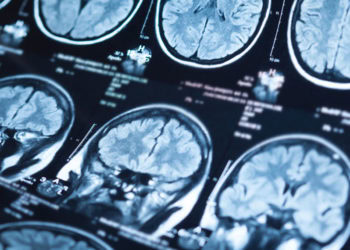
Participants completed assessments of depression symptoms using the Hamilton Depression Rating Scale and the Beck Depression Inventory, as well as manic symptoms using the Young Mania Rating Scale. They also rated their mood on a visual analog scale each morning. Magnetic resonance imaging (MRI) was used to measure changes in brain volume before and after the treatment.
The results showed a significant increase in the volume of the left hippocampal dentate gyrus in the group that received bright light therapy, while no such change was observed in the dim light group. Both groups experienced a reduction in depressive symptoms, but the improvement was more pronounced in the bright light group.
A decrease in manic symptoms was observed only in the bright light group. However, this group had slightly higher manic symptoms at the start of the study, so their scores became comparable to the control group by the end. Additionally, the researchers found a strong association between the increase in left hippocampal dentate gyrus volume and improvements in mood and depressive symptoms.
“Our study results suggest that BLT [bright light therapy] exhibits a dose-response effect, wherein light exposure of a higher intensity is more efficacious than that of a lower intensity in terms of increasing the volume of the left DG [dentate gyrus region of the brain] and alleviating depression symptoms. Thus, BLT may trigger neurogenesis [the creation of new neurons] in the left DG of patients with mood disorders, indicating a novel mechanism of action of BLT,” the study authors concluded.
The study sheds light on a mechanism through which bright light therapy might help with depression symptoms. However, it should be noted that the study was conducted on a small group of participants. Future research with larger sample sizes is needed to confirm these findings and further explore the potential of bright light therapy as a treatment for mood disorders.
The paper, “Increased volume of the left hippocampal dentate gyrus after 4 weeks of bright light exposure in patients with mood disorders: a randomized controlled study,” was authored by Hirofumi Hirakawa, Takeshi Terao, Koji Hatano, Masanao Shirahama, Tsuyoshi Kugimiya, Kentaro Kohno, Hiroyuki Matsuta, Tsuyoshi Shimomura, and Minoru Fujiki.