The idea that artistic creativity and mental illness are connected has fascinated people for centuries. But is there any scientific basis for this belief? A recent study has sought to provide more empirical evidence on this topic by analyzing the mental health of some of the most creative individuals across different fields.
The study, published in the journal Psychology of Aesthetics, Creativity, and the Arts, found that famous artists indeed had higher lifetime rates of mental disorders than both scientists and athletes, supporting the notion that there might be a connection between artistic creativity and psychopathology.
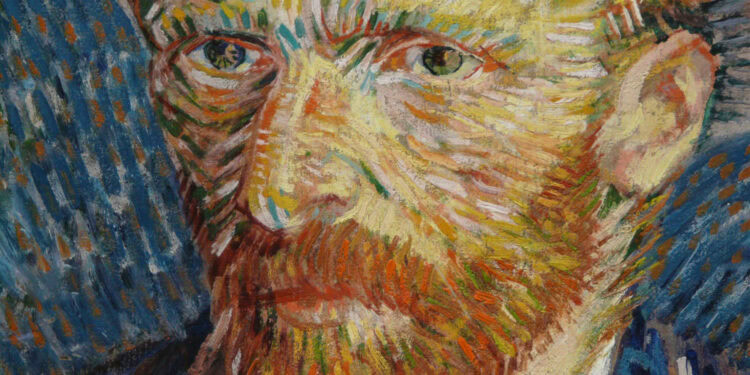
The “mad genius” theory suggests a strong connection between exceptional creativity and mental illness, an idea that dates back to ancient times. Aristotle is often credited with the early formulation of this concept, as he reportedly said, “There is no great genius without some touch of madness.” This idea has been popularized through historical examples like Vincent van Gogh and Sylvia Plath, who were both highly creative and struggled with severe mental health issues.
The theory proposes that the qualities driving extraordinary creativity, such as originality and divergent thinking, may also predispose individuals to conditions like depression or bipolar disorder. While some studies have found higher rates of mental disorders among creative individuals, especially in the arts, this theory remains controversial.
“It is a very big and important question that goes back to the ancient Greeks (the “mad genius” theory), and the research on the topic was contradictory. So it needed more nuanced distinction,” said study author Gregory J. Feist, a professor at San Jose State University and author of The Psychology of Science and the Origins of the Scientific Mind.
The study aimed to explore the relationship between creativity and mental health by examining the lifetime mental health histories of 199 eminent individuals across three distinct domains: creative arts, creative sciences, and athletics. A central objective of this research was to determine whether the observed link between mental illness and eminence could be attributed to fame itself, rather than creativity. To test this, the researchers used famous athletes as a control group, since athletes, unlike artists and scientists, are not typically recognized for their creativity but share a comparable level of fame.
The researchers selected 104 artists, 68 scientists, and 27 athletes for analysis. These individuals were chosen based on their high levels of achievement and the availability of detailed biographies that included information on their personal lives. The biographies were carefully selected to ensure they provided enough relevant information for assessing mental health and were then digitized to allow for a more efficient and unbiased analysis.
To assess the presence of mental disorders, the researchers employed a team of trained raters who were blind to the identities of the individuals in the biographies. The raters evaluated each biography for signs of 19 different mental disorders, including depression, anxiety, substance abuse, and bipolar disorder. The evaluations were made using a three-point scale: not present, probable, and present.
The findings of the study revealed that artists had significantly higher lifetime rates of mental disorders compared to both scientists and athletes. Specifically, nearly 60% of the artists were found to have had at least one form of psychopathology during their lives, with this rate increasing to 83% when including cases where a disorder was deemed “probable.” In contrast, 35% of scientists and 48% of athletes were found to have had at least one mental disorder, with rates increasing to 59% for both groups when probable cases were included.
Among the specific disorders, artists were particularly prone to depression, substance abuse, and anxiety. Writers and visual artists showed the highest risks, with rates of depression and bipolar disorder being significantly higher than those observed in the athlete group. On the other hand, scientists did not show an overall elevated rate of mental disorders.
The findings indicate “that the relationship between mental health and creativity is complex: there is a positive relationship for world-class creative artists (including writers, musicians, poets, actors) but not for world-class creative scientists (in general) relative to famous non-creative people (athletes),” Feist told PsyPost. “In addition, the severity and kind of mental illness are relevant; the severity tends to be moderate, and the kind tends to be emotional disorders like anxiety and depression/manic depression.”
“The near-total absence of mental illness in highly creative scientists is not surprising, but calls out for a theoretical explanation that is currently lacking,” Feist added.
Although this study offers valuable insights, it does have its limitations. One issue is the potential for selection bias. Biographies are often written about individuals who lead particularly interesting or dramatic lives, which could skew the sample towards those with more noticeable mental health issues.
Another limitation is the retrospective nature of the study, which relied on biographical information rather than direct clinical assessments. This method, while informative, is inherently limited by the availability and accuracy of historical records and the interpretations of biographers. Additionally, the sample was not entirely balanced in terms of gender or ethnicity, with a predominance of white males.
“We make little claim that this investigation settles the ‘debate’ over the ‘mad-genius,'” the researchers concluded. “At best, it confirms one aspect of it, namely the higher rate of pathology and the different pathologies in the creative arts than other creative domains. Many questions remain. For example, as we mentioned above, the biggest question left unresolved is the gender question. Are these patterns that we found in a heavily male-dominated sample the same in famous creative women? Our dataset does not allow this question to be satisfactorily answered.”
“As is true of all research… for each question answered, others arise and await further attention from future investigators. The topic of psychopathology and world-class creative achievement is a rich and complex topic and will provide material for researchers for years to come.”
The study, “Psychopathology in World-Class Artistic and Scientific Creativity,” was authored by Gregory J. Feist, Daniel Dostal, and Victor Kwan.