Subscribe
The latest psychology and neuroscience discoveries.
My Account
  • Mental Health
  • Social Psychology
  • Cognitive Science
  • Psychopharmacology
  • Neuroscience
  • About
No Result
View All Result
PsyPost
PsyPost
No Result
View All Result
Home Exclusive Cognitive Science

The brain’s social network: Nerve cells interact like friends on Facebook

by University of Basel
February 4, 2015
in Cognitive Science
Photo credit: Biozentrum, University of Basel

Photo credit: Biozentrum, University of Basel

Share on TwitterShare on Facebook

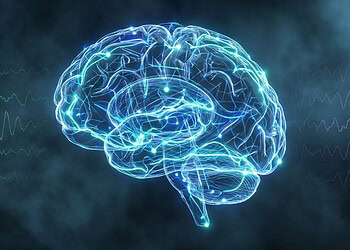
Neurons in the brain are wired like a social network, report researchers from Biozentrum, University of Basel. Each nerve cell has links with many others, but the strongest bonds form between the few cells most similar to each other. The results are published in the journal Nature.

Nerve cells form a bewildering meshwork of connections called synapses – up to several thousand per cell. Yet not all synaptic connections are equal. The overwhelming majority of connections are weak, and cells make only very few strong links. “We wanted to see if there are rules that explain how neurons connect in complex networks comprising millions of neurons,” says Professor Thomas Mrsic-Flogel, the leader of the research team from the Biozentrum (University of Basel) and UCL (University College London). “It turns out that one of the rules is quite simple. Like-minded neurons are strongly coupled, while neurons that behave very differently from each other connect weakly or not at all.”

Strong connections between close friends

The researchers focused on the visual area of the cerebral cortex, which receives information from the eye and gives rise to visual perception. Neurons in this part of the brain respond to particular visual patterns, but it is difficult to untangle which cells are synaptically connected because there are many thousands of them densely packed (close to 100.000 per cubic millimeter).

Using a combination of high resolution imaging and sensitive electrical measurements, the researchers found that connections between nearby neurons are organized like a social network. Sites like Facebook keep us in contact with large numbers of acquaintances, but most people have a much smaller circle of close friends. These are usually the friends with which we have most in common, and their opinions can be more important to us than the views of the rest.

“Weak contacts in the brain have little impact, despite being in the majority,” says Mrsic-Flogel. “The few strong connections from neurons with similar functions exert the strongest influence on the activity of their partners. This could help them work together to amplify specific information from the outside world.”

Weak connections could be important for learning

But why do neurons share such large numbers of weak connections? “We think this might have to do with learning,” says Dr Lee Cossell, one of the lead authors of the study. “If neurons need to change their behavior, weak connections are already in place to be strengthened, perhaps ensuring rapid plasticity in the brain.” As a result, the brain could quickly adapt to changes in the environment.

This research is part of worldwide effort to shed light on how the brain generates perceptions, thoughts and actions by mapping the brain’s wiring diagram. “It reveals how networks of neurons interact together to process information. Understanding how neurons connect will pave the way for building detailed computer simulations of the brain,” says Mrsic-Flogel. Research that explores how neurons connect will also be important for understanding neurological diseases. “If we know what the pattern of connections in the brain should look like, then we can start to figure out what happens when things go wrong, for example, in schizophrenia or autism,” adds Mrsic-Flogel.

RELATED

Girl taking a selfie on her smartphone, enjoying a drink, smiling and outdoors, illustrating social media, happiness, and modern communication.
Cognitive Science

Large meta-analysis links TikTok and Instagram Reels to poorer cognitive and mental health

December 18, 2025
Ghost sensations reveal a split between body image and reality
Cognitive Science

Ghost sensations reveal a split between body image and reality

December 17, 2025
New psychology research flips the script on happiness and self-control
Memory

Deep sleep reorganizes brain networks used for memory recall

December 16, 2025
New psychology research flips the script on happiness and self-control
Memory

Couples share a unique form of contagious forgetting, new research suggests

December 16, 2025
Does yoga and mindfulness training improve depression and anxiety among middle school students?
Cognitive Science

Formal schooling boosts executive functions beyond natural maturation

December 15, 2025
Higher diet quality is associated with greater cognitive reserve in midlife
Cognitive Science

Higher diet quality is associated with greater cognitive reserve in midlife

December 12, 2025
Scientists just uncovered a major limitation in how AI models understand truth and belief
Cognitive Science

New review challenges the idea that highly intelligent people are hyper-empathic

December 11, 2025
Scientists just uncovered a major limitation in how AI models understand truth and belief
Cognitive Science

Study reveals visual processing differences in dyslexia extend beyond reading

December 11, 2025

PsyPost Merch

STAY CONNECTED

LATEST

Brief computer-assisted therapy alters brain connectivity in depression

Scientists propose cognitive “digital twins” to monitor and protect mental health

Trigger sounds impair speech perception for people with misophonia

Study sheds light on household labor dynamics for women partnered with women vs. men

Women are more accurate than men at detecting signs of sickness in faces

Alcohol use linked to lower psychological resilience in soldiers, study finds

Large meta-analysis links TikTok and Instagram Reels to poorer cognitive and mental health

Early trauma may hinder the ability to communicate sexual needs and boundaries in adulthood

RSS Psychology of Selling

  • Study finds consumers must be relaxed for gamified ads to drive sales
  • Brain scans reveal increased neural effort when marketing messages miss the mark
  • Mental reconnection in the morning fuels workplace proactivity
  • The challenge of selling the connected home
  • Consumers prefer emotionally intelligent AI, but not for guilty pleasures
         
       
  • Contact us
  • Privacy policy
  • Terms and Conditions
[Do not sell my information]

Welcome Back!

Login to your account below

Forgotten Password?

Retrieve your password

Please enter your username or email address to reset your password.

Log In

Add New Playlist

Subscribe
  • My Account
  • Cognitive Science Research
  • Mental Health Research
  • Social Psychology Research
  • Drug Research
  • Relationship Research
  • About PsyPost
  • Contact
  • Privacy Policy