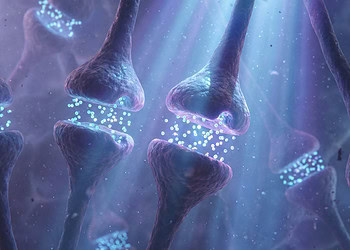
Since Hans Berger first recorded neural activity from the human scalp with an electroencephalograph (EEG), in 1924, neuroscientists have been trying to make sense of the electrical pulses emitted by our grey matter. Recent studies have focused on brain oscillations (commonly called brain waves) which are thought to be the mechanism by which different brain regions communicate with each other. Our latest study has shed some light on these curious oscillations. We have discovered that each region of the brain has a uniquely identifiable pattern of oscillations – their own rhythmic fingerprint.
Berger was the first to notice that neural activity seems to fluctuate at a rate of 10 cycles per second. He called this rhythm the alpha-wave. Since then, the methods to identify rhythmic activity have improved considerably, from counting how often a wave fluctuates within a second, to elaborate mathematical procedures, called spectral analyses.
Alpha is still the most obvious oscillation, but other types of oscillations (faster and slower ones) have been discovered. Neuroscientists have already found out a lot about specific functions of these rhythms, but it is difficult to get a clear picture of oscillations as they seem to be distributed more or less randomly across the brain.
In our study, we looked for patterns in the occurrence of oscillations that would help us to get a more organised view of rhythmic brain activity. We recruited 22 volunteers to participate in the experiment. Their instruction was to rest for a few minutes, with open eyes, while their neural activity was recorded.
We used a magnetoencephalograph (MEG, the magnetic equivalent of EEG) to measure magnetic fields produced by neural activity. From the recording of the magnetic fields it is possible to infer where in the brain the activity came from. This spontaneous brain activity can then be analysed in terms of the rhythms that occur there. By observing these oscillations over several minutes, we found that each brain area has its own characteristic mix of different rhythms over time.
In some regions, for example the visual cortex, there would only be two relatively slow rhythms (cycling at about ten times per second – the alpha rhythm. But in other regions, for example in the middle of the brain that is involved in things such as movement, learning and reward, there would be up to nine rhythms at many different time scales. These different oscillations could reflect how a particular region communicates with other regions in the brain. This means that regions with many different rhythms might have more complex tasks that involve communication with many other parts of the brain.
Although people can be quite different from each other in terms of their brain anatomy, we found that these rhythmic fingerprints were very similar across our healthy volunteers. In fact, they were so similar that we could take new data from other participants and label their brain areas based only on their oscillations, without knowing where the oscillations came from.
Potential diagnostic tool
Now that we know what pattern of oscillations to expect in each part of the brain in young, healthy adults, it should be possible to find differences in patients with illnesses that are expressed in these oscillations. As patients only have to rest and are not required to perform any tasks, using this as a tool would be possible even with severely impaired people.
Through the detailed analysis of oscillations in each brain part, it is possible to find small abnormalities that are only apparent in one particular rhythm in one brain region. One potential application of this could be to identify abnormal oscillations in a specific brain area in a patient and then use electric or magnetic brain stimulation to modulate only these specific oscillations.
These kinds of noninvasive brain stimulation methods have already been proved successful in a few studies. For example, in patients with post-traumatic stress disorder, stimulating the frontal part of the brain with magnetic pulses has been shown to reduce their symptoms, improve mood and reduce anxiety. Knowing exactly how and where to stimulate brain oscillations in patients would be a big step towards improving these conditions.

By Anne Keitel, , University of Glasgow and Joachim Gross, Professor in Psychology, University of Glasgow
This article was originally published on The Conversation. Read the original article.