PsyPost
  • Mental Health
  • Social Psychology
  • Cognitive Science
  • Neuroscience
  • About
No Result
View All Result
Join
My Account
PsyPost
No Result
View All Result
Home Exclusive Social Psychology

Victims are perceived as more morally virtuous than non-victims, study finds

by Mane Kara-Yakoubian
November 19, 2021
Reading Time: 2 mins read
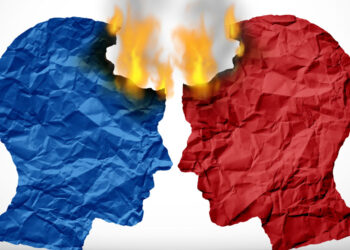
(Image by Talip Özer from Pixabay)

(Image by Talip Özer from Pixabay)

Share on TwitterShare on Facebook

A series of 17 studies published in Science Advances document the Virtuous Victim effect – the tendency for people to see victims of wrongdoing as more morally virtuous than non-victims who have behaved in an identical manner.

Narratives about victims of immoral acts are prevalent in contemporary discourse – found in personal and work lives, the news, and on social media. Perceptions of victims may have societal implications, including the shaping of policy and legal responses, the treatment of victims in their social networks, the decisions victims make about whether their story ought to be shared with others, and the societal framing and evaluation of moral debates regarding allegations of victimization.

Some research suggests that at times victims are blamed for causing their own victimization. Other bodies of work have found that people perceive victims as less agentic and more passive. In this work, Jillian J. Jordan and Maryam Kouchaki ask: “How do people perceive the moral character of victims?”

A total of 9,676 participants were recruited across 17 experiments, with 16 of the studies conducted online and 1 conducted in a laboratory. The basic design of this research involved assigning participants to a neutral or victim condition, where they were presented with narratives that contained identical information regarding a target character’s behaviour. In the victim condition, participants were informed that another character treated the target immorally, while this was not the case for the neutral condition.

After reading narratives, participants provided a morality and trustworthiness rating for the target character. Some experiments also included secondary measures, such as sympathy felt for the target. This basic design was applied to six different narratives with six distinct moral transgressions (e.g., theft, verbal attack, medical malpractice).

The researchers also explored potential boundaries of the Virtuous Victim effect by manipulating variables such as first or third person narration, target gender, and competence. As well, they explored possible explanations for the effect, including the Justice Restoration Hypothesis which argues that victims are seen as moral because this motivates punishment of perpetrators and helping of victims, and people are frequently incentivized to enact or encourage such justice-restorative actions.

Jordan and Kouchaki found that victims are often seen as more virtuous than non-victims across a wide range of moral transgressions – not because of how they have behaved, but because of how others have mistreated them. This effect was not moderated by the victim’s race or gender. In exploring the potential boundaries of this effect, the researchers found that the effect may be especially likely for victim narratives that describe the perpetrator and are narrated in third person. Further, this effect was specific to victims of immortality, and did not extend to accidental victims, or to moral virtue (i.e., positive but nonmoral traits, such as athleticism and funniness).

Additionally, the results provide support for the Justice Restoration Hypothesis, which suggests that seeing victims as virtuous motivates justice-restorative action. Importantly, introducing disincentives for such action eliminated the Virtuous Victim effect.

Google News Preferences Add PsyPost to your preferred sources

One limitation of this work is that it relied on hypothetical narratives, with most of these presented in third person. The authors suggest that future work explore perceptions of real-world victims, both in third person contexts (e.g., news coverage, gossip), as well as personal story sharing.

The study, “Virtuous victims”, was authored by Jillian J. Jordan and Maryam Kouchaki.

RELATED

White Americans who dislike Jews also tend to endorse anti-Muslim attitudes, study suggests
Political Psychology

New psychological model explains why antisemitism emerges on both the right and the left

June 7, 2026
New psychology research shows people consistently overestimate how much others lie and cheat
Moral Psychology

New psychology research shows people consistently overestimate how much others lie and cheat

June 7, 2026
Americans misperceive the true nature of political debates, contributing to a sense of hopelessness
Political Psychology

New research challenges a major theory about political bias

June 6, 2026
Scientists analyzed 38 million obituaries and found a hidden story about American values
Political Psychology

Strong approval of the National Rifle Association is linked to support for political violence

June 6, 2026
Mental health might be emerging as a source of political identity, study finds
Mental Health

Mental health might be emerging as a source of political identity, study finds

June 6, 2026
Neuroscience study shows how praise, criticism, and facial attractiveness interact to influence likability
Neuroimaging

Brainwaves reveal two different biological roots for psychopathic behavior

June 5, 2026
Political anger fuels support for violence mainly when voters feel ignored by the system
Political Psychology

Your political ideology predicts which World Cup icon you prefer: Lionel Messi or Cristiano Ronaldo

June 5, 2026
Political anger fuels support for violence mainly when voters feel ignored by the system
Political Psychology

Political anger fuels support for violence mainly when voters feel ignored by the system

June 5, 2026

Follow PsyPost

The latest research, however you prefer to read it.

Daily newsletter

One email a day. The newest research, nothing else.

Google News

Get PsyPost stories in your Google News feed.

Add PsyPost to Google News
RSS feed

Use your favorite reader. We also syndicate to Apple News.

Copy RSS URL
Social media
Support independent science journalism

Ad-free reading, full archives, and weekly deep dives for members.

Become a member

Trending

  • Study finds no association between frequency of video game play and spatial abilities
  • The location of your body fat is linked to how fast your brain ages
  • Psychopathy and Machiavellianism often look identical, but daily behavior suggests otherwise
  • Not having children isn’t linked to lower happiness, but having more than you wanted is
  • Visual experience physically shapes the brain’s feedback loops

Science of Money

  • New study sheds light on how self-control and confidence shape your financial well-being
  • Economists pull apart the two reasons to raise the minimum wage
  • Can ChatGPT beat the S&P 500? Eight months of daily picks suggest no
  • When inheritances shrink inequality, and when they widen it: A six-country look at the tipping point
  • Why winning makes some gamblers bet bigger: the psychological traits behind the “house money” effect

PsyPost is a psychology and neuroscience news website dedicated to reporting the latest research on human behavior, cognition, and society. (READ MORE...)

  • Mental Health
  • Neuroimaging
  • Personality Psychology
  • Social Psychology
  • Artificial Intelligence
  • Cognitive Science
  • Psychopharmacology
  • Contact us
  • Disclaimer
  • Privacy policy
  • Terms and conditions
  • Do not sell my personal information

(c) PsyPost Media Inc

Welcome Back!

Login to your account below

Forgotten Password?

Retrieve your password

Please enter your username or email address to reset your password.

Log In

Add New Playlist

Subscribe
  • My Account
  • Cognitive Science Research
  • Mental Health Research
  • Social Psychology Research
  • Drug Research
  • Relationship Research
  • About PsyPost
  • Contact
  • Privacy Policy

(c) PsyPost Media Inc