

The gray matter volume of a brain region involved in fear and avoidance responses appears to predict treatment outcomes in patients with anxiety disorders, according to new research published in Neuropsychopharmacology.
“Anxiety disorders are among the most prevalent mental health conditions in the US and are associated with significant economic burden worldwide,” explained study author Katie Burkhouse, an assistant professor of psychiatry at the University of Illinois at Chicago and head of the Families, Affective Neuroscience, and Mood Disorders Lab.
“Unfortunately, despite decades of research, many individuals do not respond to our first-line treatments for anxiety disorders, such as SSRIs (such as Prozac and Celexa) or cognitive behavioral therapy (CBT), especially patients presenting with more than one mental health disorder. Thus, the primary objective of this research was to identify a brain-based predictor of treatment response for patients with comorbid anxiety disorders in an attempt to use this information to guide patients toward treatments that have the highest likelihood of success.”
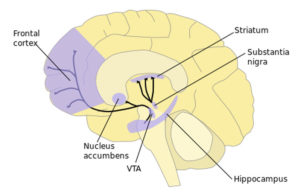
In the study, 81 participants with a current anxiety disorder were randomly assigned to receive either 12 weeks of CBT or SSRI treatment. The researchers used magnetic resonance imaging to measure the gray matter volume of the amygdala, nucleus accumbens, and ventromedial prefrontal cortex prior to treatment.
After controlling for age, sex, and total brain volume, the researchers found that participants with greater nucleus accumbens volume prior to treatment tended to see greater reductions in anxiety symptoms after the 12 weeks. The results were similar for both CBT and SSRI treatment.
“In our study, we explored whether brain volume of regions supporting fear and avoidance responses, which are heavily impacted in anxiety disorders, may be used to predict which individuals respond to treatment. We found that for adults with anxiety, the individuals that responded best to psychosocial or SSRI treatment were those who had greater pre-treatment volume in the nucleus accumbens, a region that plays a key role in both passive and active avoidance behavior,” Burkhouse told PsyPost.
The researchers replicated their results in another experiment with 55 youth who were between the ages of 7 and 19.
“The novel piece of our study was the ability to reproduce this effect in a separate sample of children and adolescents with anxiety disorders. Thus, improving avoidance responses may be one way in which these first-line treatments work for reducing anxiety among youth and adults, and these effects may be most meaningful for individuals who exhibit greater pre-treatment deficits in neural systems underlying avoidance behaviors,” Burkhouse said.
But the study — like all research — includes some limitations.
“Although the focus on patients with anxiety disorders and comorbid conditions (e.g., multiple anxiety disorders or anxiety with depression) was intentional to increase the generalizability of the current findings to the community and to understand predictors of treatment response for this population, we were unable to examine whether the effects were specific to a certain anxiety diagnosis (such as social anxiety or generalized anxiety),” Burkhouse explained.
“Future studies should explore whether findings are specific to comorbid anxiety profiles or are observed for specific diagnoses. Additionally, although we were able to reproduce our treatment finding in a separate sample, the total proportion of variance in treatment outcome explained by our brain-based predictor was still relatively low (approximately 20%), which is not uncommon for treatment outcome studies.”
“Thus, continued work in this area is needed to improve prediction models. For example, combining structural data (e.g., brain volume) with other measures of threat processing and avoidance behaviors (e.g., functional neuroimaging) may result in improved accuracy and prediction in future anxiety treatment outcome studies,” Burkhouse said.
The nucleus accumbens has long been associated with motivation and reward. The brain structure might be related to vulnerability to stress as well, and it also appears to be involved in emitting or withholding a response to avoid harm.
“The present study benefited from the ability to reproduce the treatment prediction finding in a distinct sample of youth with anxiety disorders. Given that anxiety disorders are most likely to onset during childhood and adolescence, identifying predictors of response to treatment for this developmental population is essential,” Burkhouse added.
“To our knowledge, this is the first study to include a separate independent sample when testing neural predictors of treatment response. The ability to reproduce findings in separate samples is critical for advancing the field of precision medicine.”
The study, “Nucleus accumbens volume as a predictor of anxiety symptom improvement following CBT and SSRI treatment in two independent samples“, was authored by Katie L. Burkhouse, Jagan Jimmy, Nicholas Defelice, Heide Klumpp, Olusola Ajilore, Bobby Hosseini, Kate D. Fitzgerald, Christopher S. Monk, and K. Luan Phan.