
Many people associate Parkinson’s disease with the physical symptoms it causes – such as tremors, muscle stiffness and balance problems – which can all make everyday activities difficult. But just because Parkinson’s makes movement harder, doesn’t mean those with the disease should stop moving.
This was highlighted in a recent video posted by British fitness influencer Joe Wicks on his YouTube channel. In the video, Wicks guides viewers through exercises they can do if they have Parkinson’s disease – and explains why it’s important to keep moving.
There have been several scientific studies exploring the impact of different types of exercise on people with Parkinson’s disease. On the whole, most types of exercise have been shown to have a positive effect on people with Parkinson’s – improving quality of life and physical symptoms. Aerobic exercise appears to be particularly beneficial.
One clinical trial, for instance, found that high-intensity exercise may reduce the severity of motor symptoms in people recently diagnosed with Parkinson’s disease.
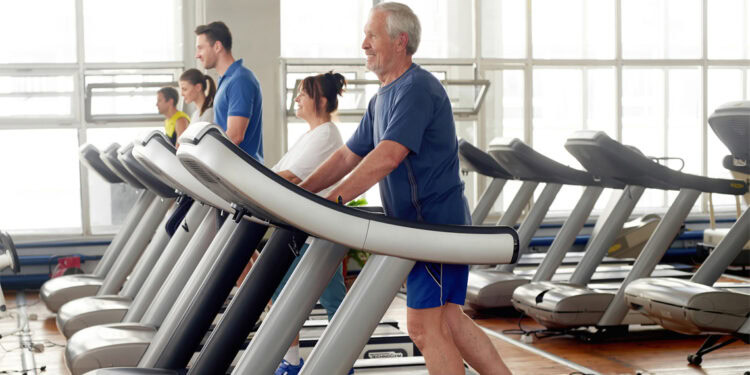
To conduct their study, researchers split participants into three groups. One group performed a high-intensity treadmill routine, running close to maximum effort. Another performed moderate-intensity exercise, running at a light jog. The last group were given no instructions to perform a treadmill-based exercise regime. The exercise regimes were performed for 30 minutes between three and four times a week for a period of six months.
At the end of the study, the participants who had performed the high-intensity exercise had less severe motor symptoms compared to the other groups. None of the participants in the study had yet been prescribed medication to manage their symptoms – so the positive effects appear to be solely down to exercise.
Another long-term global study of 2,940 people with Parkinson’s found that those who said they consistently exercised for at least 2.5 hours a week (around 20 minutes per day) had a better quality of life compared to those who didn’t exercise at all. The greatest benefit was seen in participants with advanced Parkinson’s disease.
However, given that all the participants were taking medication to manage their symptoms at the time of the study, it’s difficult to know if exercise alone explained this link.
Maintaining a regular exercise routine may also slow the worsening of Parkinson’s symptoms. A study, which looked at 237 people recently diagnosed with Parkinson’s, found that those who reported doing moderate exercise 150 minutes a week showed less decline in motor symptoms after six years compared to those who did less exercise and were less active in general.
This was true for many different types of physical activity – including doing household chores – so long as the exercise was regular and sustained throughout the study.
It isn’t only high-intensity aerobic exercise that may be beneficial to people with Parkinson’s. A large systemic review, which examined 156 randomised clinical trials and data from 7,939 participants, found that many types of exercise – from swimming to walking – can improve movement and overall quality of life in people with Parkinson’s.
The authors also concluded that there was no evidence that one kind of exercise worked better than others.
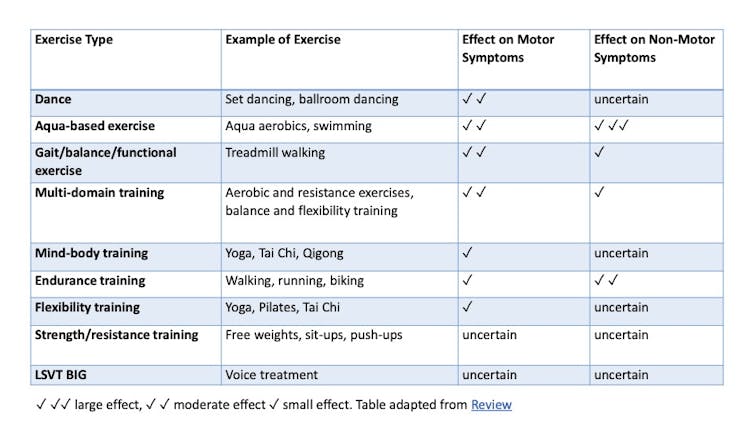
Research has also shown that regular physical activity may help prevent other Parkinson’s symptoms from worsening – such as sleep problems.
While researchers still aren’t sure why exercise may improve symptoms for people with Parkinson’s, some evidence from laboratory and clinical studies shows that exercise may protect the brain’s neurons (the nerve cells which send messages from the brain throughout the body) by releasing a protein in the brain called brain-derived neurotrophic factor.
This is a protein which can promote the survival and regrowth of neurons and is present at higher levels during physical exercise. Levels of brain-derived neurotrophic factor have been shown to be lower in people with Parkinson’s.
Another protein, called irisin, which is made by muscle cells when we exercise, may also help protect neurons, as shown in cell models of Parkinson’s disease.
Tailored workouts
While exercise has many benefits for people with Parkinson’s, it should be used as a complement to other treatments, such as medications which help manage symptoms.
It’s also important that people with Parkinson’s consult their GP when putting together an exercise regime. This is to avoid risk of pain, injury or falls by determining which exercises suit each person.
Exercises which maintain and improve strength and balance are recommended. Pilates, for example, has been shown to benefit balance and overall strength in people with Parkinson’s. Yoga can also improve flexibility and overall mental wellbeing in people with Parkinson’s, while balance training (such as tai chi or yoga) may prevent falls.
If you’re up for something more intense, strength training has been shown to improve slowness of movement. Swimming is also a good option, and may especially be beneficial for those who with joint stiffness or pain.
But even if you’re having trouble motivating yourself to exercise, many types of physical activity may be helpful as long as you do them regularly. For example, walking, gardening and household chores (such as cooking, hoovering and dusting) may prevent symptoms worsening and improve quality of life. And, these activities may be easier to incorporate into your daily routine than a gym workout.
This article is republished from The Conversation under a Creative Commons license. Read the original article.