In a new study, neuroscientists have delved deep into the human brain’s approach to moral judgment. Their findings reveal that our moral decisions activate various, distinct areas of the brain, challenging the notion that morality is processed in a single “moral hotspot.” The study, published in Nature Human Behaviour, also uncovered intriguing variations in moral perception based on political ideology.
The motivation behind this study lies in one of moral science’s most heated debates: whether our moral reasoning is a monolithic process or a diverse one. At the heart of this debate is the Moral Foundations Theory, which argues for the latter. According to this theory, our moral compass is not guided by a single north star but by multiple, contextually variable moral intuitions.
These foundations include care, fairness, loyalty, authority, sanctity, and more recently identified, liberty. Essentially, this theory suggests that our moral judgments stem from different mental processes, evolved to tackle specific social challenges. The researchers sought to investigate whether our moral judgments about different areas like care, fairness, or loyalty are processed in separate neural systems or whether they converge within a unified framework.
“Complex and context-dependent moral judgment is a unique human capacity and at the core of most social interactions among humans, either directly person to person, or mediated. As such, it is an important and fascinating topic to study for a cognitive psychologist, neuroscientist, and communication scientist,” said study author René Weber, a professor at the University of California Santa Barbara and director of UCSB’s Media Neuroscience Lab.
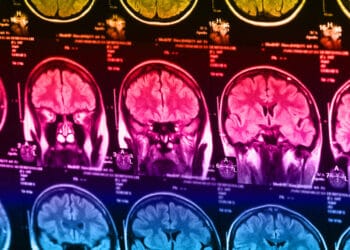
To explore this, the researchers conducted an experiment involving 64 participants, mainly young adults from the University of California, Santa Barbara community. Participants underwent a functional Magnetic Resonance Imaging (fMRI) scan, a technology that visualizes brain activity by detecting changes associated with blood flow.
During the scans, participants engaged in a task involving Moral Foundations Vignettes – short descriptions of actions violating specific moral foundations. The vignettes also included non-moral social norm transgressions, such as eating cereal with water instead of milk, which served as a control. Participants rated these actions based on their perceived moral wrongness. This setup allowed the researchers to observe which parts of the brain were activated during different moral judgments.
As expected, the moral violations (physical care, emotional care, fairness, liberty, authority, loyalty, and sanctity) were judged as more morally wrong than social norm transgressions. Judging moral transgressions also took longer on average than judging social norm transgressions, suggesting a deeper cognitive process involved in evaluating moral actions.
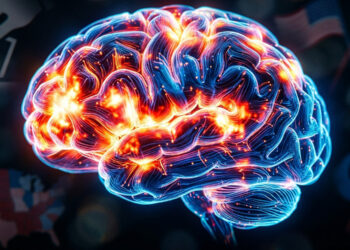
The researchers found that different brain areas were activated for moral violations compared to social norm transgressions. A distributed network involving areas like the dorsomedial prefrontal cortex, posterior cingulate cortex, temporoparietal junction, and primary visual cortex showed common activation across all moral foundations. This suggests that these areas of the brain are pivotal in discerning moral judgments from non-moral social norm transgressions.
When examining how specific moral foundations were processed in the brain, the researchers discovered that each of these moral categories elicited unique patterns of brain activity. This finding is particularly significant as it aligns with the Moral Foundations Theory, which posits that different moral considerations are rooted in separate cognitive processes.
A significant achievement of the study was the development of a decoding model capable of predicting which specific moral foundation or social norm an individual was judging, based on the activity patterns across their brain. This level of prediction would not be feasible if all moral categories were processed uniformly at the neurological level.
“Our findings indicated that there are very specific neural signatures of different moral dimensions or foundations,” Weber told PsyPost. “These signatures can even be used to decode moral judgment, that is, to predict individuals’ moral judgement from their brain activation pattern. The accuracy with which this can be done was surprising to us. We are currently testing moral decoding across different datasets and problems and try to replicate our findings in our Nature Human Behavior article.”
The researchers also found that liberals and conservatives exhibited distinct patterns of brain activation when making moral judgments. This suggests that an individual’s political orientation is not just a reflection of their social and moral beliefs, but it also influences the fundamental neural processes underlying these beliefs.
Liberals showed more pronounced neural responses to moral transgressions related to care/harm and fairness/cheating. These foundations typically protect the rights and freedoms of individuals. The heightened sensitivity of liberals to these moral dimensions was reflected in the specific activation patterns in their brains.
On the other hand, conservatives displayed greater neural engagement when processing moral issues related to loyalty/betrayal, authority/subversion, and sanctity/degradation. These categories generally operate at the group level, emphasizing group cohesion, respect for authority, and purity. The brain scans of conservatives showed that they are neurologically more attuned to these aspects of moral reasoning.
For example, in judging individualizing versus binding moral foundations, the lingual gyrus, visual cortex, anterior prefrontal cortex, and superior temporal cortex showed significant differences in activity between liberals and conservatives. These areas are associated with various cognitive functions, including semantic processing and intention attribution, suggesting that ideological differences might affect fundamental cognitive processing during moral judgments.
Together, the findings challenge the idea of a singular ‘moral hotspot’ in the brain. Instead, it suggests that our moral judgments are the result of a more distributed neural process.
“Morality or moral judgment is not just ‘one thing’ or arises from just one concern (e.g. from harming or caring for other individuals),” Weber told PsyPost. “At its core, morality’s function is to facilitate (group) cohesion and cooperation among humans. Because there are many cooperative problems to solve, moral judgement is diverse, and different individuals develop different moral sensibilities.”
“In many ways, I think our findings clarify that monism and pluralism are not necessarily mutually exclusive approaches,” added first author Frederic Hopp, who led the study as a doctoral student in the Media Neuroscience Lab. “We show that moral judgments of a wide range of different types of morally relevant behaviors are instantiated in shared brain regions.”
Despite these significant findings, the study has its limitations. For one, the sample size and demographic (mostly young, university-affiliated adults) might not represent the full spectrum of moral cognition across different ages, cultures, and backgrounds. Also, while fMRI is a powerful tool, it has its constraints in pinpointing the exact neural mechanisms at play.
Future research might focus on broadening the demographic diversity of participants or employing even more advanced neuroimaging techniques. Furthermore, exploring how moral decision-making develops over time and in different cultural contexts could add another layer of understanding to this complex facet of human cognition.
“There are dozens of additional questions to be addressed,” Weber said. “The question of why and how moral judgment works has been an important topic for scholars from diverse backgrounds for millennia, and it will keep scholars busy for a long time. For us, our next goals are testing different theories of moral judgment against each other and to replicate our findings in our Nature Human Behavior article in more diverse populations.”
The study, “Moral foundations elicit shared and dissociable cortical activation modulated by political ideology“, was authored by Frederic R. Hopp, Ori Amir, Jacob T. Fisher, Scott Grafton, Walter Sinnott-Armstrong, and René Weber.