![[Adobe Stock]](https://sp-ao.shortpixel.ai/client/to_webp,q_glossy,ret_img,w_750,h_375/https://www.psypost.org/wp-content/uploads/2024/11/psychedelic-psilocybin-mushrooms-750x375.jpg)
In a newly reported case, a 21-year-old Hispanic man in Texas died after stabbing himself in both eyes with a pencil during a bad psychedelic experience at home. The disturbing event, published in the American Journal of Ophthalmology Case Reports, provides a rare but sobering account of how the effects of psilocybin—the active compound in “magic mushrooms”—can, under certain conditions, result in tragic outcomes. The patient suffered severe brain damage after a pencil entered his skull through his eye socket, ultimately leading to his death despite intensive surgical care.
While psilocybin is being actively explored for its potential to treat mental health conditions like depression and post-traumatic stress disorder, the report underscores the need for greater awareness of potential psychiatric side effects, particularly when the substance is taken in unsupervised settings.
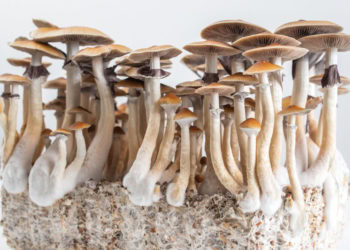
Psilocybin is a naturally occurring psychedelic compound found in certain species of mushrooms. Once ingested, it is converted into psilocin, which alters perception, mood, and thought patterns by stimulating serotonin receptors in the brain. Although it has a long history of traditional use, psilocybin has reemerged in recent years as a subject of modern medical interest due to its possible benefits in treating mood disorders.
Use of psilocybin has surged in the United States since 2019, following changes in public policy and a wave of scientific studies showing promising results. A recent analysis of five national datasets found that lifetime use of psilocybin among American adults rose from 10% in 2019 to over 12% in 2023. Past-year use jumped even more sharply, with a 44% increase among young adults and a 188% increase among those over 30. Despite growing interest in its therapeutic uses, psilocybin remains a federally controlled substance, and adverse events—though rare—can occur, particularly when consumed without medical guidance.
The young man described in the case report had a medical history that included attention-deficit/hyperactivity disorder and hypertension, which he managed with daily medications. He had no known history of depression, self-harm, or serious psychiatric illness. On the day of the incident, he returned home from work and consumed an unknown amount of psilocybin mushrooms.
Soon afterward, his behavior changed drastically. According to family members, he became agitated and paranoid—classic signs of a “bad trip.” Despite attempts by his stepfather and brother to calm him down, he broke a glass vase and began injuring himself. Then, in a horrific act, he placed a pencil upright on his desk and repeatedly drove his head onto it, penetrating both of his eye sockets. The pencil lodged deeply in the left eye and continued into his brainstem.
Emergency responders sedated and intubated him before transporting him to a hospital for advanced care. Initial brain scans showed that the pencil had punctured the pons, a region at the base of the brain vital for breathing and motor control. Imaging also revealed bleeding in the brain, skull fractures, and signs of vascular damage. Although the right eye had suffered a blowout fracture, the pencil had traveled through the left orbit and into the brainstem, causing a pontine hemorrhage and disruption of blood flow.
Over the next few days, a team of neurosurgeons and ophthalmologists worked to stabilize the patient and remove the foreign object. They used advanced imaging and surgical techniques, including vascular embolization and careful dissection, to extract the pencil. Despite these efforts, the patient’s condition worsened. He experienced ongoing brain swelling, additional bleeding, and increasing intracranial pressure. Eventually, he lost all brainstem reflexes and was declared brain dead five days after the injury.
While such a violent and tragic outcome is extremely rare, it is not entirely without precedent. Medical literature has documented other cases of self-inflicted injuries during psychotic episodes triggered by hallucinogens. In another recent case report, a 37-year-old man suffering from depression and alcohol abuse severed his penis with an axe after consuming psilocybin.
Most psilocybin-related adverse outcomes do not lead to death or severe injury. Psilocybin is generally considered to have a low risk of addiction and physical toxicity, but “bad trips” can lead to anxiety, confusion, hallucinations, and psychosis-like symptoms. One survey of over 1,900 users found that while the majority of “bad trips” resolved without medical intervention, 2.6% of respondents reported physically aggressive behavior, and 2.7% sought emergency care, while 11% acknowledged putting themselves or others at risk during the experience.
Although some might be tempted to draw broad conclusions from this single case, it is important to understand the nature and role of case reports in medicine. Case reports are detailed descriptions of unusual or novel clinical events involving one patient. They do not establish cause and effect or generalize to larger populations. However, they are valuable for identifying potential safety concerns, generating hypotheses for further research, and alerting clinicians to rare but serious risks. In this instance, the report highlights the potential dangers of unsupervised psychedelic use, particularly in individuals with unknown or latent vulnerabilities to psychiatric symptoms.
The patient’s history does not include any known mental illness or previous self-injurious behavior. However, the report notes that his biological father died by suicide, suggesting a possible hereditary vulnerability. This is consistent with existing concerns in the scientific literature that psychedelic substances may pose higher risks for individuals with a personal or family history of psychiatric illness.
More broadly, the case emerges at a time when public and scientific interest in psychedelics is at an all-time high. While early clinical trials have shown that psilocybin may help treat major depression and post-traumatic stress disorder, these results have come from structured settings with professional oversight, careful screening, and psychological support before, during, and after the experience. In contrast, recreational use—or self-medication without clinical guidance—can involve unknown doses, uncontrolled environments, and little preparation or safety planning.
The report, “Self-Inflicted Transorbital Intracranial Foreign Body Following Ingestion of Hallucinogenic Psilocybin Mushrooms,” was authored by Abigail M. Blanton, Pooja Parikh, Scott Zhou, Mohamed Mohamed, Rafael L. Ufret-Vincenty, and Ronald Mancini.