![[Adobe Stock]](https://sp-ao.shortpixel.ai/client/to_webp,q_glossy,ret_img,w_750,h_375/https://www.psypost.org/wp-content/uploads/2024/08/Thermometer-with-high-temperature-on-the-meadow-with-glowing-sun-background-750x375.jpg)
We are living in an age of anxiety. People face multiple existential crises such as climate change and conflicts that could potentially escalate into nuclear war.
So how do people cope with competing threats like this? And what happens to climate anxiety when wars suddenly erupt and compete for our attention?
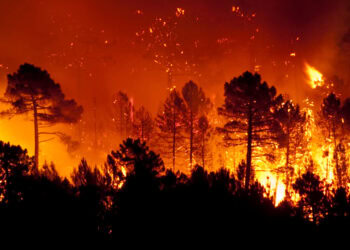
Climate change affects our physical and mental health, directly through extreme climate-related droughts, wildfires and intense storms. It also affects some people indirectly through so-called “climate anxiety”. This term covers a range of negative emotions and states, including not just anxiety, but worry and concern, hopelessness, anger, fear, grief and sadness.
A team of researchers led by Caroline Hickman from the University of Bath surveyed 10,000 children and young people (aged 16 to 25 years) in ten countries (Australia, Brazil, Finland, France, India, Nigeria, Philippines, Portugal, the UK and the US). They found that 45% of respondents said their feelings about climate change negatively affected their daily lives. It was worse for respondents from developing countries.
Climate anxiety can potentially serve a positive function. Anger, for example, can push people to act to help mitigate the effects of climate change.
But it can also lead to “eco-paralysis”, a feeling of being overwhelmed, inhibiting people from taking any effective action, affecting their sleep, work and study, as a result of them dwelling endlessly on the problem.
Climate anxiety is not included in the American Psychiatric Association’s authoritative guide to the diagnosis of mental disorders. In other words, it is not officially recognised as a mental disorder.
Some say this is a good thing. The author and Stanford academic Britt Wray wrote: “The last thing we want is to pathologise this moral emotion, which stems from an accurate understanding of the severity of our planetary health crisis.”
But if it is not officially recognised, will people take it seriously enough? Will they just dismiss people who suffer from it as “snowflakes” – too sensitive and too easily hurt by the hard realities of life. This is a major dilemma.
I explore how climate anxiety relates to other types of clinical anxiety in my recent book, Understanding Climate Anxiety, recognising that there are adaptive and non-adaptive forms of anxiety.
According to Steven Taylor, a clinical psychologist from the University of British Columbia, adaptive anxiety can “motivate climate activism, such as efforts to reduce one’s carbon footprint”. Maladaptive anxiety, however, may “take the form of anxious passivity”, he warned, where the person feels anxious but utterly helpless.
Identifying different types of climate anxiety, understanding their precursors and how they interact with personality is a major psychological challenge. Identifying ways of alleviating climate anxiety and making it more adaptive, and focused on possible climate mitigation, is a major societal challenge.
But there’s another important issue. Some global leaders, including Donald Trump, don’t believe in human-induced climate change, claiming it’s “one of the great scams”. He seems to view climate anxiety as an overblown reaction to propaganda pumped out by a biased media.
This can make the experience much worse for those who feel anxious but then having their feelings dismissed.
Some psychologists argue that climate anxiety can be a form of pre-traumatic stress disorder. This hypothesis arose from observations of climate scientists and their growing feelings of anger, distress, helplessness and depression as the climate situation has worsened.
In 2015, researchers devised a new clinical measure to assess pre-traumatic stress reactions using items found in the diagnostic and statistical manual for post-traumatic stress disorder, but now focused on the future rather than the past, asking about “repeated, disturbing dreams of a possible future stressful experience”, for example.
They tested Danish soldiers before their deployment in Afghanistan and found that “involuntary intrusive images and thoughts of possible future events … were experienced at the same level as post-traumatic stress reactions to past events before and during deployment”.
They also found that soldiers who experienced higher levels of pre-traumatic stress before deployment had an increased risk of post-traumatic stress disorder after their return from the war zone. Their hypervigilance primed their nervous system to react more strongly when anything untoward occurred.
This would suggest that we need to take stress reactions to future anticipated events such as climate change very seriously.
The crisis response
But how important is climate anxiety in the context of these other threats? Researchers assessed the emotional state and mental health of people aged 18 to 29 years in five countries (China, Portugal, South Africa, the US and UK) focusing on three global issues: climate change, an environmental disaster (the Fukushima nuclear accident in Japan), and the wars in Ukraine and the Middle East.
They found the strongest emotional engagement was with the ongoing wars, with climate change a close second, and the radiation leak third. The strongest emotional responses to the wars were concern, sadness, helplessness, disgust, outrage and anger. For climate change, the strongest responses were concern, sadness, helplessness, disappointment and anxiety.
All three crises made young people feel concerned, sad, and very importantly helpless, but climate change has this burning level of anxiety added into the bubbling mix.
It seems that climate anxiety still has this undiminished power regardless of all the other awful things that are currently happening in the world, and I suspect the stigma of being dismissed as “snowflakes” makes this particular fear response all the more unbearable.
This article is republished from The Conversation under a Creative Commons license. Read the original article.