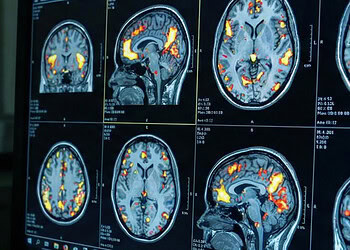
For decades, researchers have attempted to pinpoint the specific areas of the brain responsible for human intelligence. A new analysis suggests that general intelligence involves the coordination of the entire brain rather than the superior function of any single region. By mapping the connections within the human brain, or connectome, scientists found that distinct patterns of global communication predict cognitive ability.
The research indicates that intelligent thought relies on a system-wide architecture optimized for efficiency and flexibility. These findings were published in the journal Nature Communications.
General intelligence represents the capacity to reason, learn, and solve problems across a variety of different contexts. In the past, theories often attributed this capacity to specific networks, such as the areas in the frontal and parietal lobes involved in attention and working memory. While these regions are involved in cognitive tasks, newer perspectives suggest they are part of a larger story.
The Network Neuroscience Theory proposes that intelligence arises from the global topology of the brain. This framework suggests that the physical wiring of the brain and its patterns of activity work in tandem.
Ramsey R. Wilcox, a researcher at the University of Notre Dame, led the study to test the specific predictions of this network theory. Working with senior author Aron K. Barbey and colleagues from the University of Illinois and Stony Brook University, Wilcox sought to move beyond localized models. The team aimed to understand how the brain’s physical structure constrains and directs its functional activity.
To investigate these questions, the research team utilized data from the Human Connectome Project. This massive dataset provided brain imaging and cognitive testing results from 831 healthy young adults. The researchers also validated their findings using an independent sample of 145 participants from a separate study.
The investigators employed a novel method that combined two distinct types of magnetic resonance imaging (MRI) data. They used diffusion-weighted MRI to map the structural white matter tracts, which act as the physical cables connecting brain regions. Simultaneously, they analyzed resting-state functional MRI, which measures the rhythmic activation patterns of brain cells.
By integrating these modalities, Wilcox and his colleagues created a joint model of the brain. This approach allowed them to estimate the capacity of structural connections to transmit information based on observed activity. The model corrected for limitations in traditional scanning, such as the difficulty in detecting crossing fibers within the brain’s white matter.
The team then applied predictive modeling techniques to see if these global network features could estimate a participant’s general intelligence score. The results provided strong support for the idea that intelligence is a distributed phenomenon. Models that incorporated connections across the whole brain successfully predicted intelligence scores.
In contrast, models that relied on single, isolated networks performed with less accuracy. This suggests that while specific networks have roles, the interaction between them is primary. The most predictive connections were not confined to one area but were spread throughout the cortex.
One of the specific predictions the team tested involved the strength and length of neural connections. The researchers found that individuals with higher intelligence scores tended to rely on “weak ties” for long-range communication. In network science, a weak tie represents a connection that is not structurally dense but acts as a bridge between separate communities of neurons.
These long-range, weak connections require less energy to maintain than dense, strong connections. Their weakness allows them to be easily modulated by neural activity. This quality makes the brain more adaptable, enabling it to reconfigure its communication pathways rapidly in response to new problems.
The study showed that in highly intelligent individuals, these predictive weak connections spanned longer physical distances. Conversely, strong connections in these individuals tended to be shorter. This architecture likely balances the high cost of long-distance communication with the need for system-wide integration.
Another key finding concerned “modal control.” This concept refers to the ability of specific brain regions to drive the brain into difficult-to-reach states of activity. Cognitive tasks often require the brain to shift away from its default patterns to process complex information.
Wilcox and his team found that general intelligence was positively associated with the presence of regions exhibiting high modal control. These control hubs were located in areas of the brain associated with executive function and visual processing. The presence of these regulating nodes allows the brain to orchestrate interactions between different networks effectively.
The researchers also examined the overall topology of the brain using a concept known as “small-worldness.” A small-world network is one that features tight-knit local communities of nodes as well as short paths that connect those communities. This organization is efficient because it allows for specialized local processing while maintaining rapid global communication.
The analysis revealed that participants with higher intelligence scores possessed brain networks with greater small-world characteristics. Their brains exhibited high levels of local clustering, meaning nearby regions were tightly interconnected. Simultaneously, they maintained short average path lengths across the entire system.
This balance ensures that information does not get trapped in local modules. It also ensures that the brain does not become a disorganized random network. The findings suggest that deviations from this optimal balance may underlie lower cognitive performance.
There are limitations to the current study that warrant consideration. The research relies on correlational data, so it cannot definitively prove that specific network structures cause higher intelligence. It is possible that engaging in intellectual activities alters the brain’s wiring over time.
Additionally, the study focused primarily on young adults. Future research will need to determine if these network patterns hold true across the lifespan, from childhood development through aging. The team also used linear modeling techniques, which may miss more nuanced, non-linear relationships in the data.
These insights into the biological basis of human intelligence have implications for the development of artificial intelligence. Current AI systems often excel at specific tasks but struggle with the broad flexibility characteristic of human thought. Understanding how the human brain achieves general intelligence through global network architecture could inspire new designs for artificial systems.
By mimicking the brain’s balance of local specialization and global integration, engineers might create AI that is more adaptable. The reliance on weak, flexible connections for integrating information could also serve as a model for efficient data processing.
The shift in perspective offered by this study is substantial. It moves the field away from viewing the brain as a collection of isolated tools. Instead, it presents the brain as a unified, dynamic system where the pattern of connections determines cognitive potential.
Wilcox and his colleagues have provided empirical evidence that validates the core tenets of Network Neuroscience Theory. Their work demonstrates that intelligence is not a localized function but a property of the global connectome. As neuroscience continues to map these connections, the definition of what it means to be intelligent will likely continue to evolve.
The study, “The network architecture of general intelligence in the human connectome,” was authored by Ramsey R. Wilcox, Babak Hemmatian, Lav R. Varshney & Aron K. Barbey.