Subscribe
The latest psychology and neuroscience discoveries.
My Account
  • Mental Health
  • Social Psychology
  • Cognitive Science
  • Neuroscience
  • About
No Result
View All Result
PsyPost
PsyPost
No Result
View All Result
Home Exclusive Cognitive Science

Brain signatures detect racially biased and politically correct behaviors

by PsyPost
August 18, 2016
in Cognitive Science
Photo credit: NIMH

Photo credit: NIMH

Share on TwitterShare on Facebook

Empathy for others is affected by race but this can be modulated by a secondary cognitive response, according to a study published online this July in Neuroscience. The study points to the importance of education and social integration to overcome racism.

Recent research has shown that the ability to share feelings with those of someone in pain is affected by the racial difference between people. More specifically, neuroscientific research has found that empathy responses develop from an automatic, bottom-up process which is then followed by a more complex process involving top-down processes. Furthermore, research has identified a neural signature for this automatic process relating to racial biases for the in-group, sometimes referred to as the ‘‘differential empathic activation for race (DEAR) effect”.

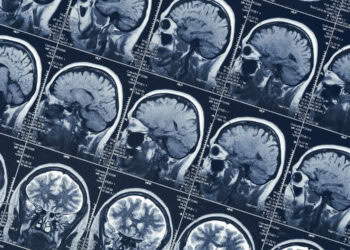
The study, led by Manuela Berlingeri of the University of Urbino Carlo Bo, performed a functional magnetic resonance imaging (fMRI) study on 25 Caucasian participants to explore these racial biases and look for the signs of politically correct behaviors within the brain. Videos were presented of either African or Caucasian actors touched by either a rubber eraser or a needle. Participants were instructed to empathize with the actors during the video presentation and to explicitly judge the pain level experienced by the actors. They also completed a measure of their implicit race biases and motivation to respond in a politically correct way.

The results revealed that on average, the participants were not explicitly racist, yet many had implicit racial bias. This correlated with a higher in-group differential empathic activation for race effect, which involved activity within the left anterior insula and the left temporo-parietal junction, when watching the video of someone receiving pain.

In contrast, when judging the level of pain, a significant out-group differential empathic activation for race effect emerged in the prefrontal cortices (ventral and dorsal prefrontal cortex, and premotor cortex). In addition, while the magnitude of the painful experience attributed to Caucasians and Africans was the same, the participants were significantly slower when judging the African’s pain experience.

The researchers proposed “a model that combines these two contrasting forces at the neurobiological and behavioral level”. Firstly, this involved a more evolutionary-based component of uncontrollable automatic responses, related to a differential empathic activation for race, biased in favor of in-group members. Secondly, it involved a more culturally evolved and cognitively dependent component based on the explicit application of social rules, as evidenced by the out-group effect.

They concluded, this “may have some practical implications as it provides a further argument in favor of intensive and continuing education, and social integration to overcome racism.”

Google News Preferences Add PsyPost to your preferred sources
Previous Post

Sleep disturbances linked with suicidal behavior in the mentally ill

Next Post

How open offices are killing us

RELATED

Cognitive Science

Intelligent people are better judges of the intelligence of others

April 6, 2026
A surprising body part might provide key insights into schizophrenia risk
Cognitive Science

Brain scans reveal how a woman voluntarily enters a psychedelic-like trance without drugs

April 4, 2026
Schemas help older adults compensate for age-related memory decline, study finds
Cognitive Science

Your body exhibits subtle physiological changes when you engage in self-deception

April 3, 2026
Psychotic delusions are evolving to incorporate smartphones and social media algorithms
Cognitive Science

Brain scans shed light on how short videos impair memory and alter neural pathways

April 3, 2026
Cannabis intoxication broadly impairs multiple memory types, new study shows
Cannabis

Cannabis intoxication broadly impairs multiple memory types, new study shows

April 3, 2026
ChatGPT acts as a “cognitive crutch” that weakens memory, new research suggests
Artificial Intelligence

ChatGPT acts as a “cognitive crutch” that weakens memory, new research suggests

March 30, 2026
Verbal IQ predicts political participation and liberal attitudes twice as strongly as performance IQ
Cognitive Science

Trying harder on an intelligence test does not actually improve your score

March 27, 2026
Brain rot and the crisis of deep thought in the age of social media
Cognitive Science

Massive analysis of longitudinal data links social media to poorer youth mental health

March 27, 2026

STAY CONNECTED

RSS Psychology of Selling

  • Free gifts with no strings attached can boost customer spending by over 30%, study finds
  • New research reveals the “Goldilocks” age for social media influencers
  • What today’s shoppers really want from salespeople, and what drives them away
  • The salesperson who competes against themselves may outperform the one trying to beat everyone else
  • When sales managers serve first, salespeople stay longer and sell more confidently

LATEST

Genetic study unravels the link between caffeine intake and sleep timing

Hikikomori: Can psychological resilience prevent extreme social withdrawal?

Can a sweet potato help your baby sleep through the night?

Anxious young adults are more likely to develop digital addictions

How stimulating the vagus nerve could protect the brain from Alzheimer’s disease

Intelligent people are better judges of the intelligence of others

People consistently devalue creative writing generated by artificial intelligence

Psilocybin slows down human reaction times and impairs executive function during the acute phase of use

PsyPost is a psychology and neuroscience news website dedicated to reporting the latest research on human behavior, cognition, and society. (READ MORE...)

  • Mental Health
  • Neuroimaging
  • Personality Psychology
  • Social Psychology
  • Artificial Intelligence
  • Cognitive Science
  • Psychopharmacology
  • Contact us
  • Disclaimer
  • Privacy policy
  • Terms and conditions
  • Do not sell my personal information

(c) PsyPost Media Inc

Welcome Back!

Login to your account below

Forgotten Password?

Retrieve your password

Please enter your username or email address to reset your password.

Log In

Add New Playlist

Subscribe
  • My Account
  • Cognitive Science Research
  • Mental Health Research
  • Social Psychology Research
  • Drug Research
  • Relationship Research
  • About PsyPost
  • Contact
  • Privacy Policy

(c) PsyPost Media Inc