Subscribe
The latest psychology and neuroscience discoveries.
My Account
  • Mental Health
  • Social Psychology
  • Cognitive Science
  • Psychopharmacology
  • Neuroscience
  • About
No Result
View All Result
PsyPost
PsyPost
No Result
View All Result
Home Exclusive Mental Health

Case report: Consumption of psilocybin-containing mushrooms results in amelioration of OCD symptoms

by Eric W. Dolan
March 29, 2021
in Mental Health, Psychedelic Drugs
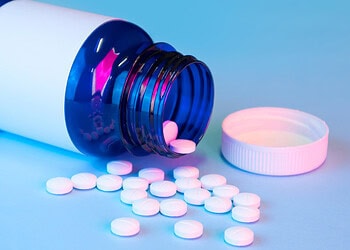
(Image by Michael M from Pixabay)

(Image by Michael M from Pixabay)

Share on TwitterShare on Facebook

Approximately 2.3% of adults will suffer from symptoms of Obsessive-Compulsive Disorder at some point in their life. The disorder is characterized by intrusive, persistent thoughts and compulsive behaviors and a substantial number of people don’t respond well to standard treatments.

A report recently published in the Journal of Psychoactive Drugs presents the case of a 30-year-old man who showed clinically significant reductions in treatment-resistant OCD symptoms after consuming psilocybin-containing mushrooms, more commonly known as “magic” mushrooms.

The man had suffered from disabling symptoms even after treatment with a variety of medications, including antidepressants, nonsteroidal anti-inflammatory drugs, and ketamine. He was undergoing treatment at a clinic when he decided to take psychedelic mushrooms.

The patient told medical professionals that he had consumed about 2 grams of dried mushrooms while at home. A friend was present to watch over him. The man did not report experiencing hallucinations, but did experience a sense of disassociation for about an hour. During this hour, his OCD symptoms completely disappeared. Despite being warned of the dangers of consuming the mushrooms, he continued to consume them about once every two weeks.

Prior to consuming psilocybin, the patient scored 35 on the Yale-Brown Obsessive Compulsive Scale Test, indicating that he was suffering from “extreme” symptoms. Six months after consuming psilocybin, the patient’s score on the test had dropped down to 13, indicating that he was suffering from “mild” symptoms.

“His obsessive thoughts and compulsions had significantly been reduced, as well as the rumination, worry and anxiety, and checking behavior,” the clinicians wrote in their case report. “He is now able to perform most of his daily tasks and work without interruptions, meaningfully improving his wellbeing and quality of life. The patient continues his treatment, while consuming the psilocybin-containing mushrooms as a therapeutic adjuvant.”

There has been growing interest in psilocybin, but scientists have only just begun to examine whether psilocybin can aid the treatment of OCD.

A study published in 2006 found that psilocybin was associated with transient reductions in OCD symptoms. But the study was only meant as a first step — and only examined 9 participants.

Researchers at Yale University and the Heffter Research Institute are currently conducting a randomized, placebo-controlled study to examine the effects of psilocybin on OCD.

“These and future studies will determine if psilocybin and other psychoactive compounds of psilocybin- containing mushrooms are clinically effective and safe for the treatment of OCD,” the clinicians wrote.

The report, “Long-term Amelioration of OCD Symptoms in a Patient with Chronic Consumption of Psilocybin-containing Mushrooms“, was authored by Agustin Lugo-Radillo and Jorge Luis Cortes-Lopez.


RELATED

Single moderate dose of psilocybin linked to temporary reduction in OCD symptoms
Psilocybin

Single moderate dose of psilocybin linked to temporary reduction in OCD symptoms

December 21, 2025
Musical memory remains resilient in old age, even for unfamiliar tunes
Dementia

Listening to music immediately after learning improves memory in older adults and Alzheimer’s patients

December 21, 2025
New study links honor cultures to higher rates of depression, suicidal thoughts
Mental Health

Consumption of common mineral associated with lower risk of suicidal thoughts

December 20, 2025
Harvard scientist reveals a surprising split in psychological well-being between the sexes
Mental Health

Five psychological approaches to handling holiday loneliness

December 20, 2025
Harvard scientist reveals a surprising split in psychological well-being between the sexes
Mental Health

Harvard scientist reveals a surprising split in psychological well-being between the sexes

December 20, 2025
Cannabidiol may ease Alzheimer’s-related brain inflammation and improve cognition
Addiction

Non-intoxicating cannabis compound may reverse opioid-induced brain changes

December 19, 2025
Melatonin trial in older adults with cognitive impairment shows strong feasibility, but no clear effects yet
Anxiety

Escitalopram normalizes brain activity related to social anxiety disorder, study finds

December 19, 2025
Stress-induced “fixated” eating patterns linked to dopamine disruption, study finds
Addiction

Scientists explain why nothing feels quite like the first time by tracking dopamine during fly sex

December 19, 2025

PsyPost Merch

STAY CONNECTED

LATEST

Smoking cannabis reduces alcohol consumption in heavy drinkers, study finds

Single moderate dose of psilocybin linked to temporary reduction in OCD symptoms

Listening to music immediately after learning improves memory in older adults and Alzheimer’s patients

Outrage at individual bigotry may undermine support for systemic racial justice

Consumption of common mineral associated with lower risk of suicidal thoughts

Five psychological approaches to handling holiday loneliness

Study finds heavy drinking creates a blind spot for angry expressions

Researchers find reverse sexual double standard in sextech use

RSS Psychology of Selling

  • The double-edged sword of dynamic pricing in online retail
  • How expert persuasion impacts willingness to pay for sugar-containing products
  • Experiments in sports marketing show product fit drives endorsement success
  • Study finds consumers must be relaxed for gamified ads to drive sales
  • Brain scans reveal increased neural effort when marketing messages miss the mark
         
       
  • Contact us
  • Privacy policy
  • Terms and Conditions
[Do not sell my information]

Welcome Back!

Login to your account below

Forgotten Password?

Retrieve your password

Please enter your username or email address to reset your password.

Log In

Add New Playlist

Subscribe
  • My Account
  • Cognitive Science Research
  • Mental Health Research
  • Social Psychology Research
  • Drug Research
  • Relationship Research
  • About PsyPost
  • Contact
  • Privacy Policy