A recent study of adolescents with anxiety disorders undergoing cognitive behavioral therapy indicated that some aspects of their sleep quality tended to improve as therapy progressed. The research was published in Behavioural and Cognitive Psychotherapy.
Anxiety disorders are a group of mental health conditions that include generalized anxiety disorder, panic disorder, social anxiety disorder, and specific phobias. Symptoms of these disorders can vary widely, but they commonly include persistent worry, nervousness, difficulty concentrating, and physical symptoms like restlessness, fatigue, and muscle tension. Estimates suggest that around 8% of children between 11 and 16 years of age meet the diagnostic criteria for one of the anxiety disorders.
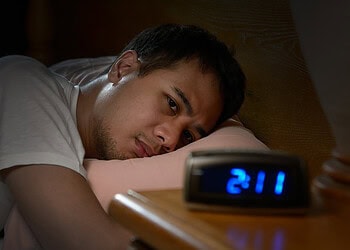
Anxiety disorders can significantly disrupt sleep patterns, leading to issues such as insomnia, restless sleep, and nightmares. The heightened state of alertness caused by anxiety can make it difficult to fall asleep or stay asleep, as the mind remains active or on edge. The lack of restorative sleep can, in turn, exacerbate the symptoms of anxiety, creating a cycle that can be challenging to break.
Studies indicate that around 38% of 12- to 16-year-olds with high levels of anxiety also suffer from insomnia, 35% sleep less than 7 hours per night, and 83% report needing more than 30 minutes to fall asleep. This is compounded by the finding that a substantial percentage of adolescents worldwide do not get enough sleep, particularly on school days.
Study author Olivia Sukiennik and her colleagues wanted to explore the sleep problems of adolescents with anxiety disorders on weekday and weekend nights and to see whether cognitive behavioral therapy for anxiety might lead to improvements in sleep patterns for these adolescents.
“I was initially interested in this topic as sleep difficulties are prevalent in adolescents, particularly in adolescents with anxiety. Further, both sleep difficulties and anxiety disorders appear to be closely linked, with childhood sleep difficulties predicting adolescent anxiety and adolescent anxiety symptoms also predicting sleep difficulties,” explained Sukiennik, a senior psychological wellbeing practitioner at Surrey and Borders NHS Talking Therapies.
“Given the impact both anxiety and sleep difficulties have on adolescents’ academic, social, and health outcomes, and that residual sleep difficulties post treatment are associated with higher likelihood of the adolescent’s anxiety relapsing, it makes it an important area to investigate whether treating one may have a positive impact on the other.”
The study participants were 135 adolescents between 11 and 17 years of age with anxiety disorders, recruited from a regional outpatient child and adolescent mental health service in southeast England. Children were included if they had a primary diagnosis of one of the following anxiety disorders: social anxiety disorder, generalized anxiety disorder, separation anxiety disorder, panic disorder, agoraphobia, or a specific phobia.
Children with post-traumatic stress disorder and obsessive-compulsive disorder were excluded. Of the children who started the study, only 73 remained until the end and provided all the necessary data. The authors collected data for this study in 2018 and 2019.
The participants and their parents completed assessments used in the analyses at the start and end of their cognitive behavioral treatment. Adolescents and their parents (reporting on the adolescent) completed assessments separately.
Children underwent three different psychotherapy treatments: a guided parent-delivered group cognitive behavioral therapy for children aged 11, the adolescent version of the Cool Kids Child and Adolescent Anxiety Program (for participants aged 12 and above), and individual cognitive behavioral therapy for adolescents (ages 12 and above).
Before and after these treatments, they completed assessments of anxiety and depression symptoms (the Revised Child Anxiety and Depression Scale, Child Version) and sleep quality (an assessment created by the authors based on the Sleep Habits Survey and the Insomnia Severity Index).
Results showed that, on average, participants needed more than 1 hour to fall asleep. They slept less than 7 hours on weekdays and more than 8 hours on weekends. They tended to wake up at night more often on weekdays than on weekends.
After undergoing cognitive behavioral therapy, the participants showed improvements in the time they needed to fall asleep and tended to sleep longer. However, the frequency of nighttime awakenings did not change after treatment. There were no changes in insomnia symptoms.
“Overall, the results show some promising evidence that cognitive behavioural therapy for adolescent anxiety disorders can help with improving sleep difficulties,” Sukiennik told PsyPost.
The study sheds light on the changes in sleep quality associated with cognitive-behavioral therapy. However, the study did not include a control group, so it remains unknown whether the observed effects were the consequence of cognitive behavioral therapy or represent changes in sleep patterns caused by other factors that coincided with the treatment period.
“The study relied upon subject measurement only, rather than a combination of subjective and objective measurement of sleep and there was also no control group included in this study,” Sukiennik noted.
“I think it would be nice to eventually reach a point where there is a sound evidence base that clearly indicates whether CBT for adolescent anxiety disorders is enough to support adolescents with their sleep difficulties or whether an insomnia component should be included as standard and apart of NICE Guidelines when treating adolescents with anxiety disorders where sleep difficulties are present with significant impact.”
The paper, “Changes to sleep patterns and insomnia symptoms following cognitive behavioural therapy for anxiety disorders in adolescents”, was authored by Olivia Sukiennik, Polly Waite, Ray Percy, and Faith Orchard.