Prescription stimulants are among the most widely used psychiatric medications in the world. For decades, the prevailing medical consensus held that drugs like methylphenidate treat attention deficit hyperactivity disorder by targeting the brain’s executive control centers. A new study challenges this long-held dogma, revealing that these medications act primarily on neural networks responsible for wakefulness and reward rather than attention. The study was published in the journal Cell.
Medical textbooks have traditionally taught that stimulants function by enhancing activity in the prefrontal cortex. This region of the brain is often associated with voluntary control, planning, and the direction of focus. The assumption was that by boosting activity in these circuits, the drugs allowed patients to filter out distractions and maintain concentration on specific tasks. However, the precise neural mechanisms have remained a subject of debate among neuroscientists.
Earlier research into these medications often produced inconsistent results. Some studies suggested that stimulants improved motivation and reaction times rather than higher-level reasoning. Furthermore, behavioral experiments have shown that the drugs do not universally improve performance. They tend to help individuals who are performing poorly but offer little benefit to those who are already performing well.
To resolve these discrepancies, a research team led by neurologist Benjamin P. Kay at Washington University School of Medicine in St. Louis undertook a massive analysis of brain activity. Working with senior author Nico U.F. Dosenbach, Kay aimed to map the effects of stimulants across the entire brain without restricting their focus to pre-determined areas. They sought to understand which specific brain networks were most altered when a child took these medications.
The researchers utilized data from the Adolescent Brain Cognitive Development Study. This large-scale project tracks the biological and psychological development of thousands of children across the United States. The team selected functional magnetic resonance imaging scans from 5,795 children between the ages of eight and eleven.
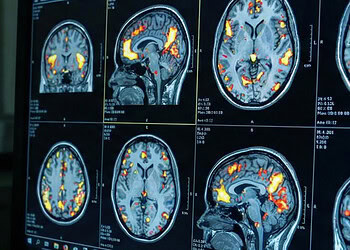
Kay and his colleagues compared the brain scans of children who had taken prescription stimulants on the day of their MRI against those who had not. They employed a technique known as resting-state functional connectivity. This method measures how different regions of the brain communicate and synchronize with one another when the person is not performing a specific task.
The analysis did not rely on small, isolated samples. The researchers used a data-driven approach to look at the whole connectome, which is the complete map of neural connections in the brain. They controlled for various factors that could skew the results, such as head motion during the scan and socioeconomic status.
The findings contradicted the traditional “attention-centric” view of stimulant medication. The researchers observed no statistical difference in the functional connectivity of the dorsal or ventral attention networks. The drugs also did not produce measurable changes in the frontoparietal control network, which is usually linked to complex problem-solving.
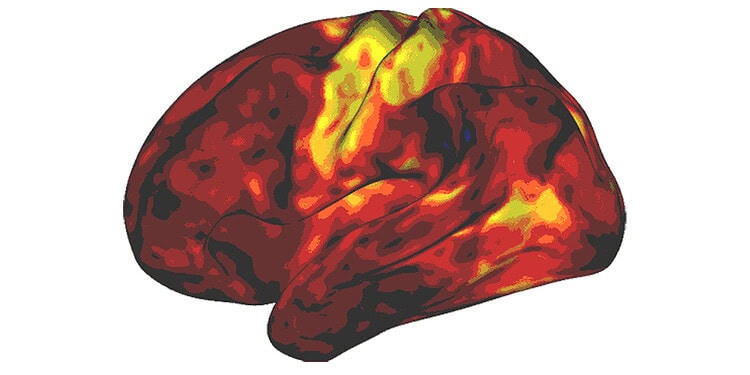
Instead, the most substantial changes occurred in the sensorimotor cortex and the salience network. The sensorimotor cortex is traditionally associated with physical movement and sensation. However, recent discoveries suggest this area also plays a major role in regulating the body’s overall arousal and wakefulness levels.
The salience network is responsible for determining what is important in the environment. It helps the brain calculate the value of a task and decides whether an action is worth the effort. The study found that stimulants increased connectivity between these reward-processing regions and the motor systems.
This shift in connectivity suggests that the drugs work by altering the brain’s calculation of effort and reward. By boosting activity in the salience network, the medication makes tedious activities feel more rewarding than they otherwise would. This reduces the urge to switch tasks or seek stimulation elsewhere.
“Essentially, we found that stimulants pre-reward our brains and allow us to keep working at things that wouldn’t normally hold our interest — like our least favorite class in school, for example,” Dosenbach said. This explains the paradox of why a stimulant can help a hyperactive child sit still. The drug removes the biological drive to fidget by satisfying the brain’s need for reward.
To verify that these findings were not an artifact of the pediatric data, the team conducted a separate validation study. They recruited five healthy adults who did not have attention deficits. These volunteers underwent repeated brain scans before and after taking a controlled dose of methylphenidate.
The results from the adult trial mirrored the findings in the children. The medication consistently altered the arousal and reward networks while leaving the attention networks largely unchanged. This replication in a controlled setting provides strong evidence that the drugs act on basic physiological drivers of behavior.
The study also uncovered a distinct relationship between stimulant medication and sleep. The researchers compared the brain patterns of medicated children to those of children who reported getting a full night of sleep. The functional connectivity signatures were remarkably similar.
Stimulants appeared to mimic the neurological effects of being well-rested. Children who were sleep-deprived showed specific disruptions in their sensorimotor and arousal networks. When sleep-deprived children took a stimulant, those disruptions disappeared.
This “rescue” effect extended to cognitive performance as well. The researchers analyzed school grades and test scores for the children in the study. As expected, children with attention deficits performed better when taking medication. However, the data revealed a nuance regarding sleep.
Stimulants improved the grades and test scores of children who did not get enough sleep. In fact, the medication raised the performance of sleep-deprived children to the level of their well-rested peers. Conversely, for children who did not have attention deficits and already got sufficient sleep, the drugs provided no statistical benefit to performance.
“We saw that if a participant didn’t sleep enough, but they took a stimulant, the brain signature of insufficient sleep was erased, as were the associated behavioral and cognitive decrements,” Dosenbach noted. The medication effectively masked the neural and behavioral symptoms of fatigue.
This finding raises important questions about the use of stimulants as performance enhancers. The data suggests that the drugs do not make a well-rested brain smarter or more attentive. They simply counteract the drag of fatigue and lack of motivation.
The authors of the study advise caution regarding this sleep-masking effect. While the drugs can hide the immediate signs of sleep deprivation, they do not replace the biological necessity of sleep. Chronic sleep loss is linked to cellular stress, metabolic issues, and other long-term health consequences that stimulants cannot fix.
Kay highlighted the clinical implications of these findings for doctors and parents. Symptoms of sleep deprivation often mimic the symptoms of attention deficit hyperactivity disorder, including lack of focus and irritability. Treating a sleep-deprived child with stimulants might mask the root cause of their struggles.
“Not getting enough sleep is always bad for you, and it’s especially bad for kids,” Kay said. He suggested that clinicians should screen for sleep disturbances before prescribing these medications. It is possible that some children diagnosed with attention deficits are actually suffering from chronic exhaustion.
The study also provides a new framework for understanding the brain’s motor cortex. The researchers noted that the changes in the motor system align with the recently discovered Somato-Cognitive Action Network. This network integrates body control with planning and arousal, further cementing the link between movement and alertness.
Future research will need to investigate the long-term effects of using stimulants to override sleep signals. The current study looked at a snapshot in time, but the cumulative impact of masking fatigue over years remains unknown. The researchers also hope to explore whether these arousal mechanisms differ in various subtypes of attention disorders.
By shifting the focus from attention to arousal and reward, this research fundamentally alters the understanding of how psychostimulants function. It suggests that these drugs are not “smart pills” that boost intelligence. Instead, they are endurance tools that help the brain maintain effort and wakefulness in the face of boredom or fatigue.
The study, “Stimulant medications affect arousal and reward, not attention,” was authored by Benjamin P. Kay, Muriah D. Wheelock, Joshua S. Siegel, Ryan Raut, Roselyne J. Chauvin, Athanasia Metoki, Aishwarya Rajesh, Andrew Eck, Jim Pollaro, Anxu Wang, Vahdeta Suljic, Babatunde Adeyemo, Noah J. Baden, Kristen M. Scheidter, Julia Monk, Nadeshka Ramirez-Perez, Samuel R. Krimmel, Russel T. Shinohara, Brenden Tervo-Clemmens, Robert J. M. Hermosillo, Steven M. Nelson, Timothy J. Hendrickson, Thomas Madison, Lucille A. Moore, Óscar Miranda-Domínguez, Anita Randolph, Eric Feczko, Jarod L. Roland, Ginger E. Nicol, Timothy O. Laumann, Scott Marek, Evan M. Gordon, Marcus E. Raichle, Deanna M. Barch, Damien A. Fair, and Nico U.F. Dosenbach.