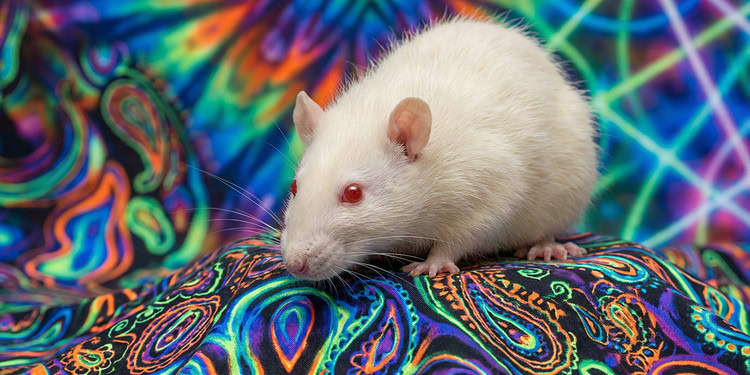

A new study published in the journal Psychedelics reveals that the environment and physiological state of an animal profoundly influence the effects of psilocybin. Researchers found that while the drug altered immune markers in mice that exercised, it did not modify social behaviors in mice modeling anorexia nervosa. These findings suggest that the therapeutic potential of psychedelics may depend heavily on the biological context in which they are administered.
Anorexia nervosa is a severe psychiatric condition characterized by restricted eating and excessive exercise. Many patients also struggle with social interactions and understanding the emotions of others. These social challenges often persist even after weight recovery, and they contribute to the isolation associated with the disorder. Current treatments frequently fail to address these specific interpersonal symptoms.
Claire J. Foldi and her colleagues at Monash University in Australia sought to investigate potential biological causes for these issues. They focused on the connection between brain function and the immune system. Previous research suggests that inflammation may play a role in psychiatric disorders. Specifically, molecules like interleukin-6 often appear at abnormal levels in people with depression and anxiety.
Psilocybin, the active compound in magic mushrooms, is known to affect serotonin receptors and possesses potential anti-inflammatory properties. Foldi’s team wanted to see if psilocybin could improve social behavior and regulate immune responses in a living organism. They hypothesized that the drug might rescue social deficits by lowering inflammation.
To test this, the researchers used a method called the activity-based anorexia model. They housed female mice in cages with running wheels and limited their access to food. This combination typically causes mice to run excessively and lose weight rapidly, mimicking human anorexia. The researchers chose female mice because the condition predominantly affects women.
The team compared these mice to three other groups to isolate specific variables. One group had restricted food but no wheel, which tested the effect of hunger alone. Another group had a wheel but unlimited food, testing the effect of exercise alone. A control group lived in standard housing with no restrictions.
Once the mice in the anorexia model lost a specific amount of weight, the researchers administered a single dose of psilocybin or a saline placebo. Later that day, they placed the mice in a special testing apparatus. This box contained three connected chambers designed to measure social interest.
The researchers measured how much time the mice spent interacting with a new mouse versus an inanimate object. In a second phase, they tracked whether the mice preferred spending time with a familiar mouse or a stranger. Finally, the team analyzed blood samples to measure levels of interleukin-6.
The results showed distinct behavioral patterns based on the living conditions of the mice. Mice in the anorexia model did not withdraw socially as the researchers had anticipated. Instead, these mice showed a strong interest in investigating new mice. They preferred novel social interactions over familiar ones.
This intense curiosity was also present in the mice that only had access to running wheels. In contrast, mice that were only food-restricted spent more time investigating the object. This likely indicates a motivation to search for food rather than socialize.
Psilocybin did not alter these social behaviors in the anorexia group, the exercise group, or the food-restricted group. The drug only changed behavior in the healthy control mice. Control mice given psilocybin became less interested in novelty and spent more time with familiar companions. This was an unexpected outcome that contrasted with the other groups.
The physiological results were equally specific to the environment. The researchers found that psilocybin markedly elevated levels of interleukin-6 in the mice that had access to running wheels. This effect was not observed in the anorexia group or the other groups.
In the running wheel group, higher levels of this inflammatory marker correlated with a stronger preference for social novelty. The drug did not reduce inflammation in the anorexia model as originally hypothesized. This suggests that prior exercise primes the immune system to respond differently to the drug.
The study highlights a limitation in how animal models mimic complex human disorders. While human patients often retreat socially, the mice in this model became hyperactive and explorative. This behavior may represent a foraging instinct triggered by hunger. It complicates the ability to translate these specific social findings directly to human psychology.
The increase in inflammation seen in the exercise group suggests a relationship between physical activity and how psychedelics affect the body. Psilocybin is often cited as an anti-inflammatory agent. However, this study indicates that in certain contexts, it may promote immune signaling.
The researchers note that they only measured inflammation at a single time point. Psilocybin may have transient effects that vary over hours or days. Future studies will need to track these markers over a longer period to capture the full picture.
It remains necessary to test different biological markers and brain regions to fully understand these mechanisms. The relationship between serotonin signaling and immune function is not uniform. The data indicate that a “one size fits all” approach to psychedelic therapy may be insufficient.
This research implies that clinical trials should account for the patient’s physical state, including their exercise habits and nutritional status. Factors such as metabolic stress could alter how the drug impacts both behavior and the immune system.
The study, “Psilocybin exerts differential effects on social behavior and inflammation in mice in contexts of activity-based anorexia,” was authored by Sheida Shadani, Erika Greaves, Zane B. Andrews, and Claire J. Foldi.