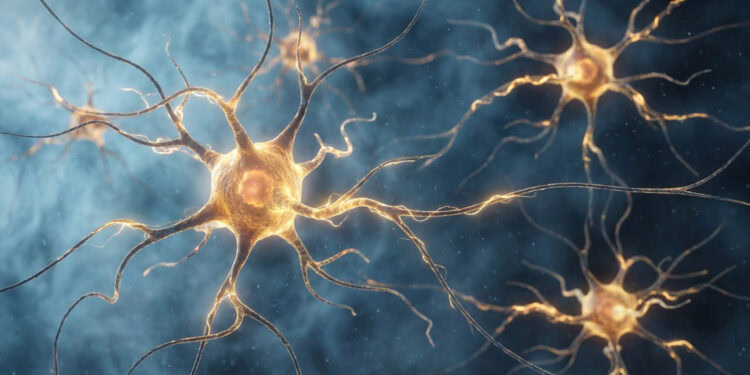

A study on common fruit flies (Drosophila melanogaster) found that disrupting the resting, or basal, activity of a small group of dopamine-producing (dopaminergic) neurons belonging to the protocerebral anterior medial cluster of their brains impairs 24-hour long-term memory formation. It also results in sleep loss and sleep fragmentation, particularly at night. The paper was published in eLife.
When an experience occurs, long-lasting memories of it are not stored in the brain instantly. Instead, newly formed memories initially remain fragile and undergo a process known as memory consolidation, during which neural connections are gradually reorganized and stabilized.
Sleep appears to play an especially important role in this process. Sleep deprivation can disrupt both memory formation and the stabilization of memories after learning. One possible explanation for this is that the brain reactivates patterns of neural activity during sleep, effectively replaying recent experiences and strengthening the circuits that represent them. Yet the precise mechanisms connecting sleep and memory consolidation remain far from fully understood.
Study author Lin Yan and colleagues conducted a study in which they aimed to identify the neural mechanism that connects sleep with long-term memory consolidation. They focused on the interaction between two groups of neurons in the brain – the protocerebral anterior medial dopaminergic neurons and the dorsal paired medial neurons. More specifically, these researchers explored how the disruption of basal activity of a small subset of neurons in the protocerebral anterior medial region of the brain of a fruit fly affects the formation of long-term memories.
The study was conducted on male and female fruit flies. The fruit fly Drosophila melanogaster is an important model for investigating various neural mechanisms because its relatively small brain contains well-defined neural circuits. A particularly important structure of the fruit fly brain is the mushroom body, a multifunctional unit roughly analogous to the mammalian hippocampus, which performs functions that are in some respects comparable to those of memory-related structures in the mammalian brain.
In these flies, dopamine-producing neurons communicate with different parts of the mushroom body and can influence whether experiences are learned as rewarding or unpleasant, how memories develop after learning, and whether they are later forgotten. Some of these same dopaminergic circuits also regulate wakefulness and sleep, raising the possibility that the neural systems controlling when a fruit fly sleeps are directly intertwined with those determining which memories survive.
Study authors conducted a series of experiments in which they used genetically modified fruit flies with modifications that allowed researchers to selectively activate or silence specific neurons, particularly protocerebral anterior medial (PAM) dopaminergic neurons and dorsal paired medial (DPM) neurons. They used genetic variants that were sensitive to temperature. In one variant, raising the temperature to about 30 °C for 1 hour activated the targeted neurons. Another gene variant blocked their activity when the flies were kept at about 32 °C, generally for 2.5 hours.
They trained these flies to associate a specific odor with being given sucrose as a reward. Because this type of learning requires the flies to be motivated by hunger, they were starved prior to training. After the flies learned this association, during the period in which this memory should be consolidating, study authors activated or inhibited selected PAM and DPM neurons. Twenty-four hours later, their memory was tested by allowing them to choose between the odor that they were trained to associate with sucrose and another odor.
The results showed that disrupting the activity of a small subset of PAM dopaminergic neurons (called PAM-α1 neurons) could impair long-term memory consolidation. Brief activation of PAM-α1 neurons impaired long-term memory, while inhibition of some PAM-α1 populations also produced memory deficits. Inhibiting two DPM neurons during the consolidation period likewise impaired long-term memory. Additionally, the researchers identified that these sleep-memory integration signals are mediated primarily by a specific dopamine receptor, Dop1R1, expressed on the DPM neurons.
Study authors also examined how these disruptions affect the sleep of female fruit flies and found that they result in sleep loss and fragmentation, especially at night. Crucially, they found that this sleep disruption is highly dependent on the flies’ internal state; it predominantly occurred when the flies were subjected to starvation conditions. Interestingly, they found that if, after activating the PAM-α1 neurons in a way that causes sleep disruption, they gave these flies gaboxadol, a drug that promotes sleep, long-term memory consolidation would be restored. This finding supports the idea that the sleep disturbance contributed to the impairment of long-term memory consolidation.
The study results provide a new molecular and neural basis for the complex relationship between sleep and memory. However, the study was conducted on fruit flies, not on humans. While these flies and humans share some broad similarities in neural mechanisms, they are still widely different species. Results of a similar study on humans might be different.
The paper, “Brief disruption of activity in a subset of dopaminergic neurons during consolidation impairs long-term memory by fragmenting sleep,” was authored by Lin Yan, Litao Wu, Timothy D Wiggin, Xiaojuan Su, Wei Yan, Hailiang Li, Lei Li, Zhonghua Lu, Fang Guo, Zhiqiang Meng, Yuantao Li, Fan Li, Leslie C Griffith, and Chang Liu.