![[Photo credit: National Institute of Mental Health]](https://sp-ao.shortpixel.ai/client/to_webp,q_glossy,ret_img,w_750,h_375/https://www.psypost.org/wp-content/uploads/2021/09/prefrontal-cortex-750x375.jpg)
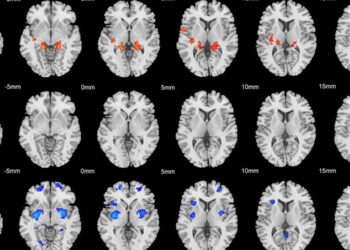
A new study in Neuron reveals that the brain’s executive center sends highly specialized, context-dependent instructions to the visual system rather than a generic broadcast signal. The findings demonstrate that distinct neural circuits adjust how animals perceive their environment based on their level of arousal and physical movement.
The brain is often described as a hierarchy. The prefrontal cortex sits at the top of this organization. It acts as a command center that guides thoughts, actions, and emotions.
For this system to work, the prefrontal cortex must communicate with sensory regions that process raw information from the outside world. One of the most important relationships in this hierarchy is the connection between the executive center and the visual cortex. This connection allows the brain to interpret what the eyes see based on current goals or needs.
Researchers have debated the nature of this communication for years. Some theories propose that the prefrontal cortex acts like a global volume dial. In this view, it sends a uniform signal to boost or suppress activity across the entire brain.
Other theories suggest a more precise system of control. These hypotheses argue that the brain sends tailored messages to specific regions depending on the immediate situation. Validating these theories requires mapping the exact wiring of the brain and observing it in action.
A team of neuroscientists at the Massachusetts Institute of Technology led the investigation into these circuits. The senior author of the paper is Mriganka Sur, a professor in the Department of Brain and Cognitive Sciences. The study was led by Sofie Ährlund-Richter, a postdoctoral researcher in Sur’s laboratory.
The researchers sought to understand how internal states shape vision. They wanted to know how being excited, stressed, or physically active changes the way the brain processes images. To do this, they focused on two specific subregions of the prefrontal cortex in mice.
The first region is the anterior cingulate area. This part of the brain is often associated with attention and error detection. The second region is the orbitofrontal cortex. This area is typically linked to decision-making and sensory integration.
The team designed a comprehensive set of experiments to track the flow of information. They utilized mice as their model organism. The biological similarities between mouse and human brains allow scientists to draw meaningful parallels regarding neural organization.
The first phase of the study involved detailed anatomical mapping. The researchers used viral tracers to visualize the pathways of nerve fibers. These tracers allowed them to see exactly where neurons in the prefrontal cortex sent their long extensions, called axons.
They found that the connections were not random. The anterior cingulate area and the orbitofrontal cortex targeted different layers of the visual cortex. This physical separation suggests that they influence the visual system through distinct mechanisms.
The anterior cingulate area connected to neurons in the deeper layers of the visual cortex. In contrast, the orbitofrontal cortex connected to separate layers that house different types of cells. This structural difference provided the first clue that the two regions perform different jobs.
Following the anatomical work, the researchers moved to functional imaging. They used a technique called two-photon calcium imaging. This method allows scientists to watch neurons fire in real time by detecting changes in calcium levels inside the cells.
The mice were placed on a comfortable running wheel. They were shown various visual stimuli, such as patterned images or naturalistic movies. The researchers recorded the activity of the axons arriving in the visual cortex from the prefrontal regions.
The team also manipulated the arousal levels of the mice. They delivered small, harmless puffs of air to the animals. This stimulus caused a temporary state of alertness or excitement.
The recordings revealed a clear division of labor between the two brain regions. The anterior cingulate area acted as a signal enhancer. It transmitted strong visual information to the visual cortex.
This activity scaled directly with the arousal of the animal. When the mouse was alert, the anterior cingulate area became more active. It appeared to help the visual cortex sharpen its focus on the images being viewed.
Sur noted the specificity of these connections. “That’s the major conclusion of this paper: There are targeted projections for targeted impact,” said Sur.
The orbitofrontal cortex displayed a different pattern of activity. It conveyed very little information about the visual scene itself. Instead, it responded primarily to the internal state of the animal.
This region only became active when the arousal of the mouse crossed a high threshold. When it did activate, it did not sharpen the image. Instead, it appeared to suppress or dampen the processing of visual information.
Ährlund-Richter suggests this creates a balance in the brain. “These two PFC subregions are kind of balancing each other,” Ährlund-Richter said. “While one will enhance stimuli that might be more uncertain or more difficult to detect, the other one kind of dampens strong stimuli that might be irrelevant.”
This balance likely helps the animal navigate complex environments. Moderate arousal might trigger the anterior cingulate area to help the mouse focus on potential threats or food. Extreme arousal might trigger the orbitofrontal cortex to filter out distractions so the animal can react quickly.
The researchers also investigated whether these brain regions sent the same messages to other parts of the cortex. They compared the signals sent to the visual cortex with those sent to the motor cortex. The motor cortex is responsible for controlling voluntary movement.
The study found that the messages were customized for the recipient. The motor cortex received detailed information about how fast the mouse was running. The visual cortex, however, only received a binary signal indicating whether the mouse was moving or staying still.
This finding challenges the idea of a global broadcast signal. It implies that the prefrontal cortex constructs specific data packets for different downstream systems. The visual system gets what it needs to process sight, while the motor system gets what it needs to coordinate limbs.
To confirm these observations, the team used chemogenetics. This technology allows researchers to selectively silence specific neural pathways using designer drugs. They blocked the connections from the prefrontal subregions to the visual cortex.
When they blocked the anterior cingulate area, the visual cortex failed to sharpen its responses during arousal. The beneficial effect of alertness on vision disappeared. This proved that the anterior cingulate area is required for focused attention.
When they blocked the orbitofrontal cortex, the dampening effect vanished. The visual cortex remained highly responsive even during high stress. This confirmed that the orbitofrontal cortex is responsible for preventing overstimulation.
The authors concluded that prefrontal feedback is highly modular. It is not a blunt instrument but a precision tool. This organization allows the brain to fine-tune sensory processing in a way that supports survival.
There are limitations to the study that warrant consideration. The research was conducted in mice, and human brain circuitry is significantly more elaborate. Further investigation is needed to verify if these exact parallel circuits exist in primates and humans.
Future research will likely focus on how these circuits change during learning. The current study looked at spontaneous behavior and simple visual tasks. It remains to be seen how these feedback loops adapt when an animal learns a complex new skill.
The study, “Distinct roles of prefrontal subregion feedback to the primary visual cortex across behavioral states,” was authored by Sofie Ährlund-Richter, Yuma Osako, Kyle R. Jenks, Emma Odom, Haoyang Huang, Don B. Arnold, and Mriganka Sur.