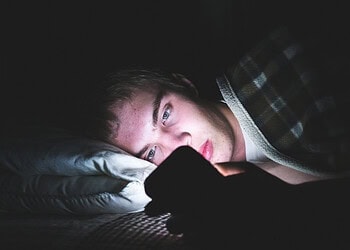
A recent study published in the journal Alcohol, Clinical and Experimental Research has found a connection between sleep disturbances and alcohol consumption in adults. The research reveals that even subclinical symptoms of insomnia can predict increased future alcohol use. This study stands out as the first to explore whether objective measures of circadian rhythms can forecast future drinking behavior in adults.
While previous studies have suggested a link between sleep disturbances and alcohol consumption, most have relied on self-reported data and have focused predominantly on adolescents and young adults. Given the variations in sleep and alcohol use patterns across different age groups, the researchers sought to investigate these associations in a more diverse adult sample using objective measures of sleep and circadian rhythms.
The study involved 78 adults aged 21 to 42 years, who were categorized based on their drinking habits into light or heavy drinkers. Light drinkers were defined as those consuming 1 to 5 standard alcoholic drinks per week with fewer than three binge drinking episodes in the past year. Heavy drinkers were those consuming ten or more standard alcoholic drinks per week with at least one binge drinking episode per week. The participants were relatively healthy, with no significant physical or mental health conditions.
The study began with a week of home monitoring. During this period, participants wore wrist actigraphy monitors, which are devices that measure movement and provide objective estimates of sleep patterns, including sleep timing, total sleep time, and sleep efficiency. Participants also maintained daily diaries to record their sleep habits, caffeine and alcohol intake, and medication use. This comprehensive monitoring provided a detailed baseline of each participant’s sleep behavior.
Following the home monitoring week, participants attended a 9-hour laboratory session. In the lab, participants underwent various assessments, including breathalyzer tests to confirm recent alcohol abstinence, and completed several questionnaires. These questionnaires assessed insomnia severity, circadian preferences, social jet lag, depressive and anxiety symptoms, and anticipated effects of alcohol.
The session also included a dim light melatonin onset (DLMO) test, which is a gold-standard measure for assessing circadian rhythms by tracking the onset of melatonin production in dim light conditions. This test provided objective data on each participant’s circadian timing.
To further understand the relationship between sleep and circadian rhythms and alcohol use, the researchers followed up with participants every three months for a year. During these follow-ups, participants completed online questionnaires detailing their alcohol consumption over the past 30 days and repeated some of the baseline assessments.
The researchers found that participants with higher baseline insomnia severity reported increased alcohol consumption and more frequent binge drinking episodes over the follow-up period. This finding indicates that even subclinical levels of insomnia can significantly impact drinking behavior, underscoring the importance of addressing sleep disturbances as a potential strategy for reducing alcohol misuse.
“It is notable that insomnia symptom severity was relatively low on average in our sample and yet still predictive of drinking,” the researchers wrote.
Interestingly, the study also found that longer total sleep time, as measured by actigraphy, was associated with greater alcohol use. This surprising finding contrasts with previous research, which typically links shorter sleep duration with higher alcohol consumption, particularly in younger populations. The researchers speculated that this unexpected result might be due to the unique characteristics of their sample or the objective measurement methods used.
They explained that “the heavy drinkers in our sample obtained on average about 30 more minutes of sleep per night than the light drinkers which was mostly due to a later wake time in the heavy drinkers. Thus, the longer total sleep time may simply be a correlate of the heavier drinking. Regardless, this finding should be interpreted with caution.”
In terms of circadian measures, the study found that none of the objective circadian measures, including DLMO and circadian misalignment, significantly predicted future alcohol use. This suggests that the circadian factors influencing alcohol consumption may differ between adolescents and adults.
For instance, younger individuals often experience significant shifts toward later circadian timing, which can influence their drinking behavior. In contrast, adults may have more stable circadian patterns and greater control over their sleep schedules, reducing the impact of circadian misalignment on alcohol use.
Additionally, the researchers noted a trend indicating that participants who anticipated stronger rewarding effects from alcohol at the six-month follow-up were more likely to increase their drinking behavior. Although this finding was not statistically significant, it suggests that the anticipated positive effects of alcohol may partly mediate the relationship between insomnia and future alcohol use. This potential mechanism warrants further investigation to better understand how expectations about alcohol’s effects influence drinking behavior.
“In conclusion, the present findings build upon our prior paper reporting sleep and circadian characteristics related to alcohol use, in this case reporting that worse insomnia symptom severity and longer actigraphy-derived total sleep time both predict greater drinking and binge episode frequency over the subsequent 12 months,” the researchers wrote.
“Although the unexpected total sleep time finding should be replicated before being given too much further consideration, the insomnia finding is cohesive with the extant literature and raises questions about whether insomnia symptoms may be a modifiable target for reducing the risk of alcohol misuse.”
The study, “Do sleep and circadian characteristics predict alcohol use in adult drinkers?“, was authored by Helen J. Burgess, Jonathan P. Troost, Muneer Rizvydeen, Fumitaka Kikyo, Nema Kebbeh, Michael Tan, Kathryn A. Roecklein, Andrea C. King, and Brant P. Hasler.