
Democrats stigmatize people with COVID-19 more than Republicans, study finds
New research conducted at Kent State University investigated the role political affiliation may play in stigmatizing those with COVID-19. The findings indicate that those identifying as Democrats and Independents were more likely to stigmatize those with COVID-19 due to greater...
Read moreDetails
Religion did not protect against racism’s harmful psychological impact on Asian Americans amid the COVID-19 pandemic
New psychology research indicates that religion provided little protection against racism-induced mental health issues among Asian Americans during the COVID-19 pandemic. The findings have been published in the Journal of Religion and Health.
Read moreDetails
People implicitly associate masked faces with psychological distance, study finds
Published in Social Psychological and Personality Science, researchers found that people who wear masks tend to be viewed as more socially distant. The findings provide evidence of an implicit association between the concepts of masked faces and psychological distance.
Read moreDetails
Overconfidence in one’s reasoning abilities and distrust of science are linked to COVID-19 conspiracy beliefs
The fact that many people hold conspiracy theory beliefs was brought into the spotlight during the COVID-19 pandemic, which raises the question: what makes people vulnerable to misinformation? A study published in Frontiers in Psychology suggests that trusting science is...
Read moreDetails
Long COVID study suggests lost connections between neurons may explain cognitive symptoms
Scientists are working to understand how exactly a COVID infection affects the human brain. But this is difficult to study, because we can’t experiment on living people’s brains. One way around this is to create organoids, which are miniature organs...
Read moreDetails
Neuroimaging study finds wearing a COVID mask does not affect brain activity during cognitive tasks
A study compared magnetic resonance images of brains of 35 undergraduate students and found that imaging results were the same regardless of whether the students wore a face mask during the imaging processes or not. The study was published in...
Read moreDetails
Neurocognitive complaints in people with COVID-19 are not consistent with their objective test performance
People who have or have had COVID-19 tend to report more complaints about their cognitive abilities, according to new research published in Psychiatry Research. But these complaints do not appear to reflect actual deficits in cognitive performance.
Read moreDetails
New research provides evidence that the pandemic changed our personalities
A new study, published in PLOS ONE, suggests the COVID pandemic has indeed triggered much greater shifts in personality than we would expect to have seen naturally over this period. In particular, the researchers found that people were less extroverted,...
Read moreDetails
Severe COVID-19 may increase the risk for schizophrenia
Researchers found that COVID-19 cases that resulted in hospitalization were associated with an 11% increase in risk for developing schizophrenia.
Read moreDetails
Study finds fourfold higher suicide risk among men who suffered loss of social status during the COVID-19 pandemic
A new online survey found that men who suffered a loss of social status due to the COVID-19 pandemic were over four times more likely to have attempted suicide in the past month, more than twice as likely to report...
Read moreDetails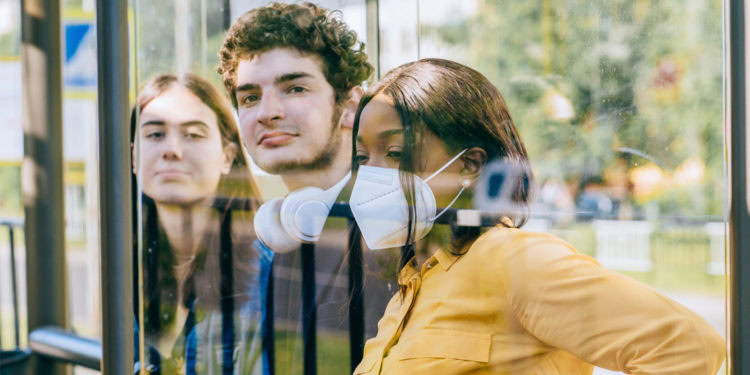
Lower empathy partially explains why political conservatism is associated with riskier pandemic lifestyles
New research helps to explain the association between political conservatism and riskier pandemic lifestyles. According to new research published in Discover Social Science and Health, political conservatives tend to be less empathetic, hold more authoritarian beliefs, and feel less threatened...
Read moreDetails
Remote learning might have helped protect teenagers’ sense of community during COVID-19 school closures
New research published in Behavioral Sciences provides evidence that information and communications technologies helped to protect students' sense of community amid the COVID-19 pandemic.
Read moreDetails
Increased anxiety and depression during the pandemic may be related to COVID-19 conspiracy beliefs
Research on mental health during the COVID-19 pandemic has shown an increase in depressive symptoms and anxiety. The pandemic has also spurred heavy discussion on social media platforms which has given rise to the prevalence of COVID-19 related conspiracy beliefs....
Read moreDetails
COVID-19 linked with a higher rate of psychiatric and brain disorders up to two years after infection
The risks of being diagnosed with some disorders, such as psychosis, seizures or epilepsy, brain fog and dementia, though mostly still low, remained elevated throughout the two years after COVID infection.
Read moreDetails
Countries with more stringent pandemic lockdowns had less mental illness-related Google searches
Many people feel their well-being and mental state suffered as a result of being locked inside during the early waves of the COVID-19 pandemic, but could stricter and longer lockdowns actually have positive effects on people’s mental health? A study...
Read moreDetails