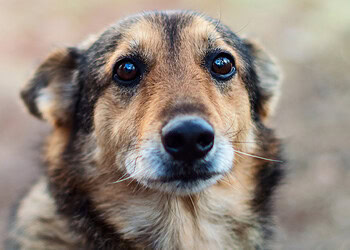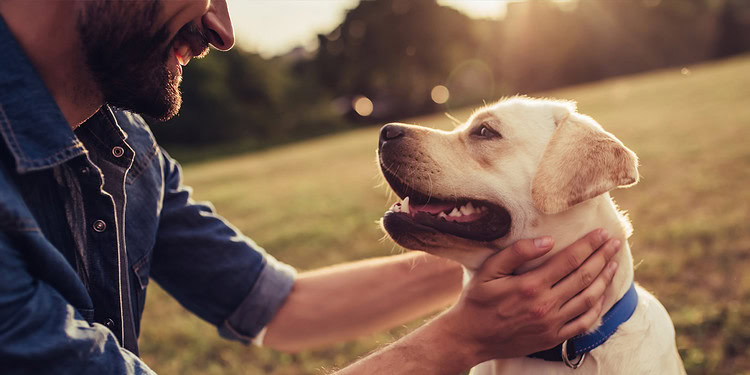
It might sound far-fetched, but recent research suggests that dogs’ and humans’ brains synchronise when they look at each other.
This research, conducted by researchers in China, is the first time that “neural coupling” between different species has been witnessed.
Neural coupling is when the brain activity of two or more individuals aligns during an interaction. For humans, this is often in response to a conversation or story.
Neural coupling has been observed when members of the same species interact, including mice, bats, humans and other primates. This linking of brains is probably important in shaping responses during social encounters and might result in complex behaviour that would not be seen in isolation, such as enhancing teamwork or learning.
When social species interact, their brains “connect”. But this case of it happening between different species raises interesting considerations about the subtleties of the human-dog relationship and might help us understand each other a little better.
What’s new puppy dog?
The dog was one of the first animals humans domesticated. And they have a long history of sharing time and space with us. Dogs are not only companions for us, they also have key roles in our society, including therapeutic support, detecting diseases and protecting and herding livestock.
As a result, dogs have developed some impressive skills, including the ability to recognise and respond to our emotional state.
In the recent study, the researchers studied neural coupling using brain-activity recording equipment called non-invasive electroencephalography (EEG). This uses headgear containing electrodes that detect neural signals – in this case, from the beagles and humans involved in the study.
Researchers examined what happened to these neural signals when dogs and people were isolated from each other, and in the presence of each other, but without looking at each other. Dogs and humans were then allowed to interact with each other.
Look into my eyes
When dogs and humans gazed at each other and the dogs were stroked, their brain signals synchronised. The brain patterns in key areas of the brain associated with attention, matched in both dog and person.
Dogs and people who became more familiar with each other over the five days of the study had increased synchronisation of neural signals. Previous studies of human-human interactions have found increased familiarity between people also resulted in more closely matching brain patterns. So the depth of relationship between people and dogs may make neural coupling stronger.
The ability of dogs to form strong attachments with people is well known. A 2022 study found the presence of familiar humans could reduce stress responses in young wolves, the dog’s close relative. Forming neural connections with people might be one of the ways by which the dog-human relationship develops.
The researchers also studied the potential effect of differences in the brain on neural coupling. They did this by including dogs with a mutation in a gene called Shank3, which can lead to impaired neural connectivity in brain areas linked with attention. This gene is responsible for making a protein that helps promote communication between cells, and is especially abundant in the brain. Mutations in Shank3 have also been associated with autism spectrum disorder in humans.
Study dogs with the Shank3 mutation did not show the same level of matching brain signals with people, as those without the mutation. This was potentially because of impaired neural signalling and processing.
However, when researchers gave the study dogs with the Shank3 mutation, a single dose of LSD (a hallucinogenic drug), they showed increased levels of attention and restored neural coupling with humans.
LSD is known to promote social behaviour in mice and humans, although clearly there are ethical concerns about such treatment.
The researchers were clear that there remains much to be learned about neural coupling between dogs and humans.
It might well be the case that looking into your dog’s eyes means that your respective brain signals will synchronise and enhance your connection. The more familiar you are with each other, the stronger it becomes, it seems.
So the next time a dog gazes at you with their puppy dog eyes, remember you could be enhancing your relationship.
This article is republished from The Conversation under a Creative Commons license. Read the original article.