Unconsciously, right-handers associate good with the right side of space and bad with the left. But this association can be rapidly changed, according to a study published online March 9, 2011 in Psychological Science, by Daniel Casasanto (Max Planck Institute for Psycholinguistics) and Evangelia Chrysikou (University of Pennsylvania). Even a few minutes of using the left hand more fluently than the right can reverse right-handers’ judgments of good and bad, making them think that the left is the ‘right side’ of space. Conceptions of good and bad are rooted in people’s bodily experiences, and change when patterns of bodily experience change.
In language, positive ideas are linked with the right side of space and negative ideas with the left. It’s good to be ‘in the right’, but bad to be ‘out in left field’. Space and goodness are also associated in the unconscious mind, but not always in the same way that they are linked in language. For right-handers, right is good, but for left-handers, left is good.
In experiments by psychologist Daniel Casasanto, when people were asked which of two products to buy, which of two job applicants to hire, or which of two alien creatures looks more intelligent, right-handers tended to choose the product, person, or creature they saw on their right, but most left-handers chose the one on their left.
Why do righties and lefties think differently? Casasanto proposed that people’s conceptions of good and bad depend, in part, on the way they use their hands. ‘People can act more fluently with their dominant hand, and come to unconsciously associate good things with their fluent side of space.’
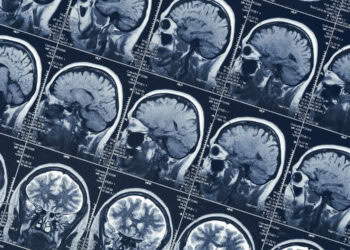
To test this theory, Casasanto and colleagues studied how natural right-handers think about good and bad when their right hand is handicapped, either due to brain injury or something much less extreme: wearing a ski glove. Stroke patients completed a task that reveals implicit associations between space and goodness in healthy participants. Patients who had lost the use of their left hand showed the usual right-is-good pattern. But patients who lost the use of their right hand following damage to the left-hemisphere of the brain associated good with left, like natural left-handers.
The same pattern was found in healthy university students who performed a motor fluency task while wearing a bulky glove on either their left hand (which preserved their right-handedness) or on their right hand, which turned them temporarily into left-handers. After about 12 minutes of lopsided motor experience, the right-gloved participants’ judgments on an unrelated task showed a good-is-left bias, like natural left-handers.
‘People generally think their judgments are rational, and their concepts are stable,’ says Casasanto. ‘But if wearing a glove for a few minutes can reverse people’s usual judgments about what’s good and bad, perhaps the mind is more malleable than we thought.’