Subscribe
The latest psychology and neuroscience discoveries.
My Account
  • Mental Health
  • Social Psychology
  • Cognitive Science
  • Neuroscience
  • About
No Result
View All Result
PsyPost
PsyPost
No Result
View All Result
Home Exclusive Cognitive Science

Grid cells’ role in human imagination revealed

by University College London
March 10, 2016
in Cognitive Science
Photo credit: DARPA

Photo credit: DARPA

Share on TwitterShare on Facebook

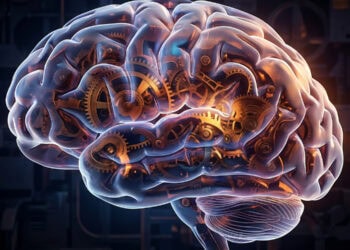
Evidence of grid cell activity has been seen in healthy volunteers asked to imagine moving through an environment in new UCL (University College London) research funded by the Medical Research Council and Wellcome Trust.

The study, published in Current Biology, used fMRI scans to detect brain activity consistent with grid cell activity in the entorhinal cortex, an important ‘hub’ for navigation and memory.

The entorhinal cortex is one of the first areas affected by Alzheimer’s disease, so the latest research could help to explain why people with Alzheimer’s can have problems imagining as well as remembering things.

Grid cells are brain cells that act as an internal coordinate system, firing at a series of locations that form a hexagonal grid across our environment as we move around it. The latest research provides the first evidence that these cells are also used when we imagine navigating, not only for tracking past or present environments.

“People with Alzheimer’s disease can find it difficult to visualise and remember scenes, and our new findings may help to explain why,” says senior author Professor Neil Burgess, Director of the UCL Institute of Cognitive Neuroscience. “We previously developed a test called the Four Mountains Test, where participants have to hold in mind a mountainous landscape and then try to identify it from a line-up of four landscapes, one of which is the original shown at a different point of view. This test has recently been shown to correlate with the progression of Alzheimer’s disease. So our latest research suggests that difficulties with the task may be related to a loss of grid cells in the entorhinal cortex.”

The study suggests that grid cells are involved in a broader range of cognitive process than previously thought.

“It is particularly exciting to see the involvement of a specific type of neuron whilst people are simply imagining moving through an environment,” explains lead author Dr Aidan Horner, who conducted the study at the UCL Institute of Cognitive Neuroscience and is now at the University of York. “This suggests that grid cells may contribute to more than just spatial navigation and are involved more broadly in planning and imagining the future. It is particularly difficult to link work at the neuronal level with higher-order cognitive processes. It is therefore incredibly exciting to see evidence for grid cells in imagined navigation, bridging the gap between neurons and mental imagery.”


Google News Preferences Add PsyPost to your preferred sources
Previous Post

Neural networks learn to link temporally dispersed stimuli

Next Post

Study examines how many CrossFitters are addicted to exercise

RELATED

Your music playlist might reveal subtle clues about your intelligence
Cognitive Science

New neuroimaging study maps the brain networks behind scientific creative thinking

March 19, 2026
Your music playlist might reveal subtle clues about your intelligence
Cognitive Science

Your music playlist might reveal subtle clues about your intelligence

March 19, 2026
The psychological reason we judge groups much more harshly than individuals
Cognitive Science

First test of a new neuroscience theory shows how smart brains coordinate information

March 18, 2026
New psychology research identifies a key factor behind support for harsh leaders
Cognitive Science

New psychology research reveals the cognitive cost of smartphone notifications

March 18, 2026
Actively open-minded thinking protects against political extremism better than liberal ideology
Cognitive Science

Outdoor athletes show superior color detection in their peripheral vision

March 17, 2026
Actively open-minded thinking protects against political extremism better than liberal ideology
Cognitive Science

Actively open-minded thinking protects against political extremism better than liberal ideology

March 17, 2026
The disturbing impact of exposure to 8 minutes of TikTok videos revealed in new study
Cognitive Science

Excessive TikTok use is linked to social anxiety and daily cognitive errors

March 16, 2026
Global study overturns conventional wisdom on language development in children
Cognitive Science

Higher skin carotenoid levels in toddlers predict better motor and language development

March 16, 2026

STAY CONNECTED

RSS Psychology of Selling

  • When saying sorry with a small discount actually makes things worse
  • How dark and light personality traits relate to business owner well-being
  • Why mobile game fail ads make you want to download the app
  • The science of sound reduplication and cuteness in product branding
  • How consumers react to wait time predictions from humans versus AI chatbots

LATEST

Building muscle strength may help prevent depression, especially in women

Researchers use machine learning to reveal how gasoline prices drive presidential approval ratings

A faulty brain waste disposal system may lead to psychosis

Emotionally intelligent AI chatbots improve mental health but destroy real-world social ties

New neuroimaging study maps the brain networks behind scientific creative thinking

Genetic risk for major depression linked to lower self-esteem years before severe diagnosis

Too much self-reflection is linked to anxiety and depression, not happiness

Psilocybin unlocks a specific biological signature in the brain linked to profound mystical states

PsyPost is a psychology and neuroscience news website dedicated to reporting the latest research on human behavior, cognition, and society. (READ MORE...)

  • Mental Health
  • Neuroimaging
  • Personality Psychology
  • Social Psychology
  • Artificial Intelligence
  • Cognitive Science
  • Psychopharmacology
  • Contact us
  • Disclaimer
  • Privacy policy
  • Terms and conditions
  • Do not sell my personal information

(c) PsyPost Media Inc

Welcome Back!

Login to your account below

Forgotten Password?

Retrieve your password

Please enter your username or email address to reset your password.

Log In

Add New Playlist

Subscribe
  • My Account
  • Cognitive Science Research
  • Mental Health Research
  • Social Psychology Research
  • Drug Research
  • Relationship Research
  • About PsyPost
  • Contact
  • Privacy Policy

(c) PsyPost Media Inc