![[Adobe Stock]](https://sp-ao.shortpixel.ai/client/to_webp,q_glossy,ret_img,w_750,h_375/https://www.psypost.org/wp-content/uploads/2025/08/neurons-750x375.jpg)
Experiencing social isolation during early developmental years can lead to increased anxiety and a higher preference for alcohol later in life. A new study in rats shows that these early stressors physically alter how the brain responds to alcohol, specifically changing how the chemical dopamine is regulated in regions linked to reward processing. The findings were published in the journal Addiction Neuroscience.
As children and teenagers navigate critical periods of brain development, social contact helps shape their neural circuits. Environmental stressors during this sensitive window can disrupt normal developmental trajectories. Experiencing isolation or neglect during youth can elevate the risk of mood disorders and substance use issues in adulthood.
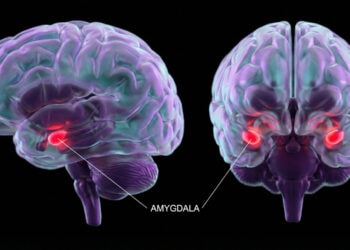
Researchers from Binghamton University and Brigham Young University wanted to understand the biological mechanisms behind this vulnerability. Lead author Gavin J. Vaughan and senior author Anushree N. Karkhanis, both affiliated with Binghamton University, focused on a brain structure called the ventral pallidum.
The ventral pallidum is a small cluster of cells resting deep within the brain. It acts as a central hub for assessing the value of different experiences. The region helps an individual weigh whether a stimulus is rewarding and worth pursuing or aversive and worth avoiding.
Cells in the ventral pallidum receive constant chemical signals from other parts of the brain. One of the primary messenger chemicals they receive is dopamine. Dopamine is a neurotransmitter that helps the brain recognize and learn from rewarding events.
The researchers designed an experiment to see how a lack of peer interaction during youth might dictate the way these dopamine signals function. They specifically wanted to see how early isolation changed the way alcohol interacts with the brain tissue.
The research team used a laboratory rat model to closely study the developmental effects of early life stress. They separated young Long-Evans rats into two distinct living situations. One group matured alongside peers in standard communal housing arrangements.
The second group was housed completely alone during a period equivalent to human adolescence. After a six-week developmental window, the researchers tested the anxiety levels of the fully grown rats. They subjected both sets of animals to a battery of behavioral obstacles.
One such test was the open-field assay, which places the animal in a large, enclosed arena. Rats are naturally prey animals and tend to hug the walls of new environments, avoiding the exposed center. The isolated rats were much more hesitant to leave the safety of the corners and venture into the middle of the arena.
Another test involved an elevated platform shaped like a cross. Two of the platform arms had high walls, while the other two arms were completely open and exposed to the bright lights of the room. The isolated rats spent far less time exploring the open arms, heavily favoring the enclosed spaces.
A third assessment used a long, gradient track separated into four varying zones. The first section offered high, protective walls, while the final section was entirely unshielded. The isolated rats spent much more of their time hiding in the first, enclosed section than the group-housed rats.
Across the different tests, the socially isolated rats consistently displayed heightened behaviors associated with anxiety. Female rats in both the isolated and group-housed categories tended to show elevated overall anxiety behaviors compared to the male rats. The researchers confirmed that the stress of juvenile isolation produced lasting psychological changes.
After establishing the behavioral differences, the researchers tested the animals’ natural preference for alcohol. Over an eight-week span, the rats were given free access to two drinking bottles in their cages. One bottle contained normal tap water and the other contained a twenty percent alcohol solution.
The researchers used an intermittent access structure for the drinking trials to simulate binge-like consumption patterns. The animals received the alcohol solution for twenty-four hours at a time, followed by a day of only water. The socially isolated animals consistently demonstrated a higher relative preference for the alcohol solution than the group-housed animals.
To see if this preference was compulsive, the team modified the experiment. They introduced varying amounts of quinine, a bitter-tasting compound, into the alcohol solution. The goal was to measure aversion-resistant drinking behavior.
Aversion-resistant consumption mimics the behaviors seen in severe human alcohol use disorders, where individuals continue consuming alcohol despite severe negative emotional or physical consequences. The researchers found that adding the bitter flavor deterred both sets of animals equally.
The isolated rats did not drink higher volumes of the bitter alcohol than their peers. Male rats tolerated the bitter taste slightly more than female rats across all groups, but the general decline in drinking was consistent. While early isolation induced a general preference for alcohol, it did not cause the rats to tolerate the bitter taste.
To see what was happening on a biological level, the team examined delicate slices of the ventral pallidum tissue from the subjects. They used a laboratory technique called fast-scan cyclic voltammetry. This process utilizes tiny carbon-fiber electrodes to measure rapid chemical changes.
The researchers suspended the brain slices in an oxygenated fluid bath that mimics the natural environment of the skull. Applying small electrical currents to the tissue stimulates the local neurons, prompting them to release dopamine. The probes read the dopamine levels in real time as the chemical flooded the tissue and was cleared away.
Initially, the baseline release of dopamine in the ventral pallidum was identical across both groups of rats. Growing up alone did not alter the natural resting state of this specific chemical pathway. The speed at which the dopamine was released and absorbed remained unchanged.
The functional differences only became apparent when the researchers applied a liquid alcohol solution directly to the brain slices. In a typical rat raised in a group, exposure to alcohol caused a distinct drop in the total amount of dopamine released in the ventral pallidum.
The brain tissue from the socially isolated rats reacted quite differently. The alcohol was much less effective at suppressing dopamine release in these animals. The developmental stress of growing up alone had fundamentally muted the brain’s typical chemical response to the drug.
The researchers also varied their electrical stimulation to mimic rapid bursts of dopamine release, which occur naturally when neurons fire in quick succession. They found that alcohol’s effect on these rapid bursts varied drastically depending on both the sex of the rat and its housing history.
In group-housed male rats, alcohol successfully depressed these rapid dopamine bursts. That depressive effect completely vanished in the isolated males. In contrast, alcohol had no impact on the dopamine bursts in group-housed females, but it actively suppressed them in the isolated females.
These sex-based physical differences highlight the sheer difficulty of modeling human psychiatric conditions in animals. Animal behavior can vary widely depending on the specific testing environment. The researchers note that laboratory animals are highly sensitive to small changes, like the brightness of the lights in an assessment room.
Measuring psychological concepts like anxiety or addiction requires relying on multiple overlapping tests to get an accurate picture. While the findings point to clear anatomical changes in the ventral pallidum, the exact molecular shifts driving these sex differences remain unknown. It is not entirely clear which cellular receptors are changing in response to the early life stress.
Alcohol interacts with several signaling proteins in the brain, including receptors that respond to a chemical called acetylcholine. The researchers suspect that early stress might change the physical shape or quantity of these specific receptors on the surface of the dopamine cells.
Moving forward, the team hopes to identify the precise proteins that mediate this altered dopamine response. Pinpointing these microscopic cellular targets represents an early step toward developing targeted medical treatments. The ultimate goal is to find targeted therapies that can alleviate alcohol use disorders that stem from childhood adversity.
The study, “Adolescent social isolation associated changes in ethanol-induced dopamine regulation in the ventral pallidum,” was authored by Gavin J. Vaughan, Makenzie R. Lehr, Gina M. Magardino, Abigail M. Kelley, Michelle A. Chan, Madison C. Heitkamp, Jordan T. Yorgason, and Anushree N. Karkhanis.