Researchers at Yale University have discovered that the brain is capable of making fructose – a simple sugar, usually found in fruit, vegetables and honey.
Not all sugars are equal. Glucose is a simple sugar that provides energy for the cells in your body. Fructose has a less important physiological role and has been repeatedly linked to the development of obesity and type 2 diabetes. When there is excess glucose the processes that break it down can become saturated, so the body converts glucose into fructose instead, using a process known as the “polyol pathway”, a chemical reaction involved in diabetic complications. The researchers at Yale reported in the journal, JCI Insight, that the brain uses the polyol pathway to produce fructose in the brain.
Unlike glucose, which can be metabolised throughout the body, fructose is normally metabolised almost completely in the liver and also in semen where it produces energy for sperm. Most fructose produced by this pathway is thought to stay inside the cells that make it, as fructose levels in the blood are usually extremely low. These low circulating levels make it unlikely that fructose made in this way reaches the brain in significant amounts, and yet some studies have previously identified very high levels of fructose in the central nervous system (the brain and spinal cord).
Importantly, research has shown that exposure to fructose can significantly alter the expression of hundreds of genes in the brain, including genes that control metabolism, cell communication, inflammation and brain function. This suggests that fructose is likely to alter brain function.
What it means
The brain relies heavily on glucose to fuel its activities. There is evidence that those with diabetes have a higher risk of dementia or cognitive decline, suggesting that exposure to excess glucose is also bad for the brain. Until now, the mechanism for this has been poorly understood.
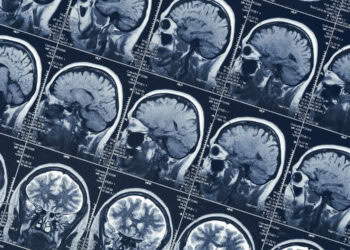
The team at Yale, which published this most recent research, used a brain scanning technology known as as magnetic resonance spectroscopy to measure the levels of glucose and fructose in the brains of eight healthy participants. What they showed was that after just 20 minutes of a glucose infusion into the blood, fructose levels in the brain markedly increased, and at much higher levels than in the blood.
All eight volunteers included in the study saw similar effects, but those that had the highest levels of glucose in the brain also had the highest levels of fructose. This provides the first ever conclusive evidence that the human brain is able to take excess glucose and rapidly convert it into fructose. Production of fructose in the human brain may therefore actually be a mechanism by which high levels of glucose alter brain function.
The findings of this study are very important. The consumption of fructose has greatly increased over the last five decades, due largely to the development of high-fructose corn syrup, a commercial sweetening agent that contains high amounts of free fructose. Consumption of fructose-rich diets have rightly come under attack as the health implications become more clear, but little focus on how glucose can be converted to fructose exists.
We currently have epidemic levels of type 2 diabetes in many parts of the world, a disease in which elevated blood glucose levels are seen. The data presented by the team at Yale suggest that in poorly controlled diabetics, whose blood glucose can rise and stay elevated for hours at a time, fructose will likely be rapidly produced in significant amounts in the brain and this could provide a mechanism for changes in the brain seen in type 2 diabetes. The population of poorly controlled diabetics is growing annually making this an urgent problem.
This data is very exciting but does need to be approached with some caution. As only eight subjects were included in the study, it is difficult to apply the findings to larger populations. It would be interesting to repeat the experiment in people who have diabetes, to show if this effect also occurs due to normal fluctuations in blood-glucose levels. Regardless, this study changes the way we think about how the brain uses sugar and may lead to changes in how we target neurological complications of diabetes.

By James Brown, Lecturer in Biology and Biomedical Science, Aston University
This article was originally published on The Conversation. Read the original article.