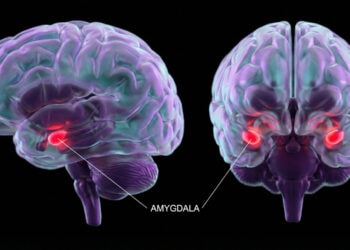
Excessive internet use has become a significant concern in recent years, and a recent study published in PLOS Mental Health has provided new insights into how this phenomenon might correlate with changes in the developing adolescent brain. The study, which reviewed multiple research findings, suggests that internet addiction is associated with altered functional connectivity in several brain networks in adolescents.
Adolescence is a critical period characterized by significant biological, cognitive, and social changes. Given the heightened neuronal plasticity and risk-taking behavior during this stage, understanding how excessive internet use correlates with brain connectivity can provide insights into both the potential consequences and interventions for internet addiction. The study aimed to address a key questions: how internet addiction correlates with functional connectivity in the adolescent brain.
“My interest piqued for this topic due to my experience playing video games and using internet growing up. Given the opportunity to pursue this interesting and relevant topic, I jumped at the chance of researching it,” said study author Max L. Y. Chang, who conducted the research at the University College London.
The researchers conducted a meta-analysis to investigate the neurological changes associated with internet addiction in adolescents. A meta-analysis is a statistical technique that combines the results of multiple scientific studies to derive a more comprehensive understanding of a particular research question.
By synthesizing data from various studies, meta-analyses can identify patterns, assess the robustness of findings, and provide more generalizable conclusions. This approach is particularly useful in fields where individual studies may have small sample sizes or varied results, as it helps to mitigate these limitations and produce a clearer overall picture.
For this meta-analysis, the researchers adhered to the Preferred Reporting Items for Systematic Reviews and Meta-Analyses (PRISMA) guidelines, which ensure a structured and transparent review process. They systematically searched databases such as PubMed and PsycINFO for studies that involved adolescents aged 10 to 19 with a clinical diagnosis of internet addiction.
The inclusion criteria for the studies were: participants with a clinical diagnosis of internet addiction, use of imaging techniques like functional magnetic resonance imaging (fMRI), peer-reviewed publications written in English, and studies published between January 2013 and April 2023. Studies that did not meet these criteria were excluded.
After an initial search yielded 238 articles, the researchers applied their inclusion and exclusion criteria to narrow down the pool to 12 eligible studies. These selected studies primarily came from Asian countries, specifically China, Korea, and Indonesia, and involved sample sizes ranging from 12 to 31 participants. The studies used various fMRI techniques to examine the brain’s functional connectivity.
The findings indicated that internet addiction is associated with altered connectivity in the default mode network (DMN) and the reward network. The DMN, which is involved in self-referential and attentional processes, showed both increases and decreases in functional connectivity, depending on the specific brain region.
For example, the posterior cingulate cortex, a critical part of the DMN, exhibited altered connectivity patterns in adolescents with internet addiction. Additionally, increased connectivity was observed in regions linked to the reward system, such as the nucleus accumbens and the caudate, suggesting heightened reinforcement for internet-related stimuli.
The executive control network (ECN), which is essential for cognitive functions like response inhibition and emotional regulation, showed consistent reductions in functional connectivity. Adolescents with internet addiction exhibited decreased connectivity in areas like the dorsolateral prefrontal cortex and the inferior frontal gyrus, which are crucial for controlling impulsive behavior. These changes suggest that impaired executive control might contribute to the compulsive use of the internet, even in the face of negative consequences.
The salience network (SN), responsible for identifying and responding to important stimuli, also showed moderate declines in connectivity. Reduced structural connectivity and fractional anisotropy in the SN were correlated with impaired cognitive control in various tasks. These findings suggest that adolescents with internet addiction may struggle to manage their attention and responses to internet-related cues effectively.
The study’s findings highlight similarities between internet addiction and other forms of behavioral and substance addictions, such as gambling and drug dependence. The increased connectivity in the reward network and decreased connectivity in the executive control network are patterns commonly observed in various types of addiction. This suggests that similar neural mechanisms might underlie different addictive behaviors.
“The main takeaway that I hope people get from this review is that adolescents diagnosed with internet addiction exhibit changes in their brain that can deeply affect their development and behavior,” Chang told PsyPost. “However, with this conclusion, it is important to understand that the internet is not an all-good or all-bad entity.”
“For internet addiction, many of the underlying mechanisms behind it are largely unknown. My hope for this field is that we develop an extensive understanding of the causes and effects of internet addiction in the future.”
While the study provides valuable insights, it also has several limitations. The reviewed studies primarily originated from Asian countries, which raises questions about the generalizability of the findings to other populations. Additionally, the small sample sizes of the included studies may affect the reliability and applicability of the results. Most of the studies employed cross-sectional designs, making it difficult to establish causal relationships between internet addiction and changes in brain connectivity.
“While this paper presents a straightforward systematic review suggesting that there are associations between functional connectivity in the brain and internet ‘addiction’, there are a number of fundamental limitations to be aware of that are critical to any interpretation,” Professor David Ellis of the University of Bath’s Institute for Digital Security and Behaviour told the Science Media Centre.
“First, the causal language used throughout is misleading. For example, headings with titles like ‘How does Internet addiction affect the functional connectivity’ and the suggestion of ‘effects’ throughout are inaccurate. Cause and effect cannot be drawn from these studies, yet this is only flagged in the discussion as a major limitation.”
“Second, the focus on functional connectivity comes at the expense of any critique about the key measure of interest,” Ellis continued. “Specifically, internet ‘addiction’, which was initially conjured up by Ivan K. Goldberg in 1995 as a joke. Today, the conceptualisation and measurement of internet ‘addiction’ is neither universally accepted and certainly not diagnosable using the survey instruments used in the studies included as part of the review. Similarly, the enormity of activities that the internet allows for immediately makes this definition somewhat redundant.”
“Such definitions, despite being widely critiqued, also have a tendency to move the focus away from genuine online harm and towards a conclusion that suggests the removal of technology from peoples’ lives will be helpful. Solid evidence to suggest that removing the internet brings any tangible benefits has not been forthcoming.”
“What we do know is that self-reported ‘addiction’ measures, as used in the papers reviewed here, appear to measure something about how much someone worries in general. Indeed, we have repeatedly observed that surveys used to assess related ‘addictions’ measure a poorly defined construct that sometimes overlaps with pre-existing measures of well-being. More importantly, these assessments are weakly associated with the actual time someone spends using digital technologies including the internet.”
“This means that any associations between functional connectivity and internet ‘addiction’ are at the mercy of multiple cofounders. This makes drawing strong conclusions from the papers reviewed almost impossible,” Ellis concluded.
The study, “Functional connectivity changes in the brain of adolescents with internet addiction: A systematic literature review of imaging studies,” was authored by Max L. Y. Chang and Irene O. Lee.