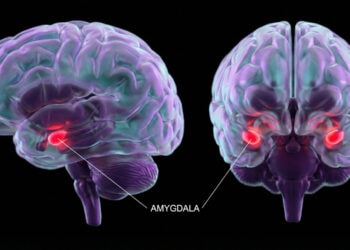
A study published in PLOS One found that odd beliefs/magical thinking, primary psychopathy, and trait Machiavellianism were each associated with a greater likelihood of believing in conspiracy theories.
Conspiracy theories are beliefs involving alternative explanations for a circumstance or event, often supposing a covert and powerful organization is responsible for orchestrating a secret plot. Research has shown that individuals who hold these beliefs may be at risk for detrimental social and health outcomes, and reduced prosocial behavior.
Study authors Evita March and Jordan Springer set out to explore trait psychopathy as a possible predictor for belief in conspiracy theories. They say, “characteristics of trait psychopathy such as the tendency to be exploitative, manipulative, have a grandiose sense of self-importance, and social dominance orientation, have all previously been associated with belief in conspiracy theories.”
Additionally, the authors aimed to extend the research linking narcissism and psychopathy to belief in conspiracy theories by exploring different dimensions of these two traits. They proposed that vulnerable narcissism (characterized by insecurity) might better explain the link between narcissism and belief in conspiracy theories than grandiose narcissism (associated with a sense of superiority of the self). The authors further distinguished between primary psychopathy (characterized by interpersonal detachment) and secondary psychopathy (characterized by emotional dysregulation).
A sample of 230 subjects with an average age of 26 completed an online questionnaire that assessed odd beliefs/magical thinking, grandiose and vulnerable narcissism, and primary and secondary psychopathy. Participants additionally completed the MACH-IV test which measured Machiavellianism, a trait characterized by the tendency to manipulate others for personal gain. Finally, subjects completed the Generic Conspiracist Beliefs Scale which asked them to rate their agreement with items like, “The government is involved in the murder of innocent citizens and/or well-known public figures, and keeps this a secret.”
Initial results showed that all variables were positively associated with belief in conspiracy theories. After regression analysis, odd beliefs/magical thinking, Machiavellianism, and primary psychopathy emerged as the only positive predictors for belief in conspiracy theories.
The authors suggest that it is unsurprising that primary psychopathy emerged as a predictor, given that characteristics linked to the trait (such as manipulation and exploitation) have also been linked to belief in conspiracy theories. Secondary psychopathy, on the other hand, was not linked to belief in conspiracies. “The lack of utility of secondary psychopathy to predict belief in conspiracy theories suggests that such beliefs are less associated with impulsivity and emotional reactivity, and may underpin a careful, structured, and detached interpersonal style where relations with others are based on dominance and manipulation,” March and Springer say.
Although previous research has linked narcissism to belief in conspiracies, March and Springer’s study showed neither grandiose nor vulnerable narcissism to be predictors of such beliefs. One explanation for this, the authors suggest, is that narcissism loses its predictive power when combined with the significant predictors of Machiavellianism, odd beliefs/magical thinking, and primary psychopathy—which together predicted 55% of the variance in conspiracy belief.
Finally, researchers suggest how the psychological trait of Machiavellianism might lead to increased belief in conspiracies. “Individuals with high trait Machiavellianism are strategic, exploitative, considered ‘master manipulators’, and tend to have a cynical view of human nature. As such, it is possible this these individuals believe other people to be foolish and easily manipulated; whereas they themselves are not so easily manipulated and know the truth,” the authors say.
As the study was cross-sectional, causality cannot be inferred. The authors suggest future studies delve further into possible mediators and causal relationships that might explain the personality traits that promote belief in conspiracy theories.
The study, “Belief in conspiracy theories: The predictive role of schizotypy, Machiavellianism, and primary psychopathy”, was authored by Evita March and Jordan Springer.