Subscribe
The latest psychology and neuroscience discoveries.
My Account
  • Mental Health
  • Social Psychology
  • Cognitive Science
  • Neuroscience
  • About
No Result
View All Result
PsyPost
PsyPost
No Result
View All Result
Home Exclusive Cognitive Science

Neuroscience study finds evidence that meditation increases the entropy of brainwaves

by Eric W. Dolan
February 11, 2020
in Cognitive Science, Meditation
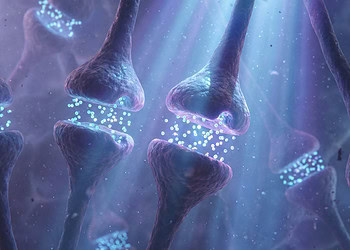
(Photo credit: psdesign1)

(Photo credit: psdesign1)

Share on TwitterShare on Facebook

New research suggests that the brain displays a similar pattern of chaotic activity during meditation as it does during the psychedelic experience. The findings, published in the journal Neuroscience, indicate that meditation is associated with increased brain entropy.

“We are currently witnessing a major psychedelic renaissance, both in science and society. Psychedelics are being reconsidered as comparatively safe tools to investigate the relationship between brain, mind and consciousness, as well as promising clinical alternatives to treat certain psychiatric disorders, such as depression,” explained study author Enzo Tagliazucchi a professor at the University of Buenos Aires and director of the Computational Cognitive Neuroscience Lab.

“I became interested in certain overlaps between the phenomenology (i.e. ‘what it feels like’) of some meditation traditions and the psychedelic state. For instance, both states have been consistently linked to a collapse of self-boundaries and a merging of the subjective and objective sides of reality.”

“My colleague Robin Carhart-Harris, one of the leading figures of the psychedelic renaissance, has put forward a theory of the psychedelic state as a brain state of increased entropy, and I became interested in finding out whether meditation could also be associated with increases in the entropy of brain activity.”

Brain entropy describes the randomness and predictability of brain activity. Tagliazucchi and Carhart-Harris were previously involved in research which found that people had higher brain entropy — meaning a larger range of potential brain states — under the influence of the psychedelic drug psilocybin.

Other research has found that higher entropy in several key brain areas is associated with higher intelligence. But heightened brain entropy has also been observed in patients with schizophrenia.

In his new study, Tagliazucchi and his colleagues recorded participants’ brainwaves to calculate their brain entropy during meditation. Electrical brain activity and oscillation patterns were measured by electroencephalogram in 27 Himalaya Yoga meditators, 20 Vipassana meditators, 27 Isha Yoga meditators, and 30 individuals with no meditation experience.

The researchers found that Vipassana meditation resulted in the highest entropy increases, with the most salient increases occurring in alpha and gamma brainwaves.

Google News Preferences Add PsyPost to your preferred sources

“In spite of not feeling at all like brain activity, your conscious experience is the result of processes that happen in the brain, and because of this there has to be a correspondence between what happens physically in the brain and how that feels in your first-person point of view,” Tagliazucchi told PsyPost.

“The acute effects of psychedelics and some meditative practices both lead to states departing from ordinary conscious wakefulness, and are experienced subjectively as richer in information and capable of sustaining an ample repertoire of contents. Because of this, we hypothesized that meditation would be associated with increased information content (in other words, increased entropy) of brain activity recordings, which was confirmed in the study.”

Future research could use other tools — such as functional magnetic resonance imaging or magnetoencephalography — to examine brain entropy during meditation.

“We need to replicate this result using other techniques to measure brain activity. We also need to probe the conscious experience of the subjects during or immediately after their meditation practice to verify whether time to time changes in entropy correspond to the fluctuating nature of their subjective experience,” Tagliazucchi explained.

The study, “Meditation Increases the Entropy of Brain Oscillatory Activity“, was authored by Rocío Martínez Vivot, Carla Pallavicinia, Federico Zamberlan, Daniel Vigo, and Enzo Tagliazucchi.


Previous Post

Women’s cardiovascular responses show supportive feedback can backfire if it’s tinged with benevolent sexism

Next Post

Study provides new details on the link between sexual satisfaction and vibrator use

RELATED

ChatGPT acts as a “cognitive crutch” that weakens memory, new research suggests
Artificial Intelligence

ChatGPT acts as a “cognitive crutch” that weakens memory, new research suggests

March 30, 2026
Verbal IQ predicts political participation and liberal attitudes twice as strongly as performance IQ
Cognitive Science

Trying harder on an intelligence test does not actually improve your score

March 27, 2026
Brain rot and the crisis of deep thought in the age of social media
Cognitive Science

Massive analysis of longitudinal data links social media to poorer youth mental health

March 27, 2026
High meat consumption may protect against cognitive decline in people with a specific Alzheimer’s gene
Cognitive Science

Asking complex questions improves creative project scores but hurts multiple-choice exam grades

March 26, 2026
Chronic medical conditions predict childhood depression more strongly than social or family hardships
Cognitive Science

What brain waves reveal about people who can solve a Rubik’s Cube in seconds

March 24, 2026
Shifting genetic tides: How early language skills forecast ADHD and literacy outcomes
Cognitive Science

The biological roots behind the chills you get from music and art

March 22, 2026
Machiavellianism most pronounced in students of politics and law, least pronounced in students of social work, nursing and education
Cognitive Science

Intelligence predicts progressive views, but only after college

March 21, 2026
Genetic factors likely confound the link between c-sections and offspring mental health
Cognitive Science

Neuroscientists just upended our understanding of Pavlovian learning

March 21, 2026

STAY CONNECTED

RSS Psychology of Selling

  • The “dark” personality traits that predict sales success — and when they backfire
  • What communication skills do B2B salespeople actually need in a digital-first era?
  • A founder’s smile may be worth millions in startup funding, research suggests
  • What actually makes millennials buy products on sale?
  • The surprising coping strategy that may help salespeople avoid burnout

LATEST

Glyphosate: A common weedkiller may induce anxiety by disrupting gut bacteria

Psychopathic traits are linked to a lack of physical and emotional connection during face-to-face interactions

ChatGPT acts as a “cognitive crutch” that weakens memory, new research suggests

Electronic dance music events appear to provide a mental health boost for women over 40

The psychological difference between playing video games to relax and playing to win

Women who hate men: Study finds similarities in gendered hate speech on Reddit

Severe emotional outbursts in ADHD are linked to distinct brain differences, study finds

Depression in early adolescence is linked to attention problems that worsen over time

PsyPost is a psychology and neuroscience news website dedicated to reporting the latest research on human behavior, cognition, and society. (READ MORE...)

  • Mental Health
  • Neuroimaging
  • Personality Psychology
  • Social Psychology
  • Artificial Intelligence
  • Cognitive Science
  • Psychopharmacology
  • Contact us
  • Disclaimer
  • Privacy policy
  • Terms and conditions
  • Do not sell my personal information

(c) PsyPost Media Inc

Welcome Back!

Login to your account below

Forgotten Password?

Retrieve your password

Please enter your username or email address to reset your password.

Log In

Add New Playlist

Subscribe
  • My Account
  • Cognitive Science Research
  • Mental Health Research
  • Social Psychology Research
  • Drug Research
  • Relationship Research
  • About PsyPost
  • Contact
  • Privacy Policy

(c) PsyPost Media Inc