![[Adobe Stock]](https://sp-ao.shortpixel.ai/client/to_webp,q_glossy,ret_img,w_750,h_375/https://www.psypost.org/wp-content/uploads/2024/12/lgbtq-activism-protest-750x375.jpg)
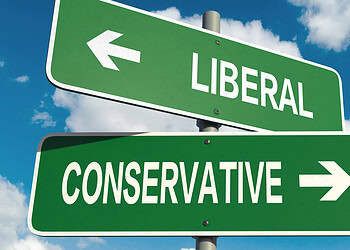
People across the political spectrum tend to see left-leaning political causes as more morally compelling than right-leaning ones, according to new research published in the European Journal of Social Psychology. The findings, based on two studies conducted in Spain, indicate that not only do leftist individuals feel a strong moral obligation to defend traditionally progressive issues — such as gender equality and environmental protection — but that conservatives do as well. Conservatives also appear to view their leftist counterparts as more morally principled than the reverse.
These findings provide evidence of a moral asymmetry in political judgment, one that favors progressive causes and individuals in the public imagination. The results suggest this pattern may shape political polarization and influence how people across the ideological divide perceive one another.
“Political debates often feel like moral battles rather than simple policy disagreements. We wanted to examine whether people perceive what we believe could be a key factor in understanding political polarization: the perceived moral superiority of the left,” said study author Cristian Catena-Fernández, a professor of social psychology at Universidad Nacional de Educación a Distancia (UNED) in Madrid.
“We argue that this perception (i.e., beyond whether the phenomenon is real or not) may be reflected in at least two specific psychological processes. The first is the prevailing tendency to feel a particularly strong moral obligation to defend political topics traditionally associated with the left (e.g., gender equality) compared to those associated with the right (e.g., national security). The second is the tendency to view leftists as more morally upright than rightists.”
The researchers conducted two studies, both carried out in Spain. Participants were recruited by psychology students at a public distance-learning university, who invited acquaintances to participate in the online studies as part of a class assignment. This approach yielded samples that were somewhat more educated than the general Spanish population, but geographically and demographically diverse.
In the first study, over 650 participants were asked to rate their sense of moral obligation to defend one of 12 political topics, randomly assigned. These topics had been pre-categorized as either traditionally leftist (e.g., environmental protection, gender equality) or rightist (e.g., national security, maintaining traditions) based on prior research. Participants also identified their political orientation on a scale from very left-wing to very right-wing. Those in the ideological middle were excluded from the main analysis.
Participants rated how strongly they agreed with statements such as “Defending [this topic] is a deep moral imperative” or “We have a duty and moral obligation to defend [this topic].” These items were adapted from prominent public and institutional sources that use moral language to frame social and political causes.
In the second study, a larger sample of 749 participants rated moral stereotypes, meta-stereotypes, and self-stereotypes related to ideological groups. In other words, they evaluated how moral they thought leftists and rightists were, how they believed others viewed their own group’s morality, and how they saw their own group in moral terms. Each participant was randomly assigned one of eight topics — four leftist and four rightist — and answered questions within that topical frame.
Across both studies, a consistent pattern emerged: leftist topics and leftist individuals were judged more favorably in moral terms than their rightist counterparts.
In Study 1, both leftists and rightists perceived a stronger moral obligation to defend leftist topics than rightist ones. While this effect was more pronounced among leftist participants, it remained significant even among conservatives. Rightist participants reported feeling more morally obligated to support causes such as gender equality and fighting poverty than to defend topics traditionally aligned with their own ideology, like maintaining social order or protecting national identity.
The findings were backed up by statistical models showing that the more a participant saw a topic as associated with the left, the more moral obligation they felt to support it. Conversely, the more they saw a topic as rightist, the less morally compelled they felt to support it — regardless of their own political orientation.
“We expected some differences, but the consistency of the asymmetry was striking,” Catena-Fernández told PsyPost. “Even rightists reported feeling more morally obliged to defend leftist causes than rightist ones.”
In Study 2, the researchers turned to perceptions of people rather than topics. Conservatives viewed leftist individuals as more moral than liberals viewed conservatives — especially when the context was a left-leaning issue. For example, conservatives rated liberals as more honest, ethical, and morally committed when it came to defending environmental protection, but liberals did not view conservatives as similarly moral when evaluating them on topics like national security.
Conservatives also believed that liberals saw them as morally deficient, a pattern known as a negative moral meta-stereotype. Liberals, on the other hand, did not anticipate the same kind of moral condemnation from conservatives.
When it came to how participants saw their own group’s morality, there were no significant differences between leftists and rightists. Both groups rated themselves highly on moral traits, suggesting that ingroup moral identity remains strong even when outgroup perceptions are asymmetric.
Taken together, the studies provide empirical evidence for a widely felt — but rarely measured — phenomenon: the perception that leftist causes and people are more morally upright than their rightist counterparts. This asymmetry could help explain why political debates often feel morally lopsided, with one side perceived as defending human rights and the other seen as preserving tradition or security without the same ethical weight.
The researchers suggest that this may not simply reflect personal beliefs, but broader social norms. Progressive values like gender equality, environmentalism, and social justice have gained prominence in Western societies over the past few decades. As these values become embedded in public discourse, people may come to see them as universally moral — even when they do not fully align with their personal ideology.
“Our results show a clear moral asymmetry: both leftists and rightists feel a stronger moral duty to defend causes linked to the left (such as gender equality or environmental protection) than those linked to the right (such as national security or tradition),” Catena-Fernández said. “Moreover, rightists tend to see leftists as more morally committed than the reverse. This helps explain why political debates so often become polarized around moral issues and why each side frequently feels misunderstood.”
As with all research, there are some limitations to consider. The studies were conducted in Spain, a specific cultural and political setting. While some of the trends may generalize to other Western democracies, cross-national comparisons are needed to confirm this. The samples also overrepresented highly educated individuals, which could influence moral perceptions.
In future research, “we plan to investigate how these moral perceptions influence political behavior—such as voting intentions or willingness to engage in dialogue across ideological divides,” Catena-Fernández explained. “Ultimately, our aim is to better understand how moral asymmetries fuel polarization and what can be done to reduce them.”
“One key message is that political conflict is not only about policy differences, but about competing moral narratives. Recognizing that both sides see themselves as morally motivated may be a first step toward fostering more constructive dialogue.”
The study, “Moral Perceptions in Politics: Ideological Asymmetries in Perceived Moral Obligations and Stereotypical Perceptions Across Leftists and Rightists,” was authored by Cristian Catena-Fernández and Saulo Fernández.