Subscribe
The latest psychology and neuroscience discoveries.
My Account
  • Mental Health
  • Social Psychology
  • Cognitive Science
  • Neuroscience
  • About
No Result
View All Result
PsyPost
PsyPost
No Result
View All Result
Home Exclusive Mental Health Addiction

Psilocybin increases the success of smoking-addiction treatment, research suggests

by PsyPost
October 3, 2016
in Addiction
Photo credit: Vaping360.com

Photo credit: Vaping360.com

Share on TwitterShare on Facebook

The use of the psychedelic drug psilocybin, in combination with cognitive behavioral therapy (CBT), is more effective than current smoking cessation treatments, according to a recent study published online this July in The American Journal of Drug and Alcohol Abuse. The study provides preliminary evidence that psilocybin-use, as part of a structured treatment program, holds considerable promise in promoting long-term smoking abstinence.

Smoking remains a leading public health concern, with almost 6 million tobacco-related deaths per year worldwide, and that number projected to rise further. Therefore, there is an urgent need to explore innovative treatment approaches, especially given that even the most successful available smoking cessation treatments fail to promote long-term abstinence in most people.

Psilocybin is a naturally occurring psychedelic compound produced by more than 200 species of mushrooms. It increases serotonin, which is a chemical that influences mood, and is showing promise as a treatment for several psychiatric illnesses, as well for the treatment of addiction.

The study, by Matthew Johnson, Albert Garcia-Romeu and & Roland Griffiths of the Johns Hopkins University School of Medicine, assessed the long-term effects of a program which combines the use of psilocybin with CBT aimed at smoking cessation. The study was a follow-up to an earlier pilot study which found that this combination resulted in substantially higher smoking abstinence rates after 6 months compared to other medications or CBT alone.

Participants underwent a 15-week combination treatment consisting of four weekly preparatory meetings integrating CBT, elements of mindfulness training, and guided imagery for smoking cessation. They received a moderate (20 mg/70 kg) dose of psilocybin in week 5 of treatment, and a high dose of psilocybin (30 mg/70 kg) approximately 2 weeks later. Participants also had the opportunity to participate in a third, optional high-dose psilocybin session in week 13 of study treatment.

The results revealed that at 12-month follow-up, 10 participants (67%) were confirmed as smoking abstinent. Furthermore, 13 of the participants (86.7%) rated their psilocybin experiences among the five most personally meaningful and spiritually significant experiences of their lives.

The researchers highlighted, “In controlled studies, the most effective smoking cessation medications typically demonstrate less than 31% abstinence at 12 months post-treatment, whereas the present study found 60% abstinence more than a year after psilocybin administration.”

They concluded, “These results suggest that in the context of a structured treatment program, psilocybin holds considerable promise in promoting long-term smoking abstinence.”


Google News Preferences Add PsyPost to your preferred sources
Previous Post

Research shows attractiveness is judged according to who we are with

Next Post

An ADHD diagnosis puts girls at much higher risk for other mental health problems

RELATED

New study links early maltreatment to higher risk of teen dating violence
Addiction

Multiple childhood traumas linked to highly interconnected addictive behaviors in adulthood

March 2, 2026
Why most people fail to spot AI-generated faces, while super-recognizers have a subtle advantage
Dark Triad

Dark personality traits are linked to the consumption of violent pornography

February 28, 2026
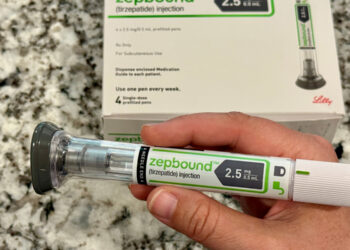
A popular weight loss drug shows promise for treating alcohol addiction
Addiction

A popular weight loss drug shows promise for treating alcohol addiction

February 21, 2026
Brain imaging study finds large sex-differences in regions tied to mental health
Addiction

Neural signatures of impulsivity and neuroticism are largely distinct in youth

February 19, 2026
Genes and childhood trauma both play a role in adult ADHD symptoms, study finds
Addiction

Childhood trauma and genetics drive alcoholism at different life stages

February 12, 2026
Adolescents with ADHD tend to eat more snacks than their peers
Addiction

Scientists: Ultra-processed foods are engineered to hijack your brain and should be treated like Big Tobacco

February 9, 2026
Social media may be trapping us in a cycle of loneliness, new study suggests
Addiction

The hidden role of vulnerable dark personality traits in digital addiction

February 3, 2026
The tendency to feel like a perpetual victim is strongly tied to vulnerable narcissism
Addiction

Having a close friend with a gambling addiction increases personal risk, study finds

January 28, 2026

STAY CONNECTED

LATEST

The orgasm face decoded: The intriguing science of sexual climax

Undigested fruit sugar is linked to increased anxiety and inflammation

Early puberty provides a biological link between childhood economic disadvantage and teenage emotional struggles in girls

People with “dark” personality traits see the world as fundamentally meaningless

Two to three cups of coffee a day may protect your mental health

The difficult people in your life might be making you biologically older

The hidden brain benefit of getting in shape that scientists just discovered

A surprising number of men suffer pain during sex but are less likely than women to speak up

PsyPost is a psychology and neuroscience news website dedicated to reporting the latest research on human behavior, cognition, and society. (READ MORE...)

  • Mental Health
  • Neuroimaging
  • Personality Psychology
  • Social Psychology
  • Artificial Intelligence
  • Cognitive Science
  • Psychopharmacology
  • Contact us
  • Disclaimer
  • Privacy policy
  • Terms and conditions
  • Do not sell my personal information

(c) PsyPost Media Inc

Welcome Back!

Login to your account below

Forgotten Password?

Retrieve your password

Please enter your username or email address to reset your password.

Log In

Add New Playlist

Subscribe
  • My Account
  • Cognitive Science Research
  • Mental Health Research
  • Social Psychology Research
  • Drug Research
  • Relationship Research
  • About PsyPost
  • Contact
  • Privacy Policy

(c) PsyPost Media Inc