![[Imagen 3]](https://sp-ao.shortpixel.ai/client/to_webp,q_glossy,ret_img,w_750,h_375/https://www.psypost.org/wp-content/uploads/2025/02/brain-2-750x375.jpg)
Current theories about why schizophrenia develops suggest it may be linked to changes in brain development during this critical period of emerging adulthood. Schizophrenia is also thought to be similar to conditions such as dyslexia, autism and attention deficit hyperactivity disorder (ADHD), which are neurodevelopmental but usually manifest in childhood.
However, our research suggests that accelerated brain ageing could be another potential driver in the development of schizophrenia – and this can be measured using a simple blood test.
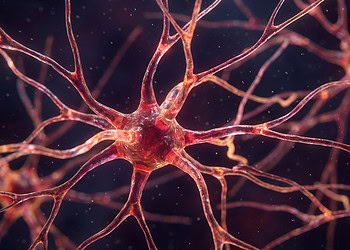
Our study is unique because we measured proteins in blood derived directly from brain neurons – the brain’s nerve cells – in people suffering from schizophrenia. This protein, called neurofilament light protein (NfL), consists of long, thread-like structures that help maintain the size and shape of nerve cells.
NfL is released into the blood and cerebrospinal fluid when brain neurons are damaged or undergo neurodegeneration. Its release when these cells are damaged makes it a useful biomarker for diagnosing and monitoring neurodegenerative diseases and neurological damage. Measuring the levels of NfL can also provide insight into the extent of neuronal injury.
Neuronal injury is damage or harm to neurons, the specialised cells in the nervous system essential for communication in the brain, spinal cord and peripheral nervous system. When neurons are injured, their ability to function properly is impaired, which can result in a range of neurological symptoms depending on the severity and location of the damage.
Raised levels of NfL have been associated with a range of neurological conditions including Alzheimer’s disease, multiple sclerosis, Parkinson’s disease and frontotemporal dementia. But NfL levels also normally increase with age as these proteins lose the ability to repair themselves as effectively. This is due to a combination of factors including gradual wear-and-tear on neurons over time.
While reductions in the brain’s grey matter, white matter and connectivity are all part of normal, healthy ageing, these changes are usually gradual and not disabling. Grey matter contains most of the brain’s neurons and is responsible for processing information, memory, decision-making, muscle control, and seeing and hearing. White matter is the long fibres that connect different brain regions, allowing them to communicate quickly and efficiently.
Noticeable symptoms of normal, healthy brain ageing might include a bit more forgetfulness, slower reaction time, and difficulty juggling multiple tasks. Such changes are very different from the patterns seen in illnesses like schizophrenia where, our study shows, the decline is faster and more severe, indicating an older brain age than would be expected from the patient’s chronological age.
Our research found that, in people with schizophrenia, NfL levels appeared to increase more quickly with age, compared with the rate of increase in healthy people, indicating an acceleration of the brain ageing process.
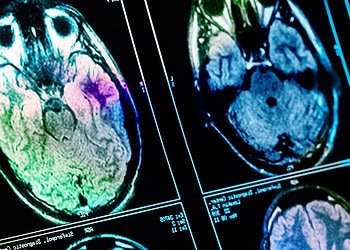
We also studied samples from people suffering from bipolar disorder, which did not show the same accelerated increase. Data from other methods, such as calculating “brain age” from MRI scans, also points to accelerated brain ageing in people with schizophrenia.
Lifestyle factors
For people suffering from schizophrenia, accelerated ageing of the body is already a serious problem, as Christos Pantelis, a Melbourne psychiatrist and senior author of our study, explains:
An important problem is that people with chronic schizophrenia are often exposed to an unhealthy lifestyle overall. They can experience isolation, unemployment, lack of physical activities, smoking – and many resort to illicit drug use that can make their condition worse.
Currently, people diagnosed with schizophrenia have a life expectancy 20-30 years shorter than the average. This is mainly due to earlier development of common age-related diseases such as cancer and cardiovascular disease. Around half of people with schizophrenia have at least one other chronic medical condition, such as obesity, respiratory conditions, chronic pain and substance-use disorders.
People with schizophrenia have a higher risk of substance-use disorders due to a combination of biological, psychological and environmental factors. These include self-medication for distressing symptoms, impaired cognitive function, social isolation, and difficulties with treatment adherence.
While lifestyle is a factor in the accelerated ageing of the body for those living with schizophrenia, our study could prove another important step in understanding – and in time, treating – this distressing disease.
This article is republished from The Conversation under a Creative Commons license. Read the original article.