Subscribe
The latest psychology and neuroscience discoveries.
My Account
  • Mental Health
  • Social Psychology
  • Cognitive Science
  • Neuroscience
  • About
No Result
View All Result
PsyPost
PsyPost
No Result
View All Result
Home Exclusive Cognitive Science

Scientists develop a new way to decode specific aspects of movement in the human brain

by University of California at Santa Barbara
May 14, 2014
in Cognitive Science
Photo credit: youris.com

Photo credit: youris.com

Share on TwitterShare on Facebook

Our human brains are filled with maps: visual maps of our external environments, and motor maps that define how we interact physically within those environments. Somehow these separate points of reference need to correspond with — and to — one another in order for us to act, whether it’s grasping a coffee cup or hitting a tennis ball.

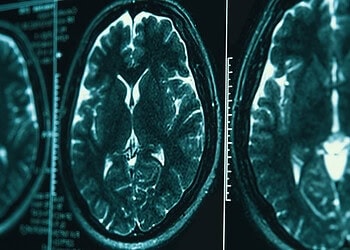
How that happens is the focus of a new study by scientists at UC Santa Barbara. The researchers used neuroimaging to decode how the brain transforms sensory input into action. Their findings are reported in The Journal of Neuroscience.

A doctoral student in UCSB’s new Interdepartmental Graduate Program in Dynamical Neuroscience, lead author Deborah Barany and colleagues measured brain activity as participants made wrist movements in different directions (left and right, or up and down) in one of two postures while in an MRI scanner.

“Trying to record the movements performed in the scanner was the first major challenge of the experiment,” Barany said. To accomplish this, she implemented a sophisticated setup in which cameras recorded LED lights placed on the right hand to track very fine movements during brain scanning. “We were ultimately able to gather a rich set of movement data to relate to brain activity.”

The researchers used an analysis technique that allowed them to parse out the specific patterns of brain activity corresponding to different aspects of movement. Building on previous research, they found brain areas containing maps for the spatial location where a movement was to go as well as the actual movement direction. One of these areas, the superior parietal lobule, contained information for both location and direction, suggesting that this area helps facilitate the transformation process.

An unexpected finding was that these movement-related maps were highly sensitive to the posture of the hand. “It was surprising to see representations of posture throughout the motor system,” said Barany. “This may mean that posture-dependent planning is more widespread in the brain than previously thought.”

“Even if you can distinguish brain activity for two actions, you still don’t know if that is because of differences in where things are in the world or differences in the way the muscles are being used,” said Scott Grafton, a professor in UCSB’s Department of Psychological and Brain Science and director of the campus’s Action Lab, where Barany is a member. “What Deborah figured out how to do is overcome that uncertainty using state-of-the-art decoding methods.”

This work helps to explain the deficits of patients with neurological damage affecting the processing of visuomotor transformations. The researchers’ findings may guide the development of novel therapies to treat patients with optic ataxia (an inability to accurately reach to objects) and ideomotor apraxia (a deficit in imitating gestures under command).

Google News Preferences Add PsyPost to your preferred sources

– See more at: https://www.news.ucsb.edu/2014/014154/deconstructing-goal-oriented-movement#sthash.JdiK2er9.dpuf
Previous Post

Difference found in brain area linked to memory among college football players

Next Post

Couples’ relationship satisfaction linked with women’s changing use of birth control pills

RELATED

Researchers identify two psychological traits that predict conspiracy theory belief
Artificial Intelligence

Brain-controlled assistive robots work best when they share the workload with users

March 8, 2026
How common is anal sex? Scientific facts about prevalence, pain, pleasure, and more
Cognitive Science

New psychology research reveals that wisdom acts as a moral compass for creative thinking

March 6, 2026
Hemp-derived cannabigerol shows promise in reducing anxiety — and maybe even improving memory
Alcohol

Using cannabis to cut back on alcohol? Your working memory might dictate if it works

March 5, 2026
Chocolate lovers’ brains: How familiarity influences reward processing
Cognitive Science

A single dose of cocoa flavanols improves cognitive performance during aerobic exercise

March 4, 2026
Heart and brain illustration with electrocardiogram waves, representing cardiovascular health and neurological connection, suitable for psychology and medical research articles.
Cognitive Science

Fascinating new research reveals your heart rate drops when your brain misperceives the world

March 4, 2026
Colorful digital illustration of a human brain with neon wireframe lines, representing neuroscience, psychology, and brain research. Ideal for psychology news, brain health, and cognitive sciences articles.
Cognitive Science

New research on acquired aphantasia pinpoints specific brain network responsible for visual imagination

March 3, 2026
Traumatic brain injury may steer Alzheimer’s pathology down a different path
Cognitive Science

Growing up with solid cooking fuels linked to long-term brain health risks

March 1, 2026
The disturbing impact of exposure to 8 minutes of TikTok videos revealed in new study
Cognitive Science

Problematic TikTok use correlates with social anxiety and daily cognitive errors

March 1, 2026

STAY CONNECTED

LATEST

Supportive relationships are linked to positive personality changes

Brain-controlled assistive robots work best when they share the workload with users

Common airborne chemicals are linked to suicidal thoughts in a new public health study

New research sheds light on the psychological recipe for a grudge

Eating ultra-processed foods is not linked to faster mental decline, study finds

Hypocrisy and intolerance drive religious doubt among college students

A single dose of DMT reverses depression-like symptoms in mice by repairing brain circuitry

Apocalyptic views are surprisingly common among Americans and predict responses to existential hazards

PsyPost is a psychology and neuroscience news website dedicated to reporting the latest research on human behavior, cognition, and society. (READ MORE...)

  • Mental Health
  • Neuroimaging
  • Personality Psychology
  • Social Psychology
  • Artificial Intelligence
  • Cognitive Science
  • Psychopharmacology
  • Contact us
  • Disclaimer
  • Privacy policy
  • Terms and conditions
  • Do not sell my personal information

(c) PsyPost Media Inc

Welcome Back!

Login to your account below

Forgotten Password?

Retrieve your password

Please enter your username or email address to reset your password.

Log In

Add New Playlist

Subscribe
  • My Account
  • Cognitive Science Research
  • Mental Health Research
  • Social Psychology Research
  • Drug Research
  • Relationship Research
  • About PsyPost
  • Contact
  • Privacy Policy

(c) PsyPost Media Inc