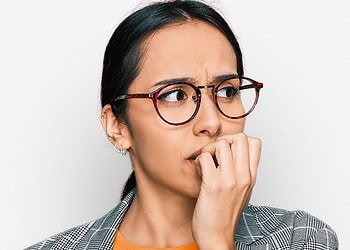
New research published the Journal of Abnormal Psychology suggests that social comparisons play an important role in social anxiety. The findings provide evidence that people with social anxiety view themselves as inferior or deficient compared to others, which in turn is related to worsened mood.
“We regularly compare ourselves to other people to determine where we fall on the social hierarchy,” said study author Fallon R. Goodman, an assistant professor at the University of South Florida and director of the Emotion and Resilience Lab.
“Am I happier than others? More successful? More attractive? More intelligent? Social comparisons are inevitable in highly interconnected societies and likely have powerful influences on our mood and social anxiety. Our study offers a first step in mapping these relationships.”
Goodman and her colleagues conducted a 3-week daily diary study with 186 undergraduate students. At the beginning of the study, the participants completed an assessment of trait social anxiety, meaning the general tendency to experience social anxiety. People with high trait social anxiety agree with statements such as “I have difficulty talking with other people” and “I worry about expressing myself in case I appear awkward.”
The participants were then asked to complete daily surveys every night before bed for at least 21 days. The surveys included assessments of positive and negative moods, social anxiety, and social comparisons.
The researchers found that participants tended to report lower positive mood and higher negative mood on days when they compared themselves less favorably to others. Importantly, less favorable comparisons were associated with higher daily social anxiety and this relationship was slightly stronger among those with higher levels of trait anxiety.
Unexpectedly, however, the researchers found no evidence that trait social anxiety moderated the relationship between social comparisons and mood. But this could be a result of the characteristics of the sample. The researchers noted that the students had relatively low levels of social anxiety.
In a follow-up study, the researchers compared 42 adults diagnosed with social anxiety disorder to a control group of 45 psychologically healthy adults. The second study used a 2-week ecological momentary assessment design, in which participants were prompted to complete surveys about their current mood, social anxiety, and social comparisons at various times throughout the day.
Both studies indicated that social anxiety was associated with more unfavorable social comparisons and that those who compared themselves more favorably to other people tended to experience more positive moods and less negative moods. People with social anxiety also tended to exhibit greater variation in the favorability of their social comparisons.
“This research has two major take-homes. First, social comparisons are closely linked with mood. When participants rated themselves as better off than other people, they also felt more positive emotions, fewer negative emotions, and less social anxiety than when they rated themselves as worse off,” Goodman told PsyPost.
“These self-views, however, fluctuated throughout the day, suggesting that they may be amenable to change with targeted interventions. Second, people with social anxiety frequently worry about being scrutinized, judged, and rejected by other people, and our study found that these social concerns might be due to negative self-views. Specifically, we found that throughout the course of the day, participants with high social anxiety viewed themselves as more socially inferior than participants low in social anxiety.”
The studies asked participants to compare themselves to other people in general. But the researchers noted that comparisons to different types of people might result in different types of outcomes.
“We did not examine if participants viewed themselves differently depending on who they compared themselves to (friends, colleagues, siblings, mentors, etc.),” Goodman explained. “These different social comparisons likely have different influences on mood. For example, viewing yourself as inferior to a world-class athlete might not crush your spirits, but viewing yourself as inferior to your teammates might sting. We have much more to learn about who we compare ourselves to and when social comparisons are harmful or helpful.”
Goodman noted there is a growing concern that social comparisons facilitated by the internet are negatively impacting people’s mental health. But she cautioned that the relationship between social media use and well-being is still murky.
“When people talk about social comparisons, they often jump to erroneous assumptions about social media,” Goodman said. “The reality is that the literature is mixed. Like everything, social media has benefits (e.g., organizing large groups of people to create meaningful change) and drawbacks (e.g., hours lost mindlessly scrolling). Given that social media will likely be a permanent fixture of our lives, it is critical that researchers continue exploring if and how different platforms influence social comparisons and well-being.”
The study, “Social comparisons and social anxiety in daily life: An experience-sampling approach“, was authored by Fallon R. Goodman, Kerry C. Kelso, Brenton M. Wiernik, and Todd B. Kashdan.