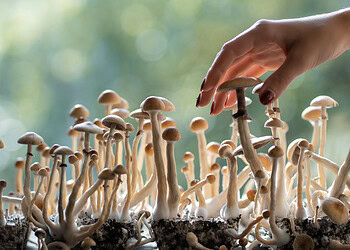
New research provides evidence that a person’s religious beliefs can shape their experiences with psychedelic drugs like LSD and psilocybin mushrooms. The findings were published in the Journal of Psychoactive Drugs.
“I first developed interest in psychedelic drugs after watching some popular documentaries on the subject as an undergrad. After looking more into the academic work for a class project, I quickly became fascinated because much of what I came across in the literature was related to the mystical or religious characteristics of the psychedelic experience,” said study author Logan Neitzke-Spruill of Minnesota State University, Mankato.
“Being fairly skeptical of religion, I was intrigued that under the proper conditions psychedelics are able to produce mystical, religious, or otherwise deeply meaningful experiences which can be employed for therapeutic purposes.”
“Further, I became really interested in the concepts of set and setting, and this notion that, although biology is important, there is much more to the drug experience than what is happening at the physiological level.”
The study of 119 participants found that religious people and those who took psychedelic drugs with religious intent tended to report stronger mystical experiences.
Religious participants were more likely to say that they had a psychedelic experience in which they had no sense of time or space, experienced a feeling of awe, and realized the oneness of all things.
“Set and setting are incredibly important in shaping the psychedelic experience,” Neitzke-Spruill told PsyPost. “These concepts have become almost cliché at this point, at least within the psychedelic world, but I think our findings help reiterate their importance.”
“Specifically, our study shows that using psychedelics for spiritual or religious purposes positively influences scores on the mysticism scale, which illustrates how motivations for using psychedelics can impact the experience.”
“Responses to the survey also seem to indicate some level of awareness of the importance of set and setting among psychedelic users. For instance, more than 60% of respondents reported performing some type of ritual prior to using psychedelics,” Neitzke-Spruill said.
The study — like all research — includes some limitations. The participants were recruited from psychedelic-related websites and a large majority were white males.
“One major limitation is that our study relies on respondents’ recollection of events that may have occurred months or even years ago, which may impact their perceptions of the experience. Also, since we sampled from psychedelic related message boards, our results may not be representative of all those who use psychedelics,” Neitzke-Spruill explained.
“There are a number of questions that still need to be addressed regarding the influence of set and setting on the psychedelic experience. For example, how do specific beliefs impact the psychedelic experience and the potential for long term benefits?”
“Our study looked at religiosity, but it could have benefited from a more nuanced measure of religious beliefs. Furthermore, are certain motivations for using psychedelics more influential than others when it comes to shaping the experience and producing long term positive impacts? Are some physical settings more conducive to positive experiences and long term impacts for some people? Answering these questions may allow for more effective applications of these substances in therapeutic contexts.”
There has been a re-emergence of interest in psychedelic drugs in the scientific community. However, most research is still in the preliminary stages.
“There is a lot of excitement surrounding these substances again. It’s great that research is progressing, and it should be supported,” Neitzke-Spruill said. “But, science takes time and I don’t recommend that anyone take these substances recreationally. That being said, people do inevitably use these drugs, so promoting education aimed at reducing harms is very important.”
“Also, I’d like to thank my co-author and mentor, Carol Glasser, for being open to these ideas and helping me follow through on what began as a class project.”
The study, “A Gratuitous Grace: The Influence of Religious Set and Intent on the Psychedelic Experience“, was authored by Logan Neitzke-Spruill and Carol Glasser.