![[Photo credit: National Institute of Mental Health]](https://sp-ao.shortpixel.ai/client/to_webp,q_glossy,ret_img,w_750,h_375/https://www.psypost.org/wp-content/uploads/2021/09/prefrontal-cortex-750x375.jpg)
New research published in Cortex provides evidence that a brain region known as the ventromedial prefrontal cortex contributes to cognitive biases in decision making. People with damage to this area of the brain often experience changes in personality and social behavior. But the new findings suggest that ventromedial prefrontal cortex damage can also make people more rational under some circumstances.
“In clinic, patients are often completely unaware they have damage at the front of the brain, and yet friends and family report subtle changes in personality and behavior,” said study author Sanjay Manohar, an associate professor and consultant neurologist at the Nuffield Department of Clinical Neuroscience at the University of Oxford.
“Current theories about prefrontal cortex function remain nebulous, ranging from forward planning and counterfactual thinking, to social inference, reward valuation and morality. I wanted to make these ideas more precise, focusing on patients with damage to a small area called ventromedial prefrontal cortex.”
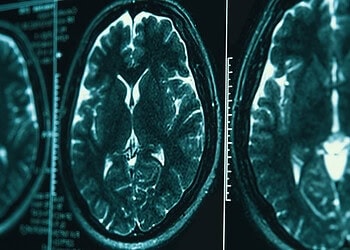
For their study, the researchers recruited patients who had prefrontal cortex lesions as the result of brain hemorrhage. The sample included one patient (dubbed “MJ”) with bilateral ventromedial prefrontal cortex lesions, 16 patients with medial frontal lobe lesions and 33 age-matched healthy controls.
The participants completed a gambling task in which they were instructed to select one of two colors displayed on a computer screen and then bet money on the choice they had made. Each color was associated with a probability of winning or losing however much they had bet, and the probabilities of each color changed over time. But the participants were not explicitly told what the probabilities were. Instead, they had to pay attention to the outcome of each bet and learn over time.
“By using simple models, we can work out which factors are lacking when brain-damaged patients make decisions,” Manohar said.
MJ outperformed everyone else tested, winning a total of £114. The control group won an average of £13.97, while patients with unilateral lesions won an average of £8.24. Compared to the other participants, MJ had more wins when he bet high, “suggesting that strategic betting was responsible for his very high winnings.” The researchers found that participants tended to repeat their selection after winning, a cognitive bias known as the hot hand fallacy, but MJ was less influenced by his previous betting history.
“When a small area at the front of the brain is damaged, patients were less biased by the past, and by things they could have chosen but didn’t. We suggest that our biases, rather than resulting from deficits, are actively constructed by these brain areas,” Manohar told PsyPost.
The findings are in line with a few previous studies, which have provided evidence that damage to the medial prefrontal cortex can result in decreases in some cognitive biases. But “this is not to say that all decisions and behaviors become more rational after such brain damage,” the researchers noted. “Clearly, although he managed to continue to work in a demanding job, patient MJ showed evidence of dysfunction in social cognition and some aspects of decision making and judgment in everyday life.”
The study — like all research — includes some limitations.
“Patients with this kind of damage are rare, and the damage is slightly different in each person, so the localization is not precise,” Manohar explained. “It is nice that it matches with recent rodent research (Lak et al 2020) and with fMRI studies. But we never get to test people before they have the damage — we can’t predict when these bleeds will happen.”
The study, “Reduced decision bias and more rational decision making following ventromedial prefrontal cortex damage“, was authored by Sanjay Manohar, Patricia Lockwood, Daniel Drew, Sean James Fallon, Trevor T-J Chong, Deva Sanjeeva Jeyaretna, Ian Baker, and Masud Husain.