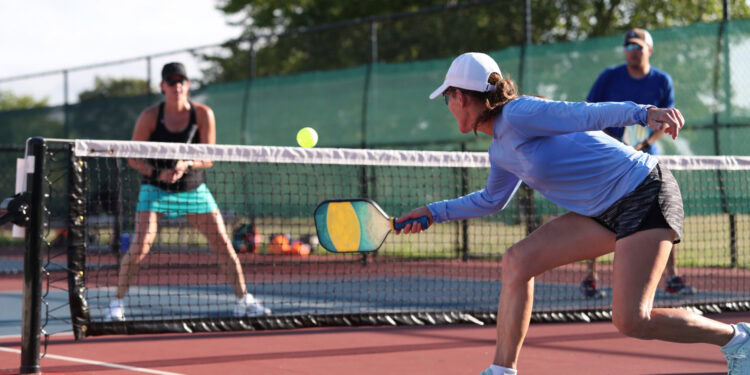

Pickleball participation was associated with greater happiness, life satisfaction, social integration and lower depression, while padel was more closely studied in relation to confidence, anxiety and mental fatigue, according to a systematic review published in Frontiers in Psychology.
Physical activity is widely linked to better mental health, yet many people do not meet recommended activity levels. Padel and pickleball have attracted attention because they are social, relatively accessible and can be played across a range of ages and skill levels. Padel is played on an enclosed court where the ball can rebound from the walls, while pickleball uses a smaller court, a perforated plastic ball and slower-paced play that emphasizes strategy and interaction.
The researchers conducted the review because most previous studies had concentrated on physical fitness, injuries and sporting performance. Less was known about whether these sports were related to mental health and wellbeing. The review ultimately revealed a stark divide in the existing literature: padel has mostly been studied in competitive settings, while pickleball research has frequently focused on recreational play among older adults.
Led by Lena Lauxtermann at the University of Vienna, the researchers searched for studies published through October 8, 2024. Of 71 records screened, 14 studies were included, representing 1,403 participants. Eight padel studies included 538 people and six pickleball studies included 865. Women represented 42% of the overall sample, or approximately 589 participants.
The pickleball findings were mainly linked to wellbeing. Participation was associated with greater happiness, stronger social connections and higher life satisfaction. One study found that happiness was positively related to participation, while another linked more serious involvement in pickleball with lower depression. Social integration appeared particularly important for female players. During the COVID-19 pandemic, reduced opportunities to play were associated with increased loneliness and poorer mental health, suggesting that the social contact provided by the sport may be part of its benefit.
The padel studies focused more on athletes’ performance-related emotions. Higher-level players generally reported greater self-confidence and lower physical symptoms of anxiety. Anxiety also changed according to ranking, gender, match stage and whether players won or lost. Mental fatigue increased across consecutive matches and was linked to slower reactions and poorer accuracy. Motivation sometimes rose during mentally demanding matches, which may help explain why players continued performing despite feeling mentally tired.
The findings suggest the two rapidly growing racket sports may offer different mental-health benefits, but stronger research is needed to determine whether playing them directly causes improvements.
The authors summarized: “Padel studies primarily target performance aspects like self-confidence, anxiety, and mental fatigue, while pickleball research highlights wellbeing gains in life satisfaction, happiness, and social integration.”
Some limitations are to be noted. The results should not be interpreted as proof that either sport prevents depression or anxiety. For example, many studies relied on self-reported experiences, and all of the included studies were observational rather than randomized controlled trials. Padel research also overrepresented elite and competitive players, while pickleball research focused mainly on older adults. Additionally, the available research was geographically narrow, with all included studies originating from just three countries: the United States, Spain and Finland.
The study, “Padel, pickleball and wellbeing: a systematic review,” was authored by Lena Lauxtermann and Brendon Stubbs.