Subscribe
The latest psychology and neuroscience discoveries.
My Account
  • Mental Health
  • Social Psychology
  • Cognitive Science
  • Psychopharmacology
  • Neuroscience
  • About
No Result
View All Result
PsyPost
PsyPost
No Result
View All Result
Home Exclusive Mental Health

Twin study suggests that common genes and pathways are likely involved in both PTSD and migraine

by Conn Hastings
July 22, 2021
in Mental Health
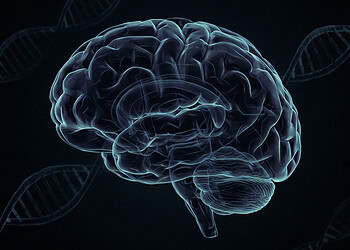
(Image by Pete Linforth from Pixabay)

(Image by Pete Linforth from Pixabay)

Share on TwitterShare on Facebook

Post-traumatic stress disorder (PTSD) and migraine often co-occur, but researchers knew relatively little about how or why this happens. A new study in Frontiers in Neuroscience is the first to investigate if the conditions have a common genetic basis. By studying identical twins, where one twin in each pair lives with PTSD or migraines and the other twin does not, the researchers found common genes that may play a role in both conditions. These genes may help to explain why the conditions co-occur, and could reveal new treatment targets for both.

PTSD is a psychiatric disorder that typically occurs after a traumatic experience, such as a life-threatening event. Most people will experience a traumatic event at some point in their lives, but the vast majority will not develop PTSD, so there is something special about those who do.

Those who live with PTSD are also more likely to experience migraine headaches, suggesting common risk factors for these conditions. The synergy between PTSD and migraines is not understood as no studies have examined this link before. This latest study suggests that our genes may hold the answer, and specifically, epigenetic changes.

Epigenetics refers to the influence of our environment on how our genes are expressed, and typically involves biochemical modifications to DNA. Identical twins have exactly the same genes, but different experiences as they grow up may result in different epigenetic changes. This can mean that some genes are more or less likely to be expressed in each twin.

The researchers used this phenomenon in twins to see which genes show altered activity in PTSD and migraine and whether the conditions shared common changes. Six pairs of twins volunteered for the study, where both twins had experienced traumatic events, but only one of each pair lives with PTSD.

Given the low probability that all these conditions are met, the sample size could never be large. But because identical twins share all of their DNA – but not all of their epigenetic marks – the study is still powerful. The researchers also enrolled 15 pairs of twins where one of each pair experiences migraine headaches. The researchers took blood samples from the twins and analyzed them to detect epigenetic changes associated with PTSD or migraine.

Exciting findings

Excitingly, the study revealed that certain genes are similarly affected in PTSD and migraine, suggesting that they may share some risk factors.

“Our results suggest that common genes and signaling pathways are involved in PTSD and migraine and this might explain why PTSD and migraine can co-occur frequently,” explained Prof Divya Mehta of the Queensland University of Technology, senior author on the study. “This might further imply that common environmental risk factors for both PTSD and migraine might be acting on these genes.”

So, what do these findings mean for those living with PTSD and/or migraines? Well, the genes and epigenetic modifications the researchers identified could form the basis for new treatments. Epigenetic changes offer an excellent drug target, as they can often be reversed.

“These results may have implications for treatments, as one medicine or therapy might only be effective for a single disorder,” said Mehta. “For co-occurring disorders such as PTSD and migraine, once we know which common genes are implicated in both disorders, we can develop new therapeutics to target these, thereby reducing symptoms and curing both.”


RELATED

Sleep disorders associated with higher risk of dementia, study finds
Dementia

Severe sleep problems is associated with fewer years of healthy brain function

January 23, 2026
Treatments for anxiety and depression increase confidence, study finds
Mental Health

People in romantic relationships who show a high-K fitness profile are more likely to be “good” patients

January 23, 2026
Narcissism study sheds new light on the relationship between grandiose and vulnerable subtypes
Anxiety

General anxiety predicts conspiracy beliefs while political anxiety does not

January 23, 2026
Dartmouth researchers create new template of the human brain
Addiction

Brain imaging provides insight into the biological roots of gambling addiction

January 22, 2026
Groundbreaking AI model uncovers hidden patterns of political bias in online news
Artificial Intelligence

AI chatbots tend to overdiagnose mental health conditions when used without structured guidance

January 22, 2026
Scientists reveal atypical depression is a distinct biological subtype linked to antidepressant resistance
Depression

Scientists reveal atypical depression is a distinct biological subtype linked to antidepressant resistance

January 22, 2026
Experienced FPS gamers show faster, more efficient eye movements during aiming tasks, study finds
Mental Health

New large study finds little evidence that social media and gaming cause poor mental health in teens

January 21, 2026
Concept cells and pronouns: Neuroscientists shed light on key aspect of language comprehension
Neuroimaging

Laughing gas treatment stimulates new brain cell growth and reduces anxiety in a rodent model of PTSD

January 21, 2026

PsyPost Merch

STAY CONNECTED

LATEST

Severe sleep problems is associated with fewer years of healthy brain function

Childhood adversity linked to accelerated biological aging in women, new study finds

People in romantic relationships who show a high-K fitness profile are more likely to be “good” patients

General anxiety predicts conspiracy beliefs while political anxiety does not

Psychopathic female criminals exhibit unexpected patterns of emotional processing

A simple language switch can make AI models behave significantly different

158 scientists used the same data, but their politics predicted the results

Are you suffering from “cognitive atrophy” due to AI overuse?

RSS Psychology of Selling

  • New research links faking emotions to higher turnover in B2B sales
  • How defending your opinion changes your confidence
  • The science behind why accessibility drives revenue in the fashion sector
  • How AI and political ideology intersect in the market for sensitive products
  • Researchers track how online shopping is related to stress
         
       
  • Contact us
  • Privacy policy
  • Terms and Conditions
[Do not sell my information]

Welcome Back!

Login to your account below

Forgotten Password?

Retrieve your password

Please enter your username or email address to reset your password.

Log In

Add New Playlist

Subscribe
  • My Account
  • Cognitive Science Research
  • Mental Health Research
  • Social Psychology Research
  • Drug Research
  • Relationship Research
  • About PsyPost
  • Contact
  • Privacy Policy