![[Adobe Stock]](https://sp-ao.shortpixel.ai/client/to_webp,q_glossy,ret_img,w_750,h_375/https://www.psypost.org/wp-content/uploads/2021/03/brain-connections-neural-network-neuroimaging-750x375.jpg)
Scientists have identified specific patterns of brain network reconfigurations that occur when people take both classical and non-classical psychedelic drugs. Their findings, published in NeuroImage, shed new light on how psychedelics affect the brain and consciousness.
The authors behind the new study wanted to better understand the neurobiology of the psychedelic experience by examining the common brain network changes induced by different types of drugs. The researchers focused on both classical psychedelics and non-classical psychedelics.
“There are many who argue that the term ‘psychedelic’ should be reserved for a certain class of drugs that act primarily on the 5-HT2 (serotonin) receptor,” explained study author George A. Mashour, the director and founder of the Michigan Psychedelic Center and a professor at the University of Michigan.
“I believe this is overly restrictive and that we should also consider effects beyond the molecular level, such as large-scale brain networks. It has long been known that drugs like nitrous oxide (‘laughing gas’) and ketamine induce psychedelic phenomenology, so a major motivation for this study was to assess whether there was any effect on the network level that was shared with the classical psychedelic LSD. The focus on large-scale networks is important because that is likely the neural level from which the experience emerges.”
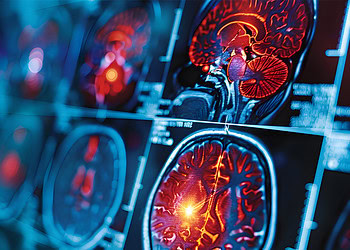
The researchers wanted to identify functional connectivity patterns that are common across different psychedelic drugs. To achieve this, they examined brain activity using a technique called resting-state functional magnetic resonance imaging (fMRI). They collected brain imaging data from healthy human volunteers both before and after they were given nitrous oxide, ketamine, and lysergic acid diethylamide (LSD).
Functional connectivity refers to the statistical relationship between different regions or areas of the brain based on their activity patterns. It represents the degree to which these brain regions “communicate” or work together.
To control for generic changes in brain connectivity unrelated to psychedelics, the researchers also analyzed fMRI data acquired during sedation with propofol, an anesthetic that acts on GABA receptors. Safety measures were taken during the drug administrations, including the use of MRI-compatible anesthesia machines, continuous monitoring, and the presence of trained anesthesiologists.
The researchers found that both the classical psychedelic drug LSD and non-classical psychedelic drugs like nitrous oxide and ketamine have similar effects on brain connectivity, suggesting that there may be a common biological mechanism underlying the effects of both classical and non-classical psychedelics on large-scale brain networks. All three substances reduced the connections within specific brain networks while increasing the connections between different networks.
The study identified certain areas in the brain that consistently showed changes in connectivity when people were under the influence of psychedelics. These areas include the right TPJ (temporoparietal junction) connecting to both sides of the IPS (intraparietal sulcus) and the precuneus connecting to the left IPS. These areas are located in the back of the brain and are thought to be important for our conscious experiences and the qualities of our perceptions.
“I think we were surprised that the common changes across the drugs were localized to what has been referred to as the posterior cortical ‘hot zone’ for consciousness,” Mashour told PsyPost. “We were not predicting that, but it certainly makes sense since that is the region of the brain hypothesized to generate the qualitative aspects of our experience, which psychedelics alter.”
The findings suggests that the psychedelic experience may not be solely influenced by a single molecular mechanism but rather by network-level events in the brain that can have various molecular mechanisms. This aligns with previous research showing similar effects of ketamine and classical psychedelics on brain oscillations, complexity, brain states, neuroplasticity, and clinical effects.
“Although nitrous oxide, ketamine, and LSD have different molecular targets and different effects on brain networks, there are some effects that are common to all three,” Mashour explained. “All three drugs tend to weaken functional connectivity within a given network and strengthen functional connectivity between networks. That is, the brain appears less modular and more integrated across networks.”
But the study, like all research, includes some caveats.
“I think it is important to note that these drugs do not have identical effects on the brain,” Mashour told PsyPost. “We found many differences but there was a consistent effect on structures important for consciousness. Also, we did not test every possible psychedelic drug so a further study that includes, for example, DMT would help strengthen or refute these findings.”
The study, “Classical and non-classical psychedelic drugs induce common network changes in human cortex“, was authored by Rui Dai, Tony E. Larkin, Zirui Huang, Vijay Tarnal, Paul Picton, Phillip E. Vlisides, Ellen Janke, Amy McKinney, Anthony G. Hudetz, Richard E. Harris, and George A. Mashour.