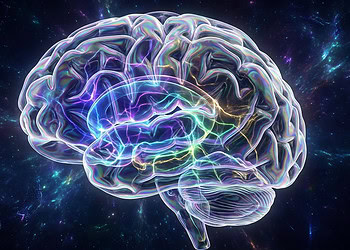
A protein that may partly explain why human brains are larger than those of other animals has been identified by scientists from two stem-cell labs at UC San Francisco, in research published in the November 13, 2014 issue of Nature.
Key experiments by the UCSF researchers revealed that the protein, called PDGFD, is made in growing brains of humans, but not in mice, and appears necessary for normal proliferation of human brain stem cells growing in a lab dish.
The scientists made their discovery as part of research in which they identified genes that are activated to make specific proteins in crucial stem cells in the brain known as radial glial cells. The discovery stems from a collaboration between the laboratories of leading radial glial cell scientist Arnold Kriegstein MD, PhD, director of the Eli and Edythe Broad Center of Regeneration Medicine and Stem Cell Research at UCSF, and Michael Oldham, PhD, who recently made a rapid career leap from graduate student to principal investigator and Sandler Fellow at UCSF.
Radial glial cells make the neurons in the growing brain, including the neurons in the cerebral cortex, the seat of higher brain functions. The cerebral cortex varies in size 10,000-fold among mammals. Changes in the timing, location and degree of cell division and nerve cell generation by radial glial cells can dramatically alter the shape and function of the cortex.
The UCSF team discovered that PDGFD is secreted by human radial glial cells and acts on radial glial cells as well as other progenitor cells in the developing brain.
“To the best of our knowledge this is the first example of any signaling pathway affecting the proliferation of radial glial cells whose activity has changed during mammalian evolution,” Oldham said. “We think that the expression of PDGFD in this signaling pathway is likely to be part of the reason the human brain is so much bigger that the mouse brain.”
Although the UCSF research team found that the majority of genes that are active in radial glial cells are the same in humans and mice, they identified 18 genes that are active in human but not mouse radial glial cells during development of the cerebral cortex.
They focused on PDGFD, already known to be a key component of growth signaling pathways in other tissues but not in the brain, because it appeared to have the biggest effect on brain cell growth in a crude preliminary experiment.
When they exposed mouse radial glial cells to PDGFD, it caused the cells to increase their numbers more rapidly than normal. When they blocked the receptor for this protein in human radial glial cells, where it is naturally produced, they found that the population of these cells grew more slowly than normal.
By helping to drive growth of the human cortex, PDGFD might have played an evolutionary role in the huge increase in cortical size in the evolution of mammals leading to the emergence of humans, according to Kriegstein.
“There is a correlation between brain size and cognitive abilities among primates, so it seems that a mechanism for generating large numbers of neurons would have at least a rough correlation with cognitive abilities,” said Kriegstein.
The human brain is more than three times bigger than the chimpanzee brain. Might chimp radial glial cells also lack activity for some of the 18 genes identified in the study?
“We’re not claiming that these are the genes that make us human, or that they are what makes our brains so much bigger than chimp brains,” Oldham said.
Kriegstein’s lab team plans to compare radial glial cells derived from induced pluripotent stem cells — that in turn have been developed from the skin cells of chimps and humans — in hopes of shedding more light on differences between the species.
Earlier studies that aimed to find molecular causes for differences in mouse and human brains focused on proteins previously identified in the mouse brain. Researchers measured and compared production of these same proteins in the human brain. But the earlier studies totally missed proteins made uniquely in these key human brain stem cells.
For the Nature study Oldham developed a new experimental design and analytical strategy to identify a gene-expression signature of human radial glial cells with only a single tissue sample. The UCSF researchers prepared 87 cross sections from the front to the back of a single human prenatal cortical specimen. They then used microarrays to determine which genes were switched on to make protein-encoding messenger RNA in each cross section. Using custom software, they identified groups of genes that were similarly activated over the cross sections, a procedure that pointed to genes that were switched on together in the same types of cells, including radial glial cells.
Six of the gene modules they identified this way contained genes already known to be switched on in the radial glial cells of mice. But these modules also included additional genes that the researchers concluded were switched on in human but not mouse radial glial cells. They confirmed the results from their computational analysis by using lab methods to detect specific messenger RNAs and proteins in samples of brain tissue.