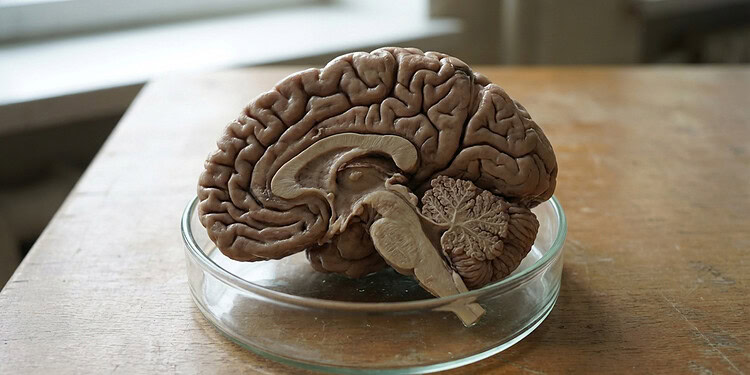

A recent study published in Autism Research suggests that the cognitive shifts associated with autism are significantly larger in females than in males. The findings provide evidence that females may need a greater biological push to develop autism, which helps explain why the condition is diagnosed much more frequently in boys. These insights clarify the psychological differences underlying the male-biased prevalence of autism spectrum disorder.
The extreme male brain theory of autism was originally proposed by psychologist Simon Baron-Cohen at the University of Cambridge. This theory suggests that autism represents an exaggeration of typical male cognitive traits. Specifically, it points to a profile of relatively low empathy, known as empathizing, and a high interest in analyzing or constructing rule-based structures, known as systemizing.
Empathizing involves the ability to recognize and respond to the feelings of others. Systemizing is the drive to understand non-social systems, such as mathematics, computer code, or mechanical devices. According to the extreme male brain theory, elevated exposure to testosterone in the womb tends to shift brain development toward this highly systemizing profile.
Historically, autism is diagnosed in about four males for every one female. Scientists Cory Szakal and Bernard Crespi at Simon Fraser University wanted to understand if the extreme male brain theory applies differently to males and females. They also wanted to explore whether females possess a biological resistance to the condition.
Some scientists suspect that a female protective effect exists. This concept suggests that females require a heavier load of genetic or environmental factors to reach the threshold for an autism diagnosis. If this protective effect is real, females diagnosed with autism should exhibit much more drastic cognitive shifts compared to their peers than males do.
“The main question was how to explain the male bias in autism. The main psychological theory on this question is Baron-Cohen’s Empathizing-Systemizing theory. However, the differences in empathizing and systemizing between people with autism and neurotypicals had never been compared between females and males. We did so using systematic review and meta-analysis of all of the published work,” explained Crespi, a professor of biological sciences.
A meta-analysis is a statistical technique that combines data from multiple independent studies to identify overall trends. The researchers gathered data from 34 previously published studies that measured empathizing and systemizing traits.
In total, the analysis included 1,234,560 participants, comprising 757,726 females and 476,834 males. The sample featured both autistic individuals and neurotypical people, meaning those whose brain development aligns with typical standards. The researchers looked at three specific self-report measures used across these studies.
These measures included the Empathy Quotient, the Systemizing Quotient, and the Autism Spectrum Quotient. The Empathy Quotient measures a person’s social sensitivity, while the Systemizing Quotient gauges their interest in systems and rules. The Autism Spectrum Quotient evaluates the presence of autistic traits in everyday behavior.
Because the 34 studies used different versions of these questionnaires, the researchers standardized the scores. They divided the reported averages by the maximum possible score for each specific test. This conversion changed all scores into a percentage, making them easily comparable across the entire dataset.
The researchers found that the gap in empathy and systemizing scores between autistic and neurotypical females is significantly wider than the gap between autistic and neurotypical males. In other words, an autistic female shows a much larger departure from the average female cognitive profile than an autistic male does from the average male profile. This provides evidence that a larger cognitive shift is involved in a female developing autism.
The data also revealed that differences in empathy scores between autistic and neurotypical individuals are substantially larger than the differences in systemizing scores. On a proportional basis, the empathy shifts were three to five times larger than the systemizing shifts. This suggests that reduced empathy may play a larger role in the psychological differences that characterize an autism diagnosis.
Additionally, the normal sex differences seen in empathy and systemizing are highly reduced among autistic individuals. Autistic males and autistic females showed almost identical scores on the Systemizing Quotient. For the Empathy Quotient, the difference between autistic males and females was also very small, showing a blending of typical gender lines.
The researchers also examined how strongly these traits predict overall autistic behaviors. They found that changes in empathy and systemizing scores have a much stronger impact on overall autism scores in autistic individuals than in neurotypical ones. The data suggests that as empathy drops and systemizing rises, the outward signs of autism multiply much faster for those already on the spectrum.
The scientists also discovered an unexpected relationship between empathy and systemizing in autistic people. Among neurotypical participants, empathy and systemizing scores tend to rise together in a positive correlation. In contrast, autistic individuals showed an inverse relationship, where higher systemizing scores were linked to lower empathy scores.
This inverse relationship points to a cognitive trade-off in people with autism. A cognitive trade-off occurs when the enhancement of one mental ability interferes with another. For example, a hyper-focus on rule-based, non-social systems might naturally suppress the brain networks used for social and emotional processing.
As with all research, there are limitations to consider. The studies included in the analysis relied on self-reported questionnaires. Self-reporting can sometimes reflect how people wish to be seen or how they mask their traits to fit societal expectations, a behavior known as camouflaging.
Autistic females are known to camouflage their traits more frequently than autistic males, often out of a desire to conform to gender norms. They might use their intellect to mimic social behaviors, which could artificially inflate how they score on empathy tests. Also, the data gathered inconsistently reported participant ages, preventing the researchers from analyzing how these cognitive traits might change over a person’s lifespan.
Another limitation is that a large portion of the data came from a small number of research groups. This clustering means that specific testing methods or regional biases might influence the overall results. The scientists recommend that future studies investigate the exact causes of the cognitive trade-offs seen between empathy and systemizing.
Future research should also explore how environmental and genetic factors interact to create these psychological shifts. Understanding these mechanisms could clarify why females appear to have a biological resistance to autism. It might also improve diagnostic tools to better identify autistic females who currently go unnoticed.
The study, “Does the Extreme Male Brain Hypothesis of Autism Apply More to Females Than Males? A Systematic and Meta-Analytic Approach,” was authored by Cory Szakal and Bernard Crespi.