Subscribe
The latest psychology and neuroscience discoveries.
My Account
  • Mental Health
  • Social Psychology
  • Cognitive Science
  • Neuroscience
  • About
No Result
View All Result
PsyPost
PsyPost
No Result
View All Result
Home Exclusive Cognitive Science

Sleep-walking neurons: Brain’s GPS never stops working — even during sleep

by New York University School of Medicine
March 6, 2015
in Cognitive Science
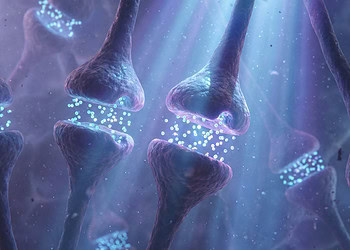
Photo credit: ZEISS Microscopy (Creative Commons)

Photo credit: ZEISS Microscopy (Creative Commons)

Share on TwitterShare on Facebook

Researchers at NYU Langone Medical Center have found that navigational brain cells that help sense direction are as electrically active during deep sleep as they are during wake time — and have visual and vestibular cues to guide them. Such information could be useful in treating navigational problems, among the first major symptoms of Alzheimer’s disease and other neurological disorders.

In a report on their work in mice to be published in the journal Nature Neuroscience online March 2, researchers found that head direction neurons continued to code for the “virtual” direction of their gaze during sleep. In fact, during Rapid Eye Movement (REM) sleep — a stage known for intense dreaming activity in humans and during which brain electrical activity is virtually indistinguishable from wake — the ‘needle’ of the brain compass in the mice surprisingly moved at the same speed than observed during wake. During slow-wave periods of sleep, it showed a 10-fold acceleration of activity, as if the mice turned their head 10 times faster than during the time they were awake.

“We have long known that the brain is at work during sleep,” says senior study investigator Gyorgy Buzsaki, MD, PhD, the Biggs Professor of Neural Sciences at NYU Langone and its Neuroscience Institute. “But now we know how it is working in one of the seemingly simpler senses — head orientation — or our sense of where we look at in any given space. The direction sense is an essential part of our navigation system, since it can reset our internal compass and maps instantaneously, as, for example, when we emerge from the subway and try to orient ourselves.”

He further adds: “Finding that the activity of head direction neurons shows coordinated patterns during sleep — as if substituting for the gaze shifts in the navigating animal — demonstrates the brain’s efforts to actively explore and coordinate its operations even when it disengages from its interactions with the environment.”

Buzsaki says the results further support his theory that brains in mammals do not passively wait around to receive sensory inputs, but actively pursue them, just like the active sense of head directionality persisted during sleep in the mice.

For the two-year study, researchers videotaped the head movements of mice and recorded the electrical activity in the head-direction regions of the sleeping animals, specifically in the antero-dorsal thalmic nucleus and postsibiculum regions of the brain. These recordings were then compared with similar readings made in the same mice while they were awake and navigating in various environments.

Adrien Peyrache, PhD, a postdoctoral fellow and lead author of the study, further concludes, “The coordinated activity during the majority of sleep likely represents a consolidation of places, events and times, a sort of navigational backup system in the brain, during which the brain stores a map to memory.”

Buzsaki says the research team plans to monitor other parts of the mouse brain involved in more complex forms of behaviors to see if similar neural activity patterns are at work. Researchers also plan experiments to test whether head direction and navigation can be electrically controlled and predicted in advance.


Google News Preferences Add PsyPost to your preferred sources
Previous Post

Can we teach intelligence?

Next Post

Breastfeeding duration influences infants’ brain responses to emotional body expressions

RELATED

ChatGPT acts as a “cognitive crutch” that weakens memory, new research suggests
Artificial Intelligence

ChatGPT acts as a “cognitive crutch” that weakens memory, new research suggests

March 30, 2026
Verbal IQ predicts political participation and liberal attitudes twice as strongly as performance IQ
Cognitive Science

Trying harder on an intelligence test does not actually improve your score

March 27, 2026
Brain rot and the crisis of deep thought in the age of social media
Cognitive Science

Massive analysis of longitudinal data links social media to poorer youth mental health

March 27, 2026
High meat consumption may protect against cognitive decline in people with a specific Alzheimer’s gene
Cognitive Science

Asking complex questions improves creative project scores but hurts multiple-choice exam grades

March 26, 2026
Chronic medical conditions predict childhood depression more strongly than social or family hardships
Cognitive Science

What brain waves reveal about people who can solve a Rubik’s Cube in seconds

March 24, 2026
Shifting genetic tides: How early language skills forecast ADHD and literacy outcomes
Cognitive Science

The biological roots behind the chills you get from music and art

March 22, 2026
Machiavellianism most pronounced in students of politics and law, least pronounced in students of social work, nursing and education
Cognitive Science

Intelligence predicts progressive views, but only after college

March 21, 2026
Genetic factors likely confound the link between c-sections and offspring mental health
Cognitive Science

Neuroscientists just upended our understanding of Pavlovian learning

March 21, 2026

STAY CONNECTED

RSS Psychology of Selling

  • Emotional intelligence linked to better sales performance
  • When a goal-driven boss ignores relationships, manipulative employees may fight back
  • When salespeople fail to hit their targets, inner drive matters more than bonus checks
  • The “dark” personality traits that predict sales success — and when they backfire
  • What communication skills do B2B salespeople actually need in a digital-first era?

LATEST

Scientists use brain measurements to identify a video that significantly lowers racial bias

Brief mindfulness practice accelerates visual processing speeds in adults

Belief in the harmfulness of speech is linked to both progressive ideology and symptoms of depression

Better parent-child communication is linked to stronger soft skills and emotional stability in teens

Men who favor the tradwife lifestyle often view the women in it with derision

A diet based on ultra-processed foods impairs metabolic and reproductive health, study finds

Psychologists identify nine core habits associated with healthy non-monogamous partnerships

Childhood trauma linked to elevated risk of simultaneous physical and mental illness in old age

PsyPost is a psychology and neuroscience news website dedicated to reporting the latest research on human behavior, cognition, and society. (READ MORE...)

  • Mental Health
  • Neuroimaging
  • Personality Psychology
  • Social Psychology
  • Artificial Intelligence
  • Cognitive Science
  • Psychopharmacology
  • Contact us
  • Disclaimer
  • Privacy policy
  • Terms and conditions
  • Do not sell my personal information

(c) PsyPost Media Inc

Welcome Back!

Login to your account below

Forgotten Password?

Retrieve your password

Please enter your username or email address to reset your password.

Log In

Add New Playlist

Subscribe
  • My Account
  • Cognitive Science Research
  • Mental Health Research
  • Social Psychology Research
  • Drug Research
  • Relationship Research
  • About PsyPost
  • Contact
  • Privacy Policy

(c) PsyPost Media Inc