Subscribe
The latest psychology and neuroscience discoveries.
My Account
  • Mental Health
  • Social Psychology
  • Cognitive Science
  • Neuroscience
  • About
No Result
View All Result
PsyPost
PsyPost
No Result
View All Result
Home Exclusive Cognitive Science

Scientists identify brain cells that help us learn by watching others

by UCLA
September 10, 2016
in Cognitive Science
(Photo credit: Wellcome Images)

(Photo credit: Wellcome Images)

Share on TwitterShare on Facebook

Picture a little boy imitating his father shaving in the mirror or a little girl wobbling proudly in her mother’s high heels.

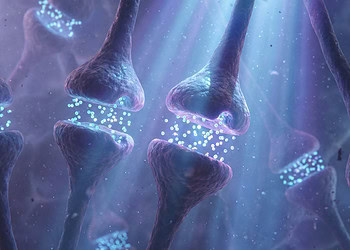
From infancy, we learn by watching other people, then use those memories to help us predict outcomes and make decisions in the future. Now a UCLA-Caltech study has pinpointed the individual neurons in the brain that support observational learning.

Published this week in Nature Communications, the findings could provide scientists with a better understanding of how the brain goes awry in conditions like learning disorders and social anxiety disorder.

In a secondary finding, the research team also discovered that neurons in the same region fire in response to schadenfreude — the pleasure of seeing someone else make a blunder or lose a game.

“Observational learning is the cornerstone for our ability to change behavior,” said senior author Dr. Itzhak Fried, a professor of neurosurgery and psychiatry at the David Geffen School of Medicine at UCLA and Semel Institute for Neuroscience and Human Behavior. “It’s human nature to want to learn from other people’s mistakes rather than commit your own.”

Said lead author Michael Hill, a former UCLA and California Institute of Technology scientist now based at the Swiss National Science Foundation: “The ability to quickly learn from others can give humans a critical edge over other species. The skill also contributes to someone feeling he or she is a member of one culture versus another.”

Prior to the study, Fried implanted electrodes deep inside the brains of people with epilepsy being treated at UCLA — a standard medical procedure used to identify the origins of epileptic seizures prior to surgery. The researchers used the electrodes to record the activity of individual neurons in the brains of 10 people playing a card game.

Players were instructed to draw a card from one of two decks. One deck included 70 percent of the winning cards, while the other deck contained only 30 percent of the winning cards. Each person took turns choosing cards on his or her own and then watched two other players draw cards from the same decks. By learning from the results of their own and the other players’ choices, the participants quickly zeroed in on the deck containing better cards.

Google News Preferences Add PsyPost to your preferred sources

The research team was surprised to discover that individual neurons deep in the frontal lobe reacted as the patient considered whether they or their opponents would pick a winning card. Called the anterior cingulate cortex, the region plays an important role in high-level functions like decision making, reward anticipation, social interaction and emotion.

“The firing rate of individual neurons altered according to what the patient expected to happen,” Hill said. “For example, would their opponents win or lose? The same cells also changed their response after the patient discovered whether their prediction was on target, reflecting their learning process.”

The findings suggest that individual nerve cells in the person’s brain used the details gleaned by observing the other players to calculate which deck to choose a card from next.

“The anterior cingulate cortex acts as the central executive of human decision-making, yet we know little about the neuronal machinery at this level,” said Fried, who is also a professor of neurosurgery at the Sackler Faculty of Medicine at Tel Aviv University.

According to the authors, the findings will help scientists better understand the organization of neurons in the anterior cingulate cortex and exactly what they do.

Fried and Hill propose that active stimulation of the neurons in the anterior cingulate cortex could influence human behavior and have possible benefits for people struggling with learning disabilities or difficulty reading social cues.

The researchers observed that the cells in the same region fired vigorously each time a person won or the other players lost, and decreased their activity whenever the person lost or the other players won.

“While obviously we don’t know precisely what it is that these neurons encode, it’s fascinating to see something like schadenfreude reflected in the activity of individual neurons in the human brain,” Hill said.

Previous Post

Study suggests bilinguals have an improved attentional control

Next Post

Can speaking two languages delay the development of dementia?

RELATED

ChatGPT acts as a “cognitive crutch” that weakens memory, new research suggests
Artificial Intelligence

ChatGPT acts as a “cognitive crutch” that weakens memory, new research suggests

March 30, 2026
Verbal IQ predicts political participation and liberal attitudes twice as strongly as performance IQ
Cognitive Science

Trying harder on an intelligence test does not actually improve your score

March 27, 2026
Brain rot and the crisis of deep thought in the age of social media
Cognitive Science

Massive analysis of longitudinal data links social media to poorer youth mental health

March 27, 2026
High meat consumption may protect against cognitive decline in people with a specific Alzheimer’s gene
Cognitive Science

Asking complex questions improves creative project scores but hurts multiple-choice exam grades

March 26, 2026
Chronic medical conditions predict childhood depression more strongly than social or family hardships
Cognitive Science

What brain waves reveal about people who can solve a Rubik’s Cube in seconds

March 24, 2026
Shifting genetic tides: How early language skills forecast ADHD and literacy outcomes
Cognitive Science

The biological roots behind the chills you get from music and art

March 22, 2026
Machiavellianism most pronounced in students of politics and law, least pronounced in students of social work, nursing and education
Cognitive Science

Intelligence predicts progressive views, but only after college

March 21, 2026
Genetic factors likely confound the link between c-sections and offspring mental health
Cognitive Science

Neuroscientists just upended our understanding of Pavlovian learning

March 21, 2026

STAY CONNECTED

RSS Psychology of Selling

  • Emotional intelligence linked to better sales performance
  • When a goal-driven boss ignores relationships, manipulative employees may fight back
  • When salespeople fail to hit their targets, inner drive matters more than bonus checks
  • The “dark” personality traits that predict sales success — and when they backfire
  • What communication skills do B2B salespeople actually need in a digital-first era?

LATEST

Scientists use brain measurements to identify a video that significantly lowers racial bias

Brief mindfulness practice accelerates visual processing speeds in adults

Belief in the harmfulness of speech is linked to both progressive ideology and symptoms of depression

Better parent-child communication is linked to stronger soft skills and emotional stability in teens

Men who favor the tradwife lifestyle often view the women in it with derision

A diet based on ultra-processed foods impairs metabolic and reproductive health, study finds

Psychologists identify nine core habits associated with healthy non-monogamous partnerships

Childhood trauma linked to elevated risk of simultaneous physical and mental illness in old age

PsyPost is a psychology and neuroscience news website dedicated to reporting the latest research on human behavior, cognition, and society. (READ MORE...)

  • Mental Health
  • Neuroimaging
  • Personality Psychology
  • Social Psychology
  • Artificial Intelligence
  • Cognitive Science
  • Psychopharmacology
  • Contact us
  • Disclaimer
  • Privacy policy
  • Terms and conditions
  • Do not sell my personal information

(c) PsyPost Media Inc

Welcome Back!

Login to your account below

Forgotten Password?

Retrieve your password

Please enter your username or email address to reset your password.

Log In

Add New Playlist

Subscribe
  • My Account
  • Cognitive Science Research
  • Mental Health Research
  • Social Psychology Research
  • Drug Research
  • Relationship Research
  • About PsyPost
  • Contact
  • Privacy Policy

(c) PsyPost Media Inc