Subscribe
The latest psychology and neuroscience discoveries.
My Account
  • Mental Health
  • Social Psychology
  • Cognitive Science
  • Neuroscience
  • About
No Result
View All Result
PsyPost
PsyPost
No Result
View All Result
Home Exclusive Psychopharmacology

Magic mushroom compound might treat depression by reviving emotional responsiveness in the brain

by Eric W. Dolan
January 5, 2018
in Psychopharmacology
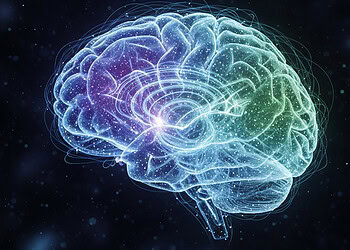
(Photo credit: agsandrew)

(Photo credit: agsandrew)

Share on TwitterShare on Facebook

New research suggests that psilocybin-assisted therapy helps alleviate treatment-resistant depression by reviving emotional responsiveness in the brain.

Psilocybin is the primary mind-altering substance in psychedelic “magic” mushrooms. The drug can profoundly alter the way a person experiences the world by producing changes in mood, sensory perception, time perception, and sense of self.

The new study, published in the scientific journal Neuropharmacology, found that depressed people had increased neural responses to fearful faces one day after a psilocybin-assisted therapy session, which positively predicted positive clinical outcomes.

“I believe that psychedelics hold a potential to cure deep psychological wounds, and I believe that by investigating their neuropsychopharmacological mechanism, we can learn to understand this potential,” explained study author Leor Roseman, a PhD student at Imperial College London.

For the study, 20 patients with major depression underwent two psilocybin-assisted therapy sessions. The participants received fMRI brain scans before their first session and on the morning after their second session.

While receiving the brain scans, the participants viewed images of faces with fearful, happy, and neutral expressions.

The researchers were particularly interested in a brain structure known as the amygdala, which is associated with emotional processing and threat detection.

Following the psilocybin-assisted therapy sessions, the majority of patients reported that the treatment improved their depressive symptoms.

Google News Preferences Add PsyPost to your preferred sources

Roseman and his colleagues observed heightened amygdala responses to both fearful and happy faces after treatment with psilocybin. However, only increased amygdala responses to fearful faces were associated with successful clinical outcomes one week later.

“Psilocybin-assisted therapy might mitigate depression by increasing emotional connection, this is unlike SSRI antidepressants which are criticized for creating in many people a general emotional blunting,” Roseman told PsyPost.

Though more studies are being conducted on psychedelic drugs like psilocybin, the research is still in its early phases.

“The major caveats are a lack of control group, a lack of SSRI group, and that the time point of investigation is only one day after the psilocybin session and not more than that. All of these caveats will be addressed in our next trial,” Roseman said.

Generally, psilocybin-assisted therapy involves only a few sessions, he noted.

“It is important to emphasize that psilocybin-assisted therapy is a model in which the patient is undergoing a deep psychological process in one or few psychedelic sessions, in which he might have an intense cathartic experience, or peak experience,” Roseman explained.

Patients receive a dose of psilocybin in a controlled setting while professionals are on hand to provide them with psychological support. The patients also typically receive counseling before and after each session, to help them prepare for and integrate their psychedelic experience.

“This is unlike antidepressants which are given as chronic pharmacological intervention with less psychological insights,” Roseman said.

The study, “Increased amygdala responses to emotional faces after psilocybin for treatment-resistant depression“, was co-authored by Lysia Demetriou, Matthew B. Wall, David J. Nutt, Robin L. Carhart-Harris.


Previous Post

Sapiosexuality study suggests some people really are sexually attracted to intelligence

Next Post

People at-risk for Facebook addiction have a distorted sense of time, study finds

RELATED

Lifting weights can slow down biological brain aging in older adults
Ayahuasca

Short-acting psychedelic DMT shows promise as a rapid treatment for major depressive disorder

March 31, 2026
Exposure to conspiracy theories heightens paranoid thoughts, study finds
Cannabis

Cannabis use exacerbates paranoia in survivors of chaotic childhoods, new study suggests

March 29, 2026
Distinct neural pathways link fear of missing out and negative emotions to compulsive phone use
Cannabis

Co-occurring depression and cannabis use linked to less efficient brain networks

March 28, 2026
Neuroimaging study finds gray matter reductions in first-time fathers
Addiction

Brain scans reveal how poor sleep fuels negative emotions in alcohol addiction

March 28, 2026
Single dose of 5-MeO-DMT alters gene expression in brain and reduces anxiety-like behavior in stressed mice
MDMA

First direct comparison of MDMA and MDA reveals distinct psychedelic differences

March 27, 2026
The science of magic mushrooms: Fascinating findings from 7 new studies of psilocybin
Psilocybin

A new study measures the temporal distortions caused by psychedelics

March 26, 2026
Antidepressant effects of psychedelics may be overstated in some clinical trials
Psychedelic Drugs

Occasional use of classic psychedelics linked to enhanced cognitive flexibility in young adults

March 23, 2026
New psychology research sheds light on the mystery of deja vu
Psilocybin

Study links psilocybin receptor activation to sustained structural brain changes

March 22, 2026

STAY CONNECTED

RSS Psychology of Selling

  • When sales managers serve first, salespeople stay longer and sell more confidently
  • Emotional intelligence linked to better sales performance
  • When a goal-driven boss ignores relationships, manipulative employees may fight back
  • When salespeople fail to hit their targets, inner drive matters more than bonus checks
  • The “dark” personality traits that predict sales success — and when they backfire

LATEST

Vulnerable narcissism is linked to intense celebrity worship via parasocial relationships

Brain scans reveal the neural fingerprints of dark personality traits

The psychological divide between Democrats and Republicans during democratic backsliding

Psychology researchers have determined the best time to text after a first date

AI autocomplete suggestions covertly change how users think about important topics

The neuroscience of hypocrisy points to a communication breakdown in the brain

How generative artificial intelligence is upending theories of political persuasion

Scientists use brain measurements to identify a video that significantly lowers racial bias

PsyPost is a psychology and neuroscience news website dedicated to reporting the latest research on human behavior, cognition, and society. (READ MORE...)

  • Mental Health
  • Neuroimaging
  • Personality Psychology
  • Social Psychology
  • Artificial Intelligence
  • Cognitive Science
  • Psychopharmacology
  • Contact us
  • Disclaimer
  • Privacy policy
  • Terms and conditions
  • Do not sell my personal information

(c) PsyPost Media Inc

Welcome Back!

Login to your account below

Forgotten Password?

Retrieve your password

Please enter your username or email address to reset your password.

Log In

Add New Playlist

Subscribe
  • My Account
  • Cognitive Science Research
  • Mental Health Research
  • Social Psychology Research
  • Drug Research
  • Relationship Research
  • About PsyPost
  • Contact
  • Privacy Policy

(c) PsyPost Media Inc