
The Research Brief is a short take about interesting academic work.
The big idea
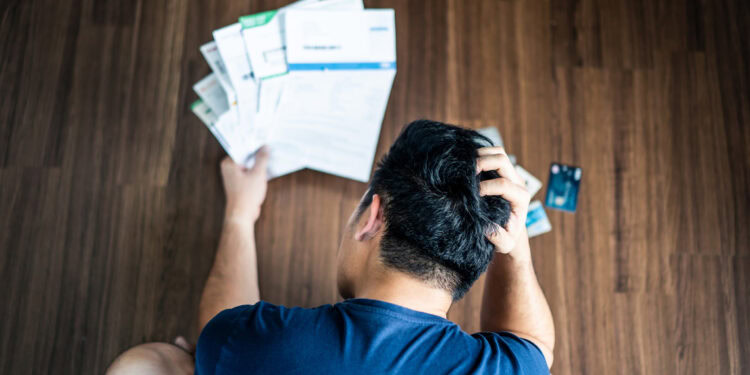
For families on low incomes, difficulty paying utility bills, rent, mortgage or health care costs set the stage for parental mental health problems, especially for fathers, that then lead to potentially violent family conflict. These are the key findings of a study I led that was recently published in the journal Family Relations.
Prior poverty research has been primarily conducted with mothers, with a predominant focus on low incomes, without considering the role of so-called “material hardship” and its impact on fathers. Family income refers to a specific dollar amount that parents bring in through paid work, such as an annual household income of US$27,750 for a family of four, whereas material hardship – or the “everyday hardships of making ends meet” – refers to whether a family has faced any challenges meeting basic needs such as food, utilities and health insurance.
My research team found that it was not low family income per se but rather the everyday hardships of making ends meet that was linked with fathers’ poorer mental health that then led to more negative conflict behaviors with the mothers. Such conflict behaviors included blaming the partner for things that go wrong; putting down a partner’s feelings, opinions or desires; or little arguments turning into ugly fights with accusations and name-calling. Such verbal aggression can be damaging to the partner relationship and is shown to be harmful for young children who witness their parents engaging in such behaviors.
To carry out this study, my team used data from the Building Strong Families project, a large and racially diverse sample of 2,794 mostly unmarried heterosexual couples caring for young children and living with low income. Our goal was to examine how economic insecurity – defined as low family income and material hardship – was associated with mothers’ and fathers’ mental health conditions and relationship functioning.
One of the key findings was that the association between material hardships such as difficulty paying for bills, rent and health insurance and destructive conflict behaviors worked primarily through fathers’ depressive symptoms and not those of the mother. Examples of depressive symptoms included feelings of sadness, sleep problems, difficulty concentrating, disinterest in eating, and loneliness.
Why it matters
These findings suggest that the negative effects of material hardship on relationship dynamics within couples operate by hurting fathers’ mental health more so than that of mothers. In light of traditional gender norms, fathers may feel more stressed than mothers when they are not able to fulfill the primary breadwinner role. That is, when fathers feel they are not economically providing to alleviate everyday economic stressors in their families, that can lead to more mental health problems and more conflict between fathers and mothers. Our study suggests the importance of focusing equal attention on fathers and how family interventions might help alleviate the issues that lead to fathers’ depressive symptoms and negative conflict between parents.
Relatedly, during the COVID-19 pandemic, parents – including fathers of low-income status – have experienced high levels of pandemic-related unemployment, economic insecurity and mental health problems. As such, addressing fathers’ and mothers’ mental health seems exceptionally critical and has the potential to support healthy family functioning during the ongoing pandemic.
What other research is being done
I am beginning to explore how families might be resilient against the negative effects of poverty by looking at positive relationships between parents as sources of strength. For example, in another study I led, I showed that when mothers and fathers focused on positive behaviors such as being a good co-parenting team on behalf of their children, they were more likely to withstand economic stressors linked with poverty and to engage in warm and sensitive parenting that benefited their young children’s social development.
This article is republished from The Conversation under a Creative Commons license. Read the original article.