An experimental study in China found that study participants who received alpha frequency transcranial alternating current stimulation to the parieto-occipital region of their brain exhibited significantly greater levels of novelty, flexibility, fluency, originality, and elaboration compared to when they received a sham stimulation. The paper was published in BMC Psychology.
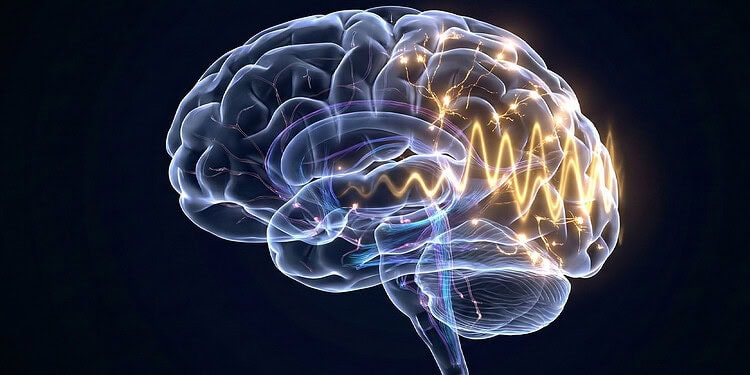
Alpha-frequency transcranial alternating current stimulation (alpha tACS) is a noninvasive brain-stimulation technique that applies a weak electrical current to the scalp at the brain’s natural alpha rhythm, typically around 8–12 Hz. The goal is to entrain or synchronize neuronal oscillations in the alpha band, which are associated with relaxed wakefulness, attention, and inhibitory control.
By rhythmically modulating cortical activity, alpha tACS can influence cognitive functions such as memory, perception, and attention. Alpha tACS is generally safe, produces only mild sensations like tingling or itching, and uses very low-intensity currents. It is studied both as a neuroscience research tool and as a potential clinical method for modulating mood, anxiety, sleep, and cognitive control.
Study author Runze Zhou and his colleagues wanted to explore whether alpha tACS applied to the parieto-occipital cortex region of the brain could improve creative performance and creative thinking. They hypothesized that applying alpha-frequency tACS to the parieto-occipital cortex might enhance creative thinking by increasing alpha oscillations, which reduce habitual thinking patterns and promote flexible, internally directed idea generation.
The study participants were 28 undergraduate students from Qufu Normal University in China. Their average age was 20 years, and 19 of them were women.
The researchers employed a within-participant design, meaning every student underwent both experimental conditions. Participants completed two sessions separated by 24 to 48 hours to prevent carry-over effects. The order of the sessions was randomized: one session involved active alpha tACS delivered using the NeuStim transcranial electrical stimulation system (developed by Neuracle), while the other was a sham (placebo) session.
The active stimulation lasted for 20 minutes. The sham treatment consisted of 10 seconds of alpha tACS stimulation at the start and the end of the session to mimic the sensation, while the equipment was turned off (without participants knowing) for the rest of the period.
After the stimulation, participants completed a creative thinking task called the Alternative Uses Task (AUT), while wearing electroencephalography (EEG) equipment that recorded their brain activity. The total duration of the task phase was approximately 30 minutes.
Results showed that when participants received the active alpha tACS, they exhibited significantly greater levels of novelty, flexibility, fluency, originality, and elaboration compared to their performance in the sham condition.
Further analyses revealed that alpha tACS treatment significantly increased alpha power in the parieto-occipital regions compared to the sham condition. Alpha power refers to the strength or amplitude of neural oscillations in the brain’s alpha frequency range (about 8–12 Hz). It reflects how prominently this rhythm is expressed in cortical activity.
“These findings suggest that α-tACS [alpha tACS] applied to the parieto-occipital cortex, with an inter-session interval of 24 to 48 h, enhances creative thinking performance. This supports the potential of α-tACS as a neuromodulatory technique for facilitating creative cognitive processes,” the study authors concluded.
The study contributes to the scientific understanding of the effects of non-invasive brain stimulation. However, it should be noted that the study was conducted on a small group of students. Results on larger groups and groups with different demographic characteristics might differ.
The paper, “Enhanced creative thinking performance: the role of alpha frequency transcranial alternating current stimulation in the parieto‑occipital region,” was authored by Runze Zhou, Jinqian Wang, Xiaotong Man, Xinying Huang, An’ning Zhan, Chunlei Liu, and Jiaqin Yang.