Subscribe
The latest psychology and neuroscience discoveries.
My Account
  • Mental Health
  • Social Psychology
  • Cognitive Science
  • Neuroscience
  • About
No Result
View All Result
PsyPost
PsyPost
No Result
View All Result
Home Exclusive Cognitive Science

Noninvasive brain stimulation increases idea generation and originality

by Vladimir Hedrih
December 4, 2025
in Cognitive Science
Share on TwitterShare on Facebook

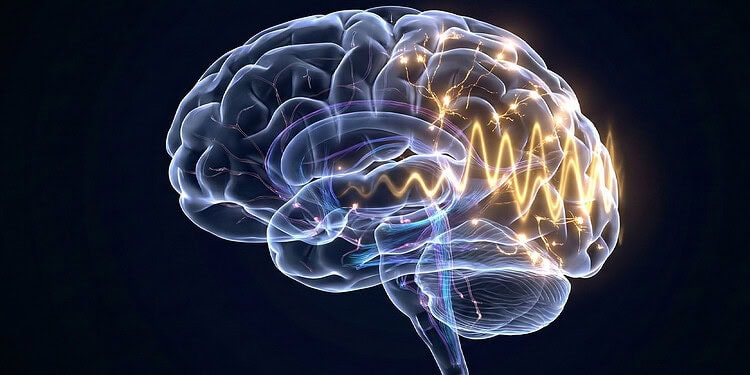
An experimental study in China found that study participants who received alpha frequency transcranial alternating current stimulation to the parieto-occipital region of their brain exhibited significantly greater levels of novelty, flexibility, fluency, originality, and elaboration compared to when they received a sham stimulation. The paper was published in BMC Psychology.

Alpha-frequency transcranial alternating current stimulation (alpha tACS) is a noninvasive brain-stimulation technique that applies a weak electrical current to the scalp at the brain’s natural alpha rhythm, typically around 8–12 Hz. The goal is to entrain or synchronize neuronal oscillations in the alpha band, which are associated with relaxed wakefulness, attention, and inhibitory control.

By rhythmically modulating cortical activity, alpha tACS can influence cognitive functions such as memory, perception, and attention. Alpha tACS is generally safe, produces only mild sensations like tingling or itching, and uses very low-intensity currents. It is studied both as a neuroscience research tool and as a potential clinical method for modulating mood, anxiety, sleep, and cognitive control.

Study author Runze Zhou and his colleagues wanted to explore whether alpha tACS applied to the parieto-occipital cortex region of the brain could improve creative performance and creative thinking. They hypothesized that applying alpha-frequency tACS to the parieto-occipital cortex might enhance creative thinking by increasing alpha oscillations, which reduce habitual thinking patterns and promote flexible, internally directed idea generation.

The study participants were 28 undergraduate students from Qufu Normal University in China. Their average age was 20 years, and 19 of them were women.

The researchers employed a within-participant design, meaning every student underwent both experimental conditions. Participants completed two sessions separated by 24 to 48 hours to prevent carry-over effects. The order of the sessions was randomized: one session involved active alpha tACS delivered using the NeuStim transcranial electrical stimulation system (developed by Neuracle), while the other was a sham (placebo) session.

The active stimulation lasted for 20 minutes. The sham treatment consisted of 10 seconds of alpha tACS stimulation at the start and the end of the session to mimic the sensation, while the equipment was turned off (without participants knowing) for the rest of the period.

After the stimulation, participants completed a creative thinking task called the Alternative Uses Task (AUT), while wearing electroencephalography (EEG) equipment that recorded their brain activity. The total duration of the task phase was approximately 30 minutes.

Google News Preferences Add PsyPost to your preferred sources

Results showed that when participants received the active alpha tACS, they exhibited significantly greater levels of novelty, flexibility, fluency, originality, and elaboration compared to their performance in the sham condition.

Further analyses revealed that alpha tACS treatment significantly increased alpha power in the parieto-occipital regions compared to the sham condition. Alpha power refers to the strength or amplitude of neural oscillations in the brain’s alpha frequency range (about 8–12 Hz). It reflects how prominently this rhythm is expressed in cortical activity.

“These findings suggest that α-tACS [alpha tACS] applied to the parieto-occipital cortex, with an inter-session interval of 24 to 48 h, enhances creative thinking performance. This supports the potential of α-tACS as a neuromodulatory technique for facilitating creative cognitive processes,” the study authors concluded.

The study contributes to the scientific understanding of the effects of non-invasive brain stimulation. However, it should be noted that the study was conducted on a small group of students. Results on larger groups and groups with different demographic characteristics might differ.

The paper, “Enhanced creative thinking performance: the role of alpha frequency transcranial alternating current stimulation in the parieto‑occipital region,” was authored by Runze Zhou, Jinqian Wang, Xiaotong Man, Xinying Huang, An’ning Zhan, Chunlei Liu, and Jiaqin Yang.

Previous Post

Boosting a regulatory protein allows brain cells to clear Alzheimer’s plaques in mice

Next Post

Neuroscientists find evidence that brain plasticity peaks at the end of the day

RELATED

Live music causes brain waves to synchronize more strongly with rhythm than recorded music
Cognitive Science

Cognition might emerge from embodied “grip” with the world rather than abstract mental processes

April 19, 2026
Women’s cognitive abilities remain stable across menstrual cycle
Cognitive Science

Men and women show different relative cognitive strengths across their lifespans

April 19, 2026
Live music causes brain waves to synchronize more strongly with rhythm than recorded music
Cognitive Science

Soft brain implants outperform rigid silicon in long-term safety study

April 18, 2026
Live music causes brain waves to synchronize more strongly with rhythm than recorded music
Cognitive Science

Live music causes brain waves to synchronize more strongly with rhythm than recorded music

April 18, 2026
How common is anal sex? Scientific facts about prevalence, pain, pleasure, and more
Cognitive Science

Higher intelligence in adolescence linked to lower mental illness risk in adulthood

April 17, 2026
Sorting Hat research: What does your Hogwarts house say about your psychological makeup?
Cognitive Science

Maturing brain pathways explain the sudden leap in children’s language skills

April 17, 2026
Republican lawmakers lead the trend of using insults to chase media attention instead of policy wins
Business

Children with obesity face a steep decline in adult economic mobility

April 16, 2026
Study reveals lasting impact of compassion training on moral expansiveness
Meditation

A daily mindfulness habit can improve your memory for future plans

April 15, 2026

STAY CONNECTED

RSS Psychology of Selling

  • Why personalized ads sometimes backfire: A research review explains when tailoring messages works and when it doesn’t
  • The common advice to avoid high customer expectations may not be backed by evidence
  • Personality-matched persuasion works better, but mismatched messages can backfire
  • When happy customers and happy employees don’t add up: How investor signals have shifted in the social media age
  • Correcting fake news about brands does not backfire, five-study experiment finds

LATEST

Cognition might emerge from embodied “grip” with the world rather than abstract mental processes

Men and women show different relative cognitive strengths across their lifespans

Early exposure to forever chemicals linked to altered brain genes and impulsive behavior in rats

Soft brain implants outperform rigid silicon in long-term safety study

Disclosing autism to AI chatbots prompts overly cautious, stereotypical advice

Can choking during sex cause brain damage? Emerging evidence points to hidden neurological risks

The decline of hypergamy: How a surge in university degrees changed marriage in the US and France

New research finds a persistent and growing leftward tilt in the social sciences

PsyPost is a psychology and neuroscience news website dedicated to reporting the latest research on human behavior, cognition, and society. (READ MORE...)

  • Mental Health
  • Neuroimaging
  • Personality Psychology
  • Social Psychology
  • Artificial Intelligence
  • Cognitive Science
  • Psychopharmacology
  • Contact us
  • Disclaimer
  • Privacy policy
  • Terms and conditions
  • Do not sell my personal information

(c) PsyPost Media Inc

Welcome Back!

Login to your account below

Forgotten Password?

Retrieve your password

Please enter your username or email address to reset your password.

Log In

Add New Playlist

Subscribe
  • My Account
  • Cognitive Science Research
  • Mental Health Research
  • Social Psychology Research
  • Drug Research
  • Relationship Research
  • About PsyPost
  • Contact
  • Privacy Policy

(c) PsyPost Media Inc