![[Adobe Stock]](https://sp-ao.shortpixel.ai/client/to_webp,q_glossy,ret_img,w_750,h_375/https://www.psypost.org/wp-content/uploads/2024/10/woman-meditating-750x375.jpg)
A new study published in the journal Mindfulness has found that high-precision brain training can help novice meditators learn the practice more effectively. The findings indicate that neurofeedback can assist individuals in reducing self-critical or wandering thoughts. This training appears to lead to sustained improvements in mindful awareness and emotional well-being during subsequent daily life.
Meditation is often promoted for its ability to reduce stress and improve mental health. The practice frequently involves focusing attention on a specific anchor, such as the sensation of breathing.
The goal is to notice when the mind wanders and gently return focus to the breath. While the concept is simple, the execution is often difficult for beginners. Novices frequently struggle to recognize when their minds have drifted into daydreams or self-referential thinking. Because meditation is an internal mental process, it lacks the external feedback that accompanies learning physical skills.
“A key problem that motivated this project, is ‘not being able to know whether what we are doing internally while meditating is what we were actually meant to be doing,'” said study author Saampras Ganesan, a postdoctoral research associate at the Laureate Institute for Brain Research and honorary research fellow at the University of Melbourne.
“You can look at a mirror to get live and detailed feedback while learning an intricate dance or exercise move. But this is not the case with something so abstract like meditation. This may be holding back the mental health benefits and wider impact that meditation could have in modern life.”
The researchers aimed to address this challenge by providing an external “mirror” for the mind. They sought to determine if real-time information about brain activity could act as a scaffold for learning.
The study focused on helping participants identify and reduce activity in the posterior cingulate cortex. This brain region is a key hub of the default mode network. This network typically becomes active when a person is not focused on the outside world, such as during daydreaming, worrying, or thinking about oneself.
To test this, the investigators recruited 40 healthy adults who had little to no prior experience with meditation. They screened these individuals to ensure they had no history of psychiatric or neurological conditions. The participants were randomly assigned to one of two groups. One group was the experimental condition, and the other served as a control.
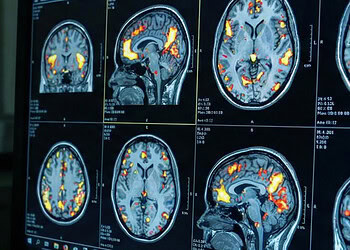
The study employed a 7-Tesla fMRI scanner. This machine creates a magnetic field much stronger than the standard MRI scanners found in hospitals. The high magnetic field allows for extremely precise imaging of brain function. Participants lay inside the scanner and were instructed to practice focused attention meditation. They kept their eyes open and watched a visual display.
The display functioned like a thermometer. For the experimental group, the level on the thermometer changed based on the real-time activity of their own posterior cingulate cortex.
When they successfully focused on their breath and quieted this brain region, the thermometer reading went down. If their mind wandered and the region became active, the reading went up. This provided immediate confirmation of their internal mental state.
The control group went through the exact same procedure with one critical difference. The feedback they saw was not from their own brains. Instead, they viewed a recording of brain activity from a participant in the experimental group.
This is known as “sham” feedback. It allowed the researchers to control for the effects of being in the scanner, seeing visual stimuli, and trying to meditate. The participants did not know which group they were in.
The training took place over two consecutive days. Following this laboratory phase, all participants were asked to continue meditating at home for one week. They used a mobile app to guide 5-minute meditation sessions. They also completed surveys to track their mood, stress levels, and mindful awareness.
The results revealed that the blinding procedure was successful. Participants in both groups believed they were receiving genuine feedback. They also reported similar levels of effort and perceived success. This suggests that any differences in outcomes were due to the specific brain training rather than placebo effects or expectations.
“Surprisingly, people could not easily tell whether the brain feedback came from their own brain (experimental group) or someone else’s (control group),” Ganesan told PsyPost. “Both groups rated the feedback as equally accurate – even though the group receiving their own brain feedback showed more meaningful positive changes in the brain circuit linked to meditation.”
“This suggests that people, especially beginners at meditation, may not be completely aware of all the factors driving effects in meditation, and that perceivable benefits may only become clearer with time and more consistent practice following targeted, reliable training.”
Despite these similar perceptions, the brain imaging data showed distinct differences. The experimental group exhibited a change in how their brain regions communicated.
Specifically, they developed a stronger negative connection between the posterior cingulate cortex and the dorsolateral prefrontal cortex. The dorsolateral prefrontal cortex is involved in executive functions, such as controlling attention and managing distractions.
This finding implies that the neurofeedback helped the experimental group recruit their brain’s control systems to down-regulate the mind-wandering network. This neural pattern was not observed in the control group.
The ability to suppress the default mode network is often associated with experienced meditators. The novices in the experimental group appeared to acquire this neural skill rapidly through the targeted feedback.
The benefits of the training extended beyond the laboratory. During the week of home practice, the experimental group maintained higher levels of mindful awareness. In contrast, the control group showed a decline in awareness over the week. This suggests that without the specific guidance provided by the neurofeedback, the control participants struggled to sustain the quality of their meditation practice.
The study also found improvements in emotional well-being. The experimental group reported a significant reduction in emotional distress. This measure combined ratings of depression, anxiety, and stress.
The researchers found a correlation between the brain changes and the mood improvements. Participants who showed the strongest connection between the attention and default mode networks experienced the greatest reduction in distress.
“Teaching people to meditate with live feedback from their own brain can help them meditate more effectively on their own over time, with early benefits for self-awareness and mood,” Ganesan explained. “For these benefits to matter, the brain feedback needs to be well-targeted and specific to the meditation goal – more precise feedback leads to stronger results.”
One unexpected finding involved a breath-counting task. This is an objective test often used to measure mindfulness. Participants press a button for each breath and a different button for every ninth breath.
The experimental group actually performed worse on this task after the training. The researchers suggest this might be because the task requires cognitive effort and counting. The neurofeedback training emphasized “letting go” of thoughts, which might have conflicted with the requirement to actively count.
As with all research, there are limitations. The sample size was relatively small. While 40 participants is common for complex neuroimaging studies, it is small for drawing broad behavioral conclusions. The equipment used is also rare and expensive. A 7-Tesla scanner is not a tool that can be easily deployed for general therapy or training.
“An important takeaway is that while the idea of using brain feedback to support meditation is promising, most current wearable and commercial devices are not yet reliable enough to deliver clear benefits,” Ganesan said. “Many studies testing such devices find little evidence beyond placebo, often because the brain signals used are not precise enough.”
“At present, there are no widely accessible, well-validated brain-feedback systems detailed enough to reliably guide meditation training and practice. Highly advanced brain-imaging approaches, like the one used in our study, show what may be possible in principle, but they are not practical for everyday use. As technology improves, reliable and scalable tools may emerge. But until then, the benefits of brain-feedback-assisted meditation will remain limited for most people.”
The follow-up period was also short. It remains unclear if the benefits would persist longer than one week without further reinforcement.
“While the study offers promising signs that detailed brain-feedback–supported meditation training can have real-world benefits, larger studies over longer periods are needed to confirm these results,” Ganesan told PsyPost. “A major strength of the current study is the use of a well-matched control group, which helped show that the benefits were greater than placebo or other unrelated effects.”
Future research will likely focus on whether these results can be replicated with larger groups. Scientists may also explore if similar results can be achieved using less expensive technology, such as EEG sensors. If scalable methods can be developed, this approach could offer a new way to support mental health treatments. It provides a proof of concept that technology can accelerate the learning curve for meditation.
“My long-term vision is to develop a scalable but personalized, science-backed brain-feedback tool that can reliably support meditation training and mental health at a population level,” Ganesan explained. “By developing such technology and making it accessible in schools, clinics, and homes, the goal is to promote everyday emotional well-being, strengthen mental resilience, and help reduce the burden of mental illness in the modern world.”
“While there are many types of meditation, the technique studied here – focused-attention or breathing-based meditation, often grouped under mindfulness – is widely regarded by researchers and meditation experts as a foundational practice,” the researcher added. “The skills developed through this form of meditation are considered essential for learning and practicing other techniques effectively. As a result, developing reliable and targeted brain-based tools to support training in this practice is especially valuable.”
The study, “Neurofeedback Training Facilitates Awareness and Enhances Emotional Well-being Associated with Real-World Meditation Practice: A 7-T MRI Study,” was authored by Saampras Ganesan, Nicholas T. Van Dam, Sunjeev K. Kamboj, Aki Tsuchiyagaito, Matthew D. Sacchet, Masaya Misaki, Bradford A. Moffat, Valentina Lorenzetti, and Andrew Zalesky.