Subscribe
The latest psychology and neuroscience discoveries.
My Account
  • Mental Health
  • Social Psychology
  • Cognitive Science
  • Neuroscience
  • About
No Result
View All Result
PsyPost
PsyPost
No Result
View All Result
Home Exclusive Social Psychology Political Psychology

Liberals tend to be more empathetic than conservatives, according to new psychology research

by Eric W. Dolan
June 13, 2018
in Political Psychology
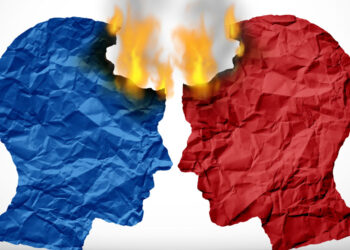
(Photo credit: Ocskay Bence)

(Photo credit: Ocskay Bence)

Share on TwitterShare on Facebook

Liberals want to experience more empathy and tend to be more empathetic than conservatives, according to new research published in the Personality and Social Psychology Bulletin.

“We know that liberals and conservatives differ in their support for social policy issues, but there is an ongoing debate whether they fundamentally differ in cognitive, motivational, and emotional aspects,” said study author Yossi Hasson of The Hebrew University of Jerusalem.

“As a researcher who investigates empathy in various intergroup contexts I was interested to examine how political ideology relates to empathy which play an important role in our social life. This question has been difficult to resolve by previous studies due to methodological constraints and common use of ideologically-biased targets (that are either liberal or conservative-leaning),” Hasson explained.

“To overcome such limitations, our study included several unique features:”

  • “Whereas previous studies used targets that, at least in some cases, were potentially ideologically-biased, we used targets that should be equally relevant to both liberals and conservatives. Specifically, we examined reactions to people in need who were liberals or conservatives to ensure that some targets would be perceived as ingroup members and other targets would be perceived as outgroup members by both liberal and conservative participants. In addition, we used ideologically-neutral targets as a comparison group.”
  • “Whereas other studies examined political ideology and differences in experienced empathy, we examined whether liberals and conservatives differ in their motivation to feel empathy, their experienced empathy and their tendency to help others (As far as we know, no other study has simultaneously assessed these three constructs that are likely to jointly determine how people treat one another).”
  • “To draw inferences about political ideology beyond a particular political context, we conducted the study in three social and cultural contexts — in the United States, Germany, and Israel — that differ in political climate, cultural background, intergroup relations, key ideological debates, and emotional norms.”

The study included a total of 1,046 participants and assessed their empathy by having them read a fake newspaper article about protesters who were injured during an overcrowded demonstration. The protesters were either described as liberals, conservatives, or (non-partisan) local residents.

The researchers found that liberals tended to want to feel more empathy and reported feeling more empathy towards others than conservatives. In the United States and Germany, liberals were more likely to want to help the protesters by donating money for the medical treatment. But both liberals and conservatives felt more empathy for their political allies.

“The takeaway message is that political ideology is associated with the motivation to feel empathy in two parallel ways – one that emphasizes the differences between liberals and conservatives, and another that emphasizes the similarities between the two political groups,” Hasson told PsyPost.

“On the one hand, liberals, compared to conservatives, want to feel more empathy toward others regardless of the targets’ political identity (either liberals, conservatives or non-political groups). On the other hand, both liberals and conservatives wanted to feel less empathy toward outgoup members compared to members of their ingroup or an ideologically-neutral group.”

Google News Preferences Add PsyPost to your preferred sources

The study, like all research, has some limitations.

“We cannot infer any causal influence of political ideology on motivated empathy,” Hasson explained. “Although we suggest that value-based goals and social needs may explain the relationship between the two constructs, it is still unclear what factors or processes are responsible for the apparent relationship.”

“In addition, all the measures used in this study were based on self-report. Although such measures have proven to be valid, participants may have responded according to how they would like or expect to appear.”

The study, “Are Liberals and Conservatives Equally Motivated to Feel Empathy Toward Others?“, was authored by Yossi Hasson, Maya Tamir, Kea S. Brahms, J. Christopher Cohrs, and Eran Halperin.


Previous Post

Neoliberals are less sympathetic about unintended adolescent pregnancy

Next Post

Childhood deprivation predicts preferences for authoritarian leaders in adulthood

RELATED

Too many choices at the ballot box has an unexpected effect on voters, study suggests
Political Psychology

Conservative 2024 campaigns reframed demographic shifts as an election integrity issue

April 10, 2026
Narcissism alignment between leaders and followers linked to higher creativity
Political Psychology

New data shows a relationship between subjective social standing and political activity

April 9, 2026
Study provides first evidence of a causal link between perceived moral division and support for authoritarian leaders
Political Psychology

Mathematical model sheds light on the hidden psychology behind authoritarian decision-making

April 9, 2026
Americans misperceive the true nature of political debates, contributing to a sense of hopelessness
Political Psychology

Social media analysis links polarized political language to distorted thought patterns

April 7, 2026
Scientists reveal the impact of conspiracy theories on personal relationships and dating success
Conspiracy Theories

The exact political location where conspiracy theories thrive

April 3, 2026
This psychological factor might help unite America or “destroy us from within”
Political Psychology

The psychological divide between Democrats and Republicans during democratic backsliding

April 2, 2026
Study links phubbing sensitivity to attachment patterns in romantic couples
Artificial Intelligence

How generative artificial intelligence is upending theories of political persuasion

April 1, 2026
Belief in the harmfulness of speech is linked to both progressive ideology and symptoms of depression
Political Psychology

Belief in the harmfulness of speech is linked to both progressive ideology and symptoms of depression

April 1, 2026

STAY CONNECTED

RSS Psychology of Selling

  • When brands embrace diversity, some customers pull away — and new research explains why
  • Smaller influencers drive engagement while bigger ones drive purchases, meta-analysis finds
  • Political conservatives are more drawn to baby-faced product designs, and purity values explain why
  • Free gifts with no strings attached can boost customer spending by over 30%, study finds
  • New research reveals the “Goldilocks” age for social media influencers

LATEST

Longitudinal study links associative learning gains to later improvements in fluid intelligence

Conservative 2024 campaigns reframed demographic shifts as an election integrity issue

People with social anxiety scan moving faces differently than others

Social context influences dating preferences just as much as biological sex

Feeling like you slept poorly might take a heavier toll on new parents than actual sleep loss

The unexpected link between loneliness, status, and shopping habits

Scientists uncover the neurological mechanisms behind cannabis-induced “munchies”

New psychology research explains why some women devalue their own orgasms

PsyPost is a psychology and neuroscience news website dedicated to reporting the latest research on human behavior, cognition, and society. (READ MORE...)

  • Mental Health
  • Neuroimaging
  • Personality Psychology
  • Social Psychology
  • Artificial Intelligence
  • Cognitive Science
  • Psychopharmacology
  • Contact us
  • Disclaimer
  • Privacy policy
  • Terms and conditions
  • Do not sell my personal information

(c) PsyPost Media Inc

Welcome Back!

Login to your account below

Forgotten Password?

Retrieve your password

Please enter your username or email address to reset your password.

Log In

Add New Playlist

Subscribe
  • My Account
  • Cognitive Science Research
  • Mental Health Research
  • Social Psychology Research
  • Drug Research
  • Relationship Research
  • About PsyPost
  • Contact
  • Privacy Policy

(c) PsyPost Media Inc